

summary
Star Citizen’s September update brings Alpha 4.10.1 improvements, a new Streamline Bundle, and major experimental ship combat changes. CIG is testing lower TTK for fighters, stronger survivability for larger ships, and a new balance between ballistic and energy weapons, while players can also buy Star Citizen AUEC to support their in-game progression.
Alpha 4.10.1 and the September Bundle
Alpha 4.10.1 has temporarily left the PTU and is expected to return soon. Meanwhile, the latest 4.10 hotfix is targeting several GeForce and Nvidia-related crashes, potentially improving stability for affected players.
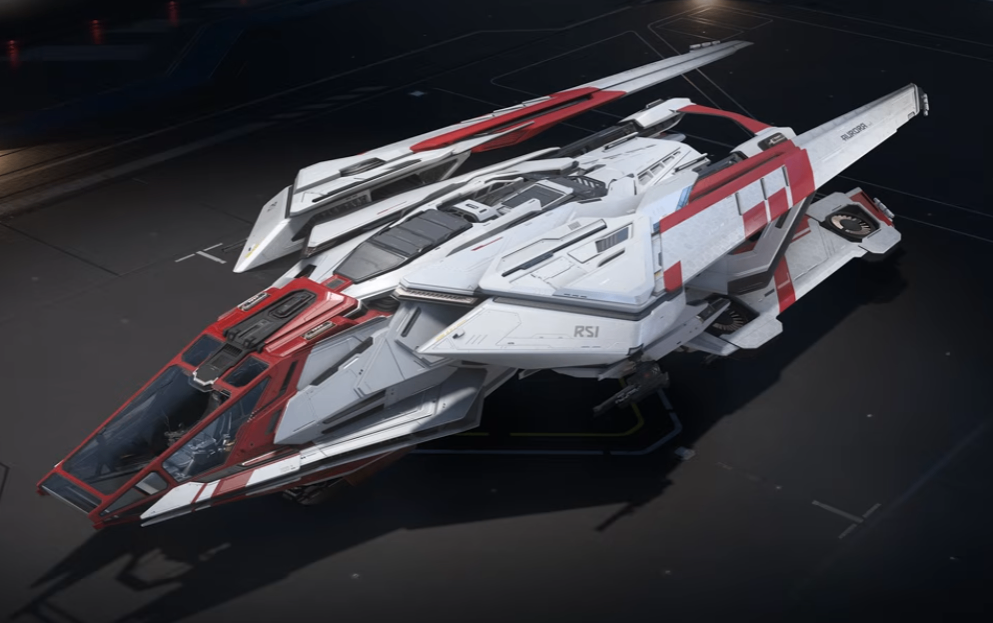
The September monthly store bundle is also available. The Streamline Bundle features a clean white design with red highlights and metallic silver accents. It includes:
· Kilgore and Poll Monde heavy armor with backpack
· Klaus & Werner Demeco laser LMG
· RSI Aurora MRK II paint
The bundle starts at around $23, with delivery planned for Alpha 4.10.1. Since the Aurora MRK II is already owned by many players, the included paint could make this month's package particularly interesting for existing owners.
CIG Begins Another Major Ship Combat Test
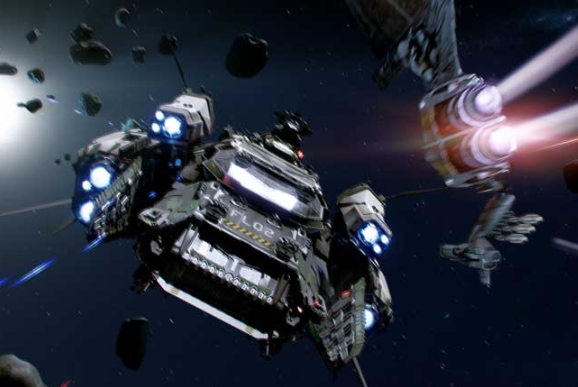
The biggest story, however, is the latest Evocati tech preview focused on ship combat balance. CIG is testing changes to time to disable (TTD) and time to destroy (TTK) across the Persistent Universe and Arena Commander.
The previous test produced useful feedback, but it also exposed several problems. CIG concluded that lowering fighter TTK was generally successful, especially for PvE, but increasing weapon alpha damage also made larger ships die too quickly.
PvP was another concern. Lower fighter TTK made combat feel too unforgiving, with players potentially being destroyed within seconds.
The new test therefore takes a more aggressive approach.
Fighters Become Faster, Larger Ships Become Tankier
CIG has reverted the previous changes and introduced a new set of deliberately dramatic values. The goal isn't to create a perfectly balanced build immediately, but to understand how individual variables affect combat.
Key changes include:
· Shield health reduced by 50% across all ships
· Small-ship armor health reduced by up to 50%
· Ships above size five receive up to 40% more armor health
· Shield generation speed reduced by 50%
· Shield regeneration delay increased by 100%
This creates a much clearer distinction between ship classes. Fighters should remain relatively quick to destroy, while multicrew and capital ships are intended to survive significantly longer.
That could eventually produce very different combat experiences depending on what you're flying.
Ballistic vs. Energy Weapons
The test also makes substantial changes to the relationship between ballistic and energy weapons.
Ballistic projectiles will now have 40% to 80% shield absorption, depending on power-pip distribution. This means ballistic weapons should deal considerably less damage while shields remain active.
At the same time, slower shield regeneration means that once a shield is brought down, it should remain vulnerable for longer.
The theory is to encourage players to use different weapons for different situations instead of relying on one universal meta loadout. Energy weapons could become more attractive for stripping shields, while ballistic weapons may have a stronger role once defenses are weakened.
What Does This Mean for Star Citizen?
The most important thing to understand is that these are experiments, not final balance changes. CIG has intentionally used drastic numbers to identify the limits of its combat systems.
The broader goal is straightforward:
· Faster and more engaging fighter battles
· Longer engagements for multicrew and capital ships
· Better separation between ship classes
· More meaningful ballistic and energy weapon choices
· Less reliance on one dominant loadout
The biggest unresolved question is PvP. CIG has indicated that it wants to increase fighter TTK for PvP after establishing a solid PvE baseline, but exactly how that separation will work remains unclear.
For now, Star Citizen players should treat this Evocati build as a direction-finding experiment rather than a preview of the final combat system. If CIG can successfully create fast fighter engagements without making them instantly lethal, while allowing larger ships to feel genuinely durable, this could become one of the most important combat balance passes yet, giving players even more reason to consider cheap Star Citizen AUEC for supporting their in-game progression.