

Summary:
The latest College Football 27 update delivers major gameplay improvements to man coverage, pass leading, receiver acceleration, route-running animations, College Football 27 Coins, and defensive coverage logic. Here’s everything you need to know about the patch and how it could change online gameplay.
College Football 27 Patch Targets Man Coverage
EA has released another major gameplay update for College Football 27, and this time the biggest focus is clearly on man coverage. Rather than completely weakening defensive man coverage, EA appears to be making the system more consistent and logical.
For months, players have complained that man coverage could feel overly powerful, while receivers sometimes struggled to create separation even when they had an obvious positional advantage. The latest patch addresses several of these problems at once.
The result could be a much healthier balance between offense and defense, particularly in online games where small gameplay inconsistencies can decide an entire possession.
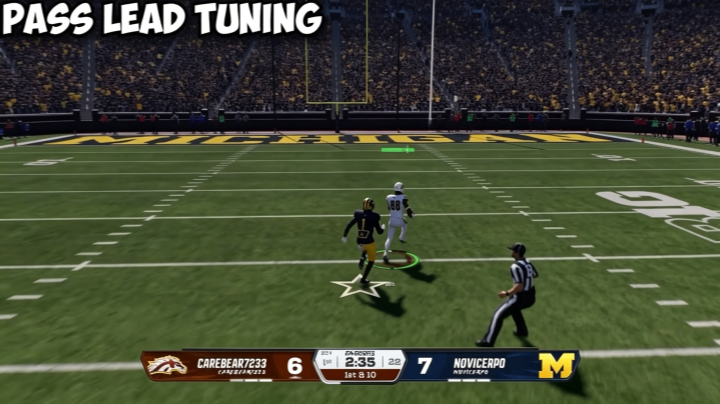
Improved Pass Leading Helps Beat Man Coverage
One of the most important changes involves pass leading. EA has adjusted the ability to increase the default lead distance when throwing to receivers running downfield.
This is particularly useful against man coverage because quarterbacks can now place the football farther away from defenders, giving receivers a better opportunity to make plays in stride.
Early community feedback has been positive. Players are reporting that normal pass leading feels substantially better, especially when throwing toward the outside against man coverage.
Deep passes also appear to benefit from the adjustment. Receivers can get to the ball while maintaining more of their momentum, which should result in fewer situations where a perfectly open receiver suddenly has to slow down and wait for the football.
That could mean fewer interceptions, more explosive plays and, most importantly, more predictable passing results.
Fewer Random High and Low Throws
Another significant improvement concerns inaccurate throws.
Before the update, players could sometimes make what appeared to be a good-quality throw only for the ball to randomly sail too high or dip too low. These unpredictable throws were especially frustrating because they could completely change the outcome of an otherwise successful offensive play.
The new patch appears to reduce these random high and low passes when the quarterback has good accuracy.
This change is important because consistency is one of the most important aspects of a competitive football game. Players should be rewarded for making the correct read and executing the throw rather than losing a possession because the ball randomly behaves differently.
Early gameplay testing suggests that passes are now landing closer to the intended target more frequently.
Zig Routes Finally Get Attention
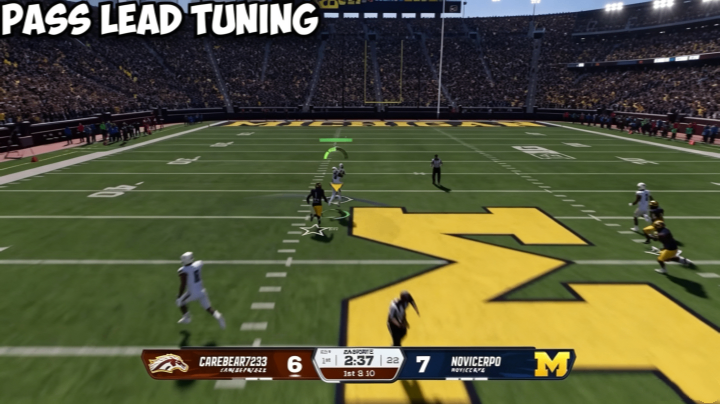
EA also addressed problems with receiver route-running animations, including zig routes.
Zig routes are extremely valuable against man coverage because they force defenders to quickly change direction. However, the route has not always performed as effectively as players expected.
One of the biggest issues involved elite receivers failing to use the correct turning animation. As a result, even talented players could struggle to create separation.
The patch specifically addresses situations where elite route runners were not properly playing the intended turn animation on zig routes.
However, early testing suggests that the improvement may not be as dramatic as some players hoped. Certain receivers can still be locked down, while other situations produce excellent separation.
This means zig routes may be better than before without becoming an automatic answer to man coverage.
Receiver Acceleration After Cuts Has Been Fixed
Another important fix concerns what happens immediately after a receiver wins a physical interaction with a defensive back.
Previously, receivers could win the interaction but fail to accelerate properly afterward. Instead of immediately returning to full speed, they could appear to slow down.
That created an unusual situation where a receiver technically won against the defender but still failed to create meaningful separation.
EA has now adjusted this behavior so receivers can accelerate more naturally after winning these interactions.
This change could have a major impact on deep in routes, deep outs and other breaking routes where maintaining momentum is critical.
Better WR vs. DB Interactions
EA also improved the animations surrounding physical interactions between receivers and defensive backs.
The goal is to help better receivers maintain separation from weaker defenders. In theory, this means player ratings should matter more.
A receiver with excellent route-running ability should be able to create more space against a lower-rated defensive back, rather than having the matchup feel almost identical regardless of player quality.
This change works particularly well alongside the improved pass leading. If the receiver creates separation and maintains speed, the quarterback now has more control over where the football goes.
Together, these changes could make offensive execution feel considerably more rewarding.
Press Coverage and Defensive Alignment Changes
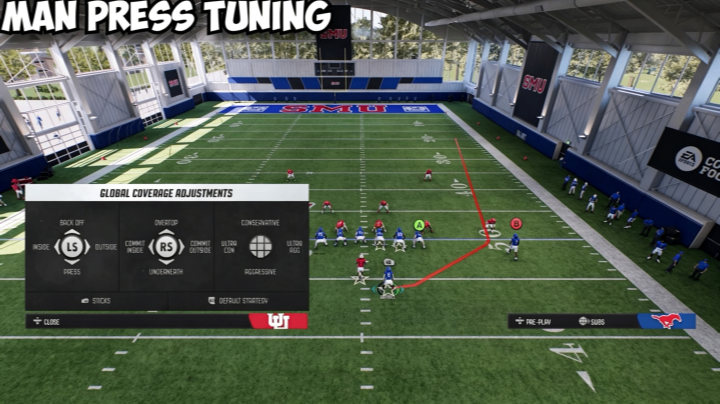
EA also adjusted man coverage when defenders use press coverage.
The idea is to increase the punishment for poor defensive alignment, particularly when defenders are positioned incorrectly relative to where a receiver is trying to release.
However, early testing indicates that this adjustment is difficult to measure consistently.
Different route combinations, defensive adjustments and user-controlled alignment decisions can produce dramatically different results. Some receivers appear to win cleanly, while others remain heavily restricted.
Because of this, it may take more online gameplay before the community understands exactly how significant the change really is.
Additional College Football 27 Fixes
The update also includes several smaller but important fixes.
EA addressed an issue that caused illegal forward pass penalties to occur too frequently. The developers also fixed a problem involving cloud-flat defenders aggressively jumping short routes while ignoring certain coaching adjustments.
Another defensive fix ensures that the user's selected coverage shell is properly respected.
These changes may not receive as much attention as the man coverage adjustments, but they can improve overall defensive consistency.
Grip Breaker Requirements Have Changed
The patch also changes the requirements for the Grip Breaker ability for defensive tackles using the Power Rusher archetype.
The updated requirements are 94 Strength for Bronze and 95 Strength for Silver.
This is particularly relevant for College Football 27 Ultimate Team players because Grip Breaker can provide useful benefits during pass-rush situations. The ability can improve lateral movement during certain plays, making it valuable against offensive linemen and contain situations.
Players building defensive tackles should therefore pay close attention to the new attribute requirements.
Is the College Football 27 Patch Actually Good?
Overall, this looks like a strong update for College Football 27.
The biggest positive is that EA did not simply destroy man coverage. Instead, the developers appear to have focused on making offensive and defensive interactions more logical.
Better pass leading, improved receiver acceleration, fewer random inaccurate throws, and updated route-running animations all work toward the same goal: making player ratings and user decisions matter more.
Some issues still remain, especially with zig routes and press-man interactions, buy College Football 27 Coins. However, the early results suggest that College Football 27 is moving in the right direction.
For competitive players, the biggest takeaway is simple: man coverage is still viable, but beating it should now feel more consistent and skill-based. As more games are played after the patch, the community will have a much clearer picture of which offensive formations and routes benefit the most from these changes.