

Summary
Nvidia’s DLSS 5 neural rendering technology debuted to heavy community backlash in early 2026 for distorted, artificial in-game visuals. After unofficial library leaks from NBA 2K27, modders ported DLSS 5 to older and modern titles, including The Elder Scrolls Online. Despite its problematic initial reveal, DLSS 5 delivers transformative character and shadow overhauls for ESO’s outdated engine. This guide covers verified visual improvements, severe performance penalties, risky manual mod installation, and realistic player expectations for this emerging neural graphics tech, while also considering how The Elder Scrolls Online Gold can support broader character progression and gameplay activities.
DLSS 5: From Viral Failure to Playable Unofficial Tech
First teased six months before 2026, DLSS 5’s original trailer faced widespread criticism. The neural rendering filter produced doll-like, distorted character faces reminiscent of overfiltered social media visuals. It originally required dual RTX 5090 setups to run, making it functionally impractical for mainstream players.
Public perception shifted after DLSS 5 library files leaked alongside the NBA 2K27 launch. Modders quickly adapted the exclusive 50-series code to work on RTX 20-series through 40-series cards, plus select AMD GPUs. While NBA 2K27 remains the only official DLSS 5 title, unofficial ports now let players test the tech in nearly any PC game.
Critically, DLSS 5 no longer functions as a traditional upscaler. It operates as a post-processing neural filter. Players must enable standard game upscaling first, then toggle standalone neural rendering and frame generation as overlay effects.
Verified ESO Visual Upgrades With DLSS 5
The Elder Scrolls Online’s aging engine suffers from flat lighting, low-detail character textures, and minimal dynamic shadowing. DLSS 5 fixes these core flaws with impressive precision, even using basketball-trained AI models.
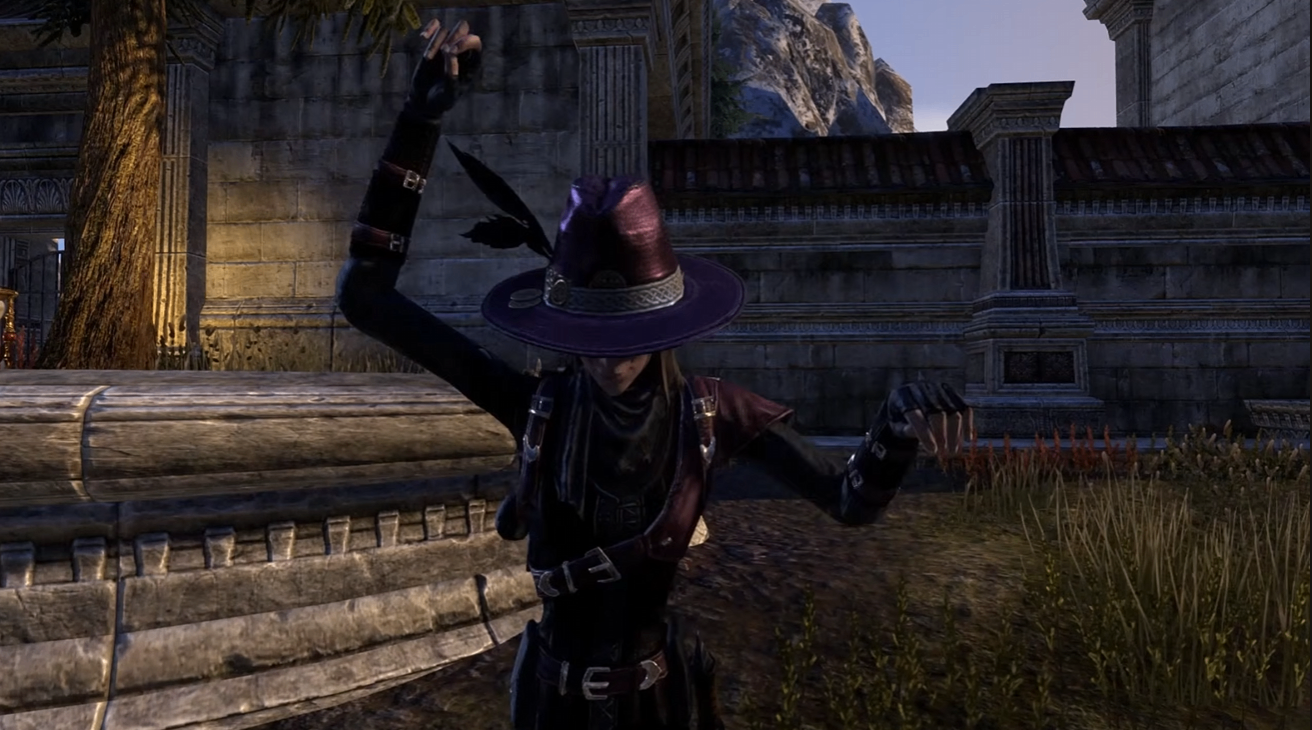
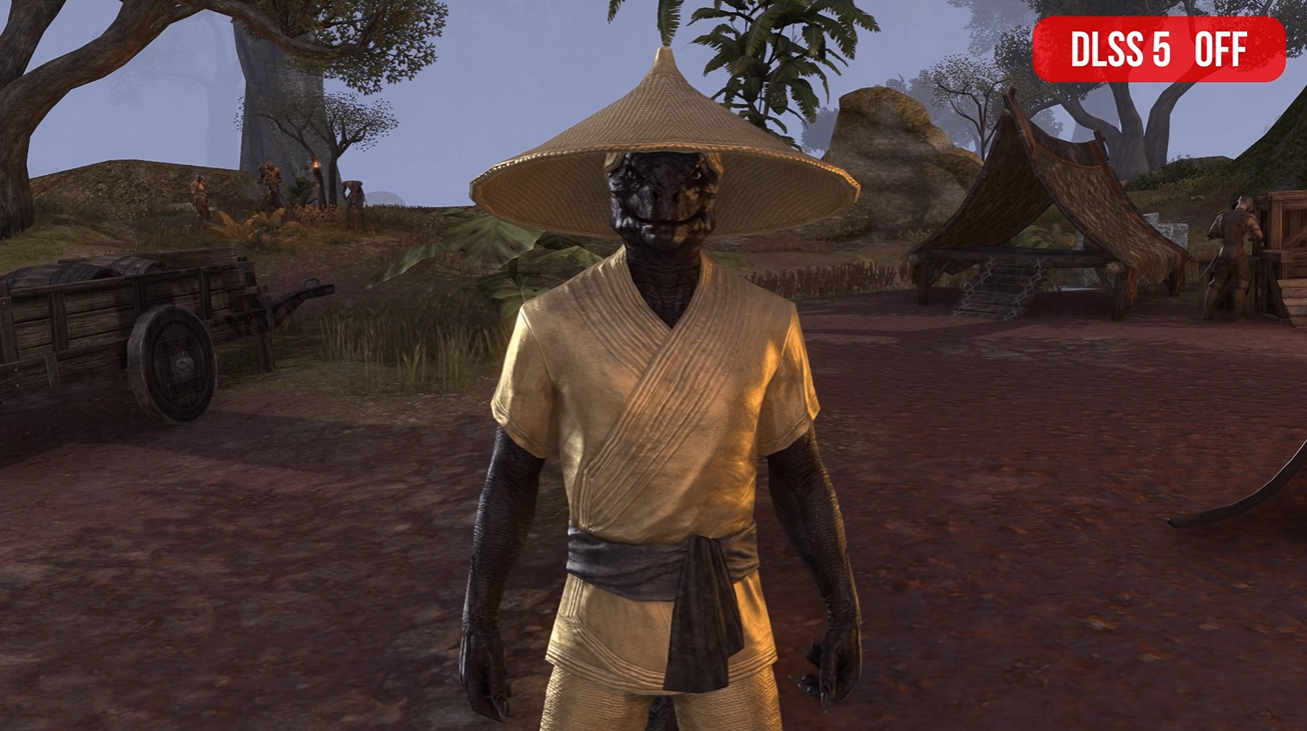
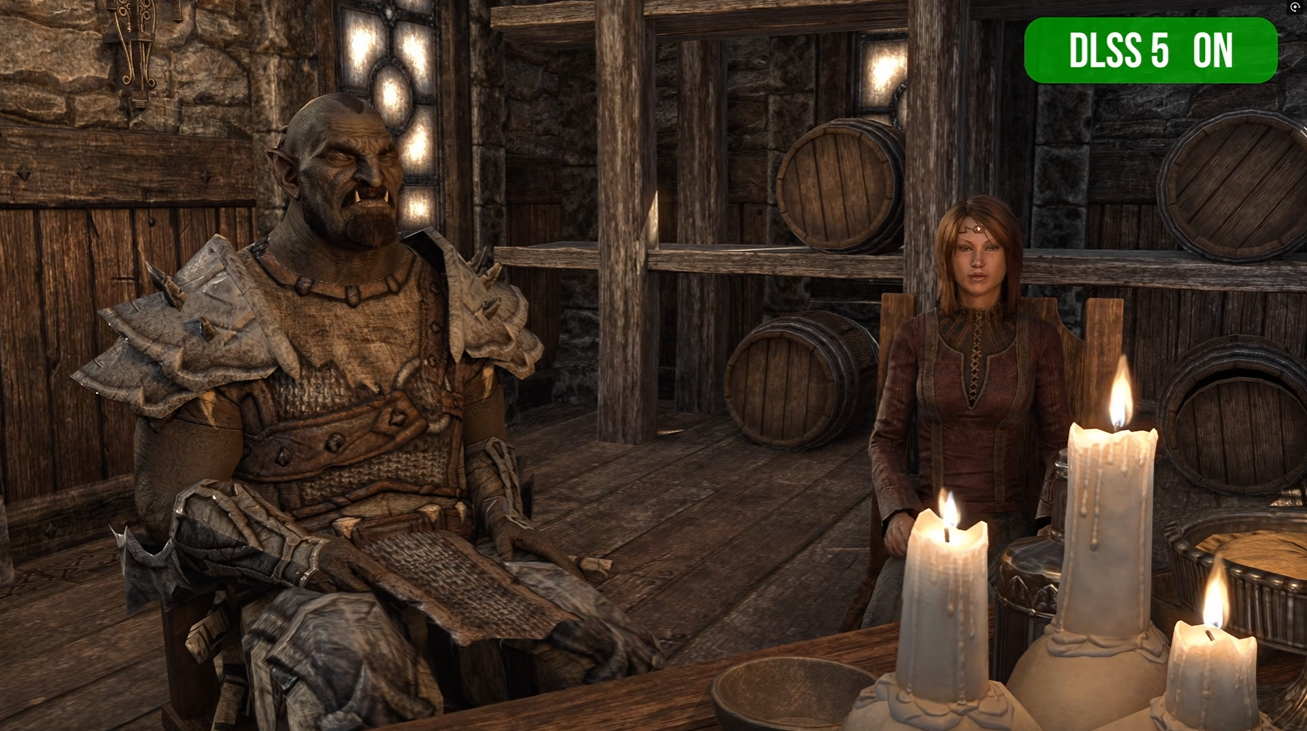
Character model overhauls are the biggest upgrade. Vanilla ESO character faces appear overly smooth, plasticky, and flat with static lighting. DLSS 5 adds realistic skin texture, natural brow shadows, and depth to facial features.
All playable races benefit significantly. Nord characters gain defined hair and facial shadows. Orc models lose their cartoonish appearance and gain gritty, realistic texture. Even Khajiit, Dunmer, and Altmer models receive improved shadow depth, though the AI occasionally overcorrects Altmer skin tones due to mismatched training data.
Environmental and gear shading also improves drastically. Armor pauldrons, hats, fabric clothing, and metallic gear gain accurate depth shadows. Overhanging architectural structures display natural darkened underhangs, adding subtle HDR-like depth to indoor and outdoor zones.
Major Performance Drawbacks & Limitations
DLSS 5 delivers stunning visual gains at a steep framerate cost. The standalone neural rendering layer adds significant GPU load, causing massive performance drops across all hardware.
Average FPS losses range from 50% to 80%, even on RTX 50-series flagship cards. High-end RTX 5080 hardware struggles to maintain stable 60 FPS with full neural rendering active. Older RTX 30-series, 40-series, and AMD cards face unplayable frame rates in most ESO zones.
AI training mismatches create consistent visual flaws. Built for uniform basketball stadium lighting, the neural model struggles with ESO’s dynamic lighting. Campfires, spell effects, and vibrant magical light sources often appear muted or improperly shaded.
The tech cannot fix core engine limitations. It improves shading and texture depth but fails to correct outdated animations or low-quality base model geometry.
ESO Mod Setup Risks & Barriers
There is no official DLSS 5 support for The Elder Scrolls Online in 2026. All implementations rely on complex manual workarounds paired with ReShade frame interception tools.
The required installation guide spans 16 pages of file edits and mod configurations. Many players report failed setups even when following instructions precisely. Advanced file tweaks and third-party tool adjustments are often mandatory for successful activation.
While ZeniMax does not officially ban ReShade usage, unofficial DLSS 5 modifications exist in a policy gray area. Players assume full account risk when installing these unapproved file replacements.
Player Recommendations & Future Predictions
Most players should avoid installing DLSS 5 for ESO in 2026. The extreme performance cost, unstable setup process, and account risks outweigh visual benefits for casual and competitive players.
High-end GPU users seeking graphical showcase can test the mod for screenshot and video previews but should disable it for regular gameplay.
Future DLSS 5 updates will likely resolve current flaws. Nvidia will optimize official game support to reduce FPS drops ahead of RTX 60-series launches. Refined AI training will adapt to dynamic fantasy lighting, eliminating muted spell and fire effects.
Long-term, polished neural rendering could replace basic ambient occlusion and ray tracing presets, offering lightweight high-quality shading for old and new games alike.
Final Verdict
DLSS 5 delivers transformative graphical upgrades for The Elder Scrolls Online, revitalizing outdated character shading and environmental lighting. However, its 2026 unofficial iteration suffers from crippling performance losses, tricky installation, and inconsistent dynamic lighting handling. The technology proves massive future potential to extend the lifespan of older game engines. Still, players should wait for official Nvidia optimization and native ESO support before adopting DLSS 5 for regular gameplay. In the meantime, players can focus on optimizing their existing characters and gear, while those preparing for future content may consider when it makes sense to buy The Elder Scrolls Online Items for their preferred builds.