










Rockstar Games is no stranger to pushing the boundaries of open-world gaming. With the imminent release of Grand Theft Auto 6 (GTA 6), the developer is taking another bold step forward, introducing groundbreaking technological advancements that promise to redefine player immersion and interactivity. Beyond expansive environments and complex narratives, GTA 6 is set to revolutionize how players experience and interact with the game world, thanks to a combination of dynamic terrain systems, enhanced rendering techniques, and realistic visual effects.
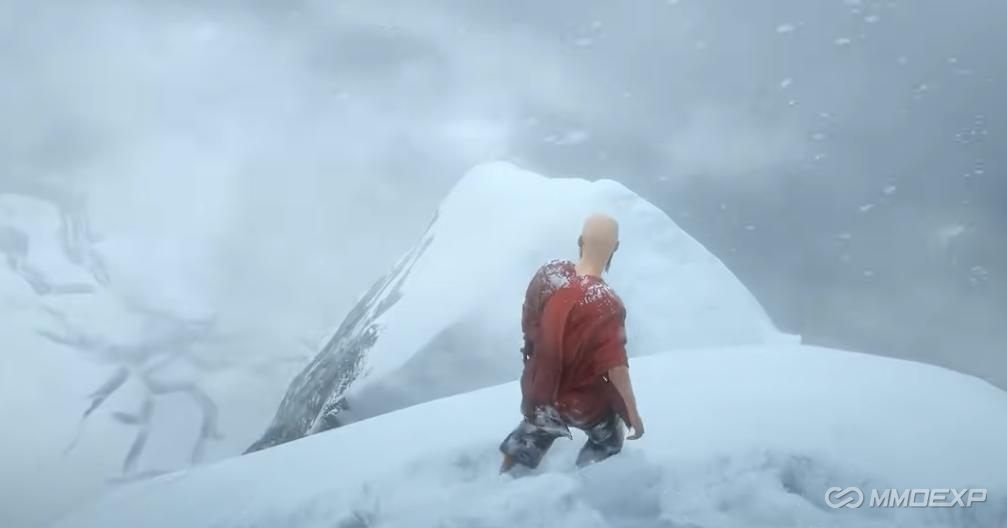
At the core of GTA 6's graphical overhaul is a sophisticated terrain system, designed to respond dynamically to player and NPC interactions. Traditional video game environments have long faced the challenge of balancing visual realism with real-time performance. In previous GTA titles and comparable open-world games, terrain interactions were mostly static—footprints, vehicle tracks, and environmental effects often had limited or pre-rendered behavior. GTA 6 seeks to overturn this limitation by implementing a trail map system, combined with a suite of specialized shaders, allowing every surface in the game to respond convincingly to a variety of influences.
Dynamic Terrain: Leaving Your Mark on the World
Imagine walking through a patch of snow in GTA 6. As your character moves, footprints appear in the fresh powder, gradually disappearing as the snow settles. Drive through a muddy track with a vehicle, and you'll see tire ruts forming along the path, only to fade over time as the ground naturally "heals" itself. Explosions, whether from grenades or RPGs, leave craters and deform terrain surfaces in real time, making each encounter visually and mechanically impactful.
This realism is achieved through Rockstar's patented shader system for dynamic terrain rendering. The system relies on a combination of trail maps and terrain-specific shaders that govern how different surfaces behave under stress. For example, simple terrains like concrete sidewalks require minimal processing and do not rely heavily on advanced shaders. In contrast, a shallow mud patch benefits from a parallax surface shader, which efficiently models ruts and tracks while preserving high-detail visuals. Deep mud terrains utilize tessellation shaders, offering an even higher level of visual fidelity for intricate terrain deformation.
GTA 6's dynamic terrain system builds upon the lessons learned in Red Dead Redemption 2. In RDR2, players could leave footprints in snow or mud, and the system used a combination of parallax maps and desolation shaders to simulate realistic surface deformations. While these deformations were mostly visual illusions rather than physical changes, they were crucial for delivering a polished and immersive experience. GTA 6 expands on this approach, incorporating a wider variety of terrains and interactions to create a game world that responds intelligently to player actions and environmental changes.
A World of Diverse Terrains
One of the standout features of GTA 6's terrain system is the sheer diversity of surfaces players can encounter. The game includes multiple terrain types such as sandy beaches, grassy plains, muddy paths, hard-packed dirt, and snowy regions. Each type reacts differently to interaction. Sandy terrain deforms easily under footprints or vehicle tracks, while grassy or rocky terrains resist deformation, creating a realistic variance in how the environment responds.
The dynamic terrain system relies on a world map that serves as a reference for all terrain interactions. This map informs how trail maps are generated in real time, dictating the placement and persistence of footprints, tire tracks, and environmental changes. NPCs are also subject to these terrain effects, further enhancing the sense of realism as the game world reacts organically to both player and non-player characters. For instance, a chase scene across multiple terrain types will produce a trail map that records every impact—from boot prints in snow to wheel ruts in muddy paths—resulting in a rich visual record of the action.
Importantly, the system also allows certain changes to naturally fade over time. Footprints in mud will eventually disappear as the terrain returns to its normal state, reflecting the real-world properties of different surfaces. This attention to detail ensures that the game world feels alive and continuously evolving, rather than static and pre-rendered.
Advanced Rendering Techniques
GTA 6 is not just improving terrain realism; it is also enhancing overall graphics through cutting-edge rendering techniques. Traditional real-time rendering pipelines process 3D vertex data before calculating pixel-level details, such as lighting, shadows, and material textures. Modern games employ shaders—programs executed on the GPU—to perform these calculations efficiently. GTA 6 takes this a step further by integrating multiple advanced rendering features to balance visual fidelity with performance.
Among these features are ambient occlusion, global illumination, and material tinting. Ambient occlusion simulates how light interacts with nearby surfaces, creating realistic shading in crevices and corners. Global illumination models how light bounces throughout the environment, contributing to a naturalistic interplay of light and shadow. Material tinting allows surfaces to respond dynamically to environmental conditions, such as wet roads reflecting light differently than dry asphalt. Combined, these effects create an immersive visual experience that blurs the line between game graphics and reality.
While conventional lighting techniques often rely on cube maps for static elements, GTA 6 addresses the shortcomings of precomputed lighting for dynamic scenes. Pre-baked ambient occlusion cannot adapt to moving characters or changing objects, which often results in visually inconsistent environments. Rockstar's new rendering approach updates lighting dynamically, ensuring that interactions with characters, vehicles, or explosions influence the environment in real time. This means that shadows shift naturally as objects move, light reflects realistically off wet surfaces, and terrain deformation affects how light interacts with the ground.
Interactivity Through Physics and Graphics
One of the most compelling aspects of GTA 6's new systems is the integration of physics and graphics to create interactivity. Terrain deformation is not merely a visual effect; it reflects real-world physical interactions. An RPG fired at the ground generates a crater with accurate depth and spread based on the terrain type. Vehicles moving through mud experience increased resistance and leave distinct tracks that reflect their weight and speed. NPCs walking through different surfaces exhibit variable movement patterns, contributing to a richer simulation of the game world.
This attention to interactivity aligns with Rockstar's long-standing philosophy of creating living, breathing worlds. By ensuring that player actions leave tangible traces, GTA 6 fosters a deeper sense of immersion. Every action—whether it's a car chase, a foot pursuit, or a large-scale explosion—creates visual and physical feedback that enhances the gameplay experience.
Performance Optimization
With all these enhancements, one might wonder how GTA 6 maintains smooth performance. Rendering high-fidelity visuals in real time is computationally expensive, especially with a dynamic terrain system that continuously updates trail maps and surface shaders. Rockstar's solution lies in an efficient shader pipeline, optimized to prioritize resource-intensive effects only where necessary. Simple terrain surfaces employ lightweight shaders, while complex terrains with high deformation potential utilize more advanced shaders. This dynamic allocation of resources ensures that the game maintains high frame rates without sacrificing visual quality.
Furthermore, the use of visual illusions—such as parallax maps for surface deformation—reduces the need for fully simulated physical changes. These techniques create convincing visuals without overloading the GPU with excessive calculations, striking a delicate balance between realism and performance.
The Impact on Player Experience
The combination of dynamic terrain, advanced shaders, and improved lighting fundamentally transforms how players experience GTA 6. Environments feel alive, responding to every footstep, vehicle tire, and explosion. Exploration becomes more rewarding, as the world reacts in realistic and visually satisfying ways. Combat encounters gain added depth, with explosions leaving lasting marks and altering the battlefield dynamically. Even everyday interactions—walking on sand, driving through mud, or leaving footprints in snow—contribute to a more immersive and believable experience.
Moreover, these systems encourage players to think strategically about how they interact with the environment. Choosing a path through muddy terrain versus solid ground can affect movement speed, vehicle handling, and visibility of tracks. This opens up opportunities for emergent gameplay, where players can manipulate the environment to their advantage or leave a trail that others may follow.
Looking Ahead
As GTA 6 approaches release, the innovations in graphics and terrain systems represent more than just visual upgrades—they signal a new era of interactivity in open-world gaming. By combining dynamic trail maps, specialized shaders, and advanced lighting techniques, Rockstar Games is creating a living world that responds intelligently to both players and NPCs.
These advancements are likely to set new standards for the industry, pushing other developers to rethink how terrain, lighting, and interactivity can be integrated into expansive game worlds. GTA 6 is not just about creating a realistic city or environment; it's about designing a world that feels alive, where every action has a visible and meaningful impact.
GTA 6 promises to be a milestone in open-world game development, marrying visual fidelity with dynamic interactivity. Through its innovative terrain system, Rockstar Games ensures that every surface in the game world is responsive, realistic, and visually captivating. Advanced shaders, dynamic lighting, and trail maps work in concert to create environments that are as reactive as they are beautiful, while maintaining smooth performance through intelligent optimization.
Players can expect a game world where footprints, tire tracks, and craters leave a lasting impression, where explosions and environmental changes influence gameplay, and where every terrain type—mud, sand, snow, or grass—offers a unique and believable interaction. In essence, GTA 6 is redefining what it means for a game world to be immersive, setting a new benchmark for realism, interactivity, and visual excellence in the gaming industry.
As the release date approaches, anticipation is building for what is poised to be one of the most technically ambitious and visually stunning entries in the Grand Theft Auto franchise. MMOexp is also ready for players, offering reliable GTA 6 Items, GTA 6 Money, and other services to meet all your needs. GTA 6 is not merely an evolution of the series; it is a bold statement on the future of open-world gaming—a world that reacts, adapts, and evolves alongside the players who inhabit it.
MMOexp GTA 6 Team