Weekend Drop -












In MLB The Show 26, building a dominant rotation is one of the fastest ways to improve in Ranked Seasons, Events, and competitive online play. While hitting often steals the spotlight, elite pitching still decides close games—especially once you reach tougher divisions where every run matters. The difference between a top-tier starter and an average one can be the difference between climbing the ladder or getting mercy-ruled.
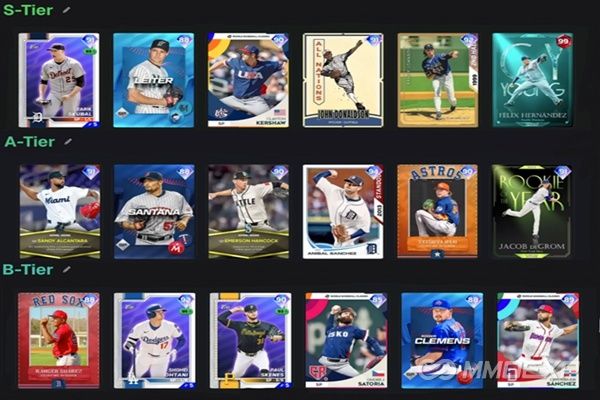
This guide breaks down the current starting pitcher meta using a full tier list system. We'll cover who belongs in S Tier, which free cards are worth grinding for, and which pitchers should stay far away from your lineup.
It's important to note one thing before we begin: difficulty matters. On All-Star and lower difficulties, this year's game heavily favors hitters. Even elite pitchers can get shelled if your opponent is good. On Hall of Fame and Legend, however, pitch sequencing, speed differentials, and deceptive releases become far more valuable.
So with that in mind, let's rank the best starters in MLB The Show 26.
S Tier – Must-Use Rotation Aces
These are the pitchers who should make your lineup immediately if you own them. They combine elite stuff, deceptive mechanics, and the ability to dominate even strong hitters.
Tarik Skubal
At the moment, many players consider Tarik Skubal the best pitcher in the game. He combines velocity, control, and enough movement to keep hitters uncomfortable all game long. His delivery feels smooth and difficult to read, and he can attack all parts of the strike zone.
If you want reliability, Skubal is one of the safest options available.
Randy Johnson
Randy Johnson continues to be terrifying in MLB The Show. Even without personally facing him often, the card profile alone screams dominance. His height, left-handed angle, and overpowering velocity make him one of the hardest pitchers to square up.
Any time Randy Johnson appears in Diamond Dynasty, he becomes relevant.
Al Leiter
One of the best values in the game, Al Leiter is a free option and absolutely worth obtaining. His biggest strength is pitch differential. A fast sinker paired with an off-speed pitch in the low 80s creates constant timing issues.
Even if hitters know what's coming, they often still struggle to adjust.
Clayton Kershaw
This version may not be as dominant as previous years, but Kershaw remains elite. His curveball, slider, and left-handed release point make him dangerous in any matchup.
Experienced players know how effective Kershaw can be when tunneling pitches properly.
Jon Lester
Lester may only be a 91 overall right now, but his card plays above the rating. He has a deceptive release, quality mix, and a forkball that gets ugly swings. He'll likely receive stronger cards later, but even now he's rotation-worthy.
Félix Hernández
Felix is still strong because he's a 99 overall, but he has some concerns. He lacks a huge speed differential and can get hit on lower difficulties. He's best on Legend, where movement and sequencing matter more than raw velocity.
Still strong now—but may age quickly as stronger cards release.
A Tier – Excellent Options Just Below Elite
These pitchers may not be universal must-starts, but they can absolutely carry games.
Johan Santana
Santana stands out as one of the best pitchers outside S Tier. Many players feel he belongs in his own mini-tier between A and S. Great movement, left-handed angle, and excellent pitch variety make him dangerous.
Emerson Hancock
Hancock thrives because of a funky release. Against opponents unfamiliar with him, he can dominate. He's especially effective on All-Star where timing matters most.
Jacob deGrom
Still dangerous, but lacking Outlier right now hurts him. Once stronger versions arrive later in the cycle, expect him to jump tiers.
Satchel Paige
A fun and effective option depending on difficulty. On higher levels, his unpredictability can shine.
Corbin Burnes
Burnes is elite on Hall of Fame and Legend due to movement and precision. On All-Star, however, he can become batting practice if your opponent reads sinkers well.
Corey Kluber
Kluber remains a classic meta pitcher. Good release, great sinker/cutter combo, and years of success in The Show make him dependable.
Free A-Tier Cards Worth Grinding
Some of the best no-money-spent options include:
Ryan Schimpf
Liam Doyle
Corbin Burnes
Corey Kluber
Santana
These cards are obtainable through programs or Team Affinity and can anchor rotations without spending MLB 26 stubs.
B Tier – Solid Starters With Noticeable Flaws
These pitchers are usable and can win games, but something holds them back.
Shohei Ohtani
A controversial ranking. Many players love Shohei, but his new release angle is easier to read this year, and he lacks overwhelming velocity. His pitch mix is fine, but not terrifying.
Paul Skenes
Great arm talent, but current version lacks enough speed differential and no Outlier yet. Once upgraded cards arrive, he'll rise significantly.
Roger Clemens
Can throw heat, especially when Parallel upgraded, but control issues become dangerous at higher difficulties. He lacks the devastating pitch gap that elite cards possess.
Michael Lorenzen & Ranger Suárez
These are dependable "fine" options. Not stars, but perfectly serviceable if you need innings.
Christopher Sánchez / Nolan McLean
Good pitch mixes, but many players report they get shelled too often. Day-one familiarity hurts them because everyone has seen them already.
C Tier – Spot Start Only
These pitchers can occasionally work, but are inconsistent and risky.
Chris Sale
Sale's arm angle is unique, but experienced hitters adjust quickly. Once opponents see one inning of his release, they often begin squaring him up. Strong versus inexperienced players, shaky versus veterans.
Gerrit Cole
One of the easiest pitchers to hit right now. No Outlier, mediocre H/9, and readable release point.
Justin Verlander
Better stats than Cole, but similar problem: easy to see and lacking truly scary movement.
Zack Wheeler / Logan Webb
Can be effective in the right hands, but many players have faced them countless times. Familiarity lowers their ceiling.
Yu Darvish
Great sinker, but too dependent on that one weapon.
Framber Valdez
Deceptive enough to steal innings, especially against unfamiliar opponents.
Eduardo Rodríguez
Arguably one of the better C-tier names, but overused. Players have seen him too much, reducing effectiveness.
Negro League Options
Several Negro League pitchers have fun pitch styles, but many lack velocity or top-tier stats. Some can surprise opponents, but few feel trustworthy long term.
D Tier – Avoid Unless Necessary
These pitchers are technically usable, but there's rarely a reason to choose them.
Whitey Ford
Lacks velocity and doesn't bring enough deception.
Bob Feller
Poor overall attributes compared to alternatives.
Steve Carlton
Being left-handed helps, but velocity is too weak.
Clay Holmes
Fine in theory, but better bullpen than starter style.
Dontrelle Willis
Unique windup looks intimidating, but many players read him easily. Once hitters adjust, damage comes fast.
Others in D Tier
Several cards have quirky deliveries or one interesting pitch, but not enough overall quality to justify regular starts.
F Tier – Never Use These Cards
These are the cards best left off your roster entirely.
Greg Maddux (Current Version)
Maddux will likely become excellent later in the year with stronger cards. Right now, his current version lacks enough velocity and dominance.
Luis Gil
48 control is nearly unplayable, especially at higher levels. Too many random misses.
Spencer Strider
Only four pitches, two of which are fastballs. Strong strikeout stats, but poor variety makes him easy to predict.
Seth Hernandez
Many players report his hand motion makes pitches easy to identify immediately. If hitters know what's coming, he gets destroyed.
Bert Blyleven
Tried by many, but results are disappointing. Nothing especially redeeming in the current meta.
Bill Foster / Leon Day / Cool Papa Bell Pitching Cards
Poor stats and weak pitch mixes make them non-competitive choices.
Best Free Pitchers in MLB The Show 26
If you are no-money-spent, these are excellent targets:
Al Leiter – S Tier free ace
Corbin Burnes – Great on higher difficulties
Corey Kluber – Trusted meta arm
Santana – Elite free option
Ryan Schimpf / Liam Doyle – Strong value cards
Grinding programs and Team Affinity is absolutely worth it this year.
How to Choose Pitchers in MLB The Show 26
Instead of only looking at overall rating, prioritize:
1. Pitch Speed Differential
A 95 mph sinker and 83 mph changeup is often better than pure 102 mph heat.
2. Release Point
Some pitchers feel unhittable because of arm angle or animation.
3. Pitch Mix
Sinker/cutter/changeup/slider combinations are stronger than repetitive fastball-heavy arsenals.
4. Difficulty Level
All-Star: Hitters dominate more often
Hall of Fame: Control and sequencing matter more
Legend: Elite pitchers become significantly stronger
Final Thoughts
MLB The Show 26 currently rewards offense heavily, especially on lower difficulties, meaning no pitcher is invincible. Even S-tier aces can get rocked by elite hitters. Still, using the right starter gives you a massive edge.
If you want the safest elite rotation today, target:
Tarik Skubal
Randy Johnson
Al Leiter
Clayton Kershaw
Jon Lester
If you're no-money-spent, focus on free A-tier and S-tier cards through programs.
And if you're still running weak live-series pitchers with bad control and shallow arsenals, now is the time to upgrade. In MLB The Show 26, the gap between elite pitchers and average pitchers is the difference between surviving five innings—or giving up eight runs by the second.
MMOexp MLB 26 Team