Weekend Drop -











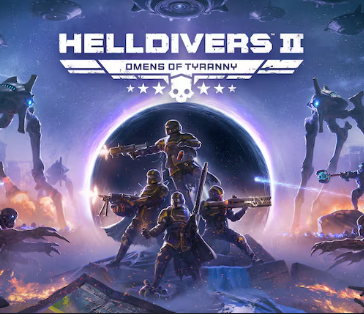
Two years into the war, Helldivers 2 is deeper, louder, and more flexible than ever. With the Battle for Cyberstan in full swing, this is the perfect moment for a fresh, practical guide—whether you're a brand-new recruit or a returning veteran shaking the rust off your boots. Let's get you combat-ready.
The Core Loop: Build Your Diver, Pick Your Tools, Finish the Job
One of the best evolutions since launch is just how many ways you can play. Go in loud, creep in quiet, tank damage, or sprint circles around the enemy—the game supports it all.
Every mission loadout starts with three weapon slots:
Primary: Your main workhorse—assault rifles, marksman rifles, explosive and special weapons all live here.
Secondary: Utility and cleanup—pistols and SMGs for weaker targets or tight spaces.
Grenade: Your panic button, crowd control, or armor cracker, depending on type.
Weapon Progression (and Why It Matters)
Your primary weapons level up all the way to 25, unlocking attachments, camos, and four custom loadout presets per gun. This lets you keep different "versions" of the same weapon for different missions—say, a recoil-controlled setup for open maps and a punchier build for close quarters.
Important caveat: crossover weapons (like certain special collab guns) don't use this progression system—but many of them are still strong out of the box.
Traits, Armor, and Penetration
Every weapon has traits that define its role, and every enemy comes with armor tiers:
Light armor
Medium armor
Heavy armor
This applies to you and them. If you bring a light-penetration weapon against heavy armor, you'll mostly get ricochets unless you hit weak spots. Medium-penetration guns are more forgiving, and heavy-penetration tools are for the real threats.
Your own armor works the same way in reverse:
Light armor: Fast, great stamina regen, but fragile.
Heavy armor: Tough as nails, but slow and clunky.
Medium armor: The balanced middle ground.
Each armor piece also has an intrinsic trait (stealth bonuses, extra stims, etc.), so hover over gear and tailor it to how you actually play.
Stratagems: Your Real Power
For most missions, you'll bring four stratagems—a mix of orbitals, Eagle strikes, deployables, backpacks, and turrets. This is where the game truly opens up.
A few rules of thumb:
Read the mission briefing. It tells you what kind of problems you're about to solve.
Check cooldowns and use cases. A tool with fewer uses but massive impact might beat a spammable strike, depending on the mission.
Bring at least one "answer" to big threats. Anti-tank, heavy explosives, or a powerful turret can save a run.
Synergy matters. A shield generator pairs beautifully with light armor; a jump pack can make heavy armor feel mobile again.
As you level up, Arrowhead Game Studios steadily unlocks more firepower for you. Don't just chase raw damage—think about reliability, cooldowns, and how often a stratagem will actually save your squad.
Where Gear Comes From: Warbonds, the Superstore, and Currencies
The live-service economy is built around Warbonds (think battle passes, but permanent) and the Superstore.
The Three Main Currencies (Plus One More)
1.HD2 Super Credits (Premium, but farmable):
Used to buy Warbonds or Superstore items.
Found in pods and bunkers during missions—30 per match is common, 50+ is possible, and some players have even hit ~100 in a single run.
Warbonds never expire—no FOMO here.
2.Warbond Tokens:
Used to unlock items inside Warbonds.
Earned by: completing missions, major orders, minor orders, and finding them in missions.
Helldivers 2 Items cost different amounts, and spending tokens unlocks new pages.
You can hold up to 250 at once.
3.Requisition Slips:
Used for upgrades: weapon progression unlocks, stratagem unlocks, and ship module upgrades.
Cap: 50,000.
Earned through missions and exploration (pods/bunkers).
4.Samples (The Upgrade Bottleneck):
Common (green), Rare (orange), Super (purple)
Picked up in missions and must be extracted to keep them.
Super samples only appear from difficulty 7+, and greater difficulties mean more of them.
Ship modules require both requisition and samples, and each module has five upgrade levels. The deeper you go, the steeper the costs—so pick upgrade paths that actually fit your playstyle (cooldowns, Eagle upgrades, turret buffs, etc.).
Pro tip for Super Samples: Clear every point of interest. They spawn next to a very distinctive rock formation—you'll learn the silhouette over time. Remember: credits, requisition, and Warbond tokens don't require extraction, but samples do.
Mission Difficulty, Rewards, and Why Pushing Higher Is Worth It
There are 10 difficulties. As you climb:
You earn more XP, more requisition, more Warbond tokens
You gain access to better and more numerous samples
You get difficulty modifiers that increase rewards
Star ratings depend on difficulty and performance (objectives completed, divers extracted, outposts destroyed, time remaining). Full clears at higher tiers are the fastest way to progress.
Warbond token payouts also scale in three-mission clusters, so tougher runs = faster unlocks.
Orders and Modifiers: Read Before You Drop
Major Orders: Global objectives that push the story and reward everyone if completed.
Minor Orders: Personal challenges (specific kills, mission types, etc.) that pay 15 Warbond tokens.
Before each mission, check modifiers. Some are boons (extra stratagems, free gear), others are pain (longer cooldowns, more enemies, ion storms disrupting call-ins). These should absolutely influence your loadout choices.
Know Your Enemies (and Pick the Right Tools)
Different factions demand different answers:
Terminids: Flesh and swarms—fire and area control shine.
Automatons: Armor and range—bring penetration and heavy hitters.
Illuminate: Somewhere in between—adaptability is key.
There is no single "best build." Some tools (like an autocannon turret, a big bomb, or a shield backpack) are broadly useful, but mission type matters:
Defense: Turrets, sustained fire, area denial.
Search & Destroy: Big explosives—lasers, thermite, heavy bombs.
Commando Missions (new favorite): Limited call-ins (only two uses of the Super Destroyer). This makes carryable, persistent gear like jump packs, heavy weapons, or exosuits far more valuable, while spammable airstrikes lose some shine.
The real meta? Fun that still works. Bring tools that can hurt the enemy you're facing—and that you actually enjoy using.
Weak Spots, Visual Cues, and Smarter Shooting
Enemies telegraph their vulnerabilities:
Glowing vents, exposed joints, or differently colored armor plates usually mean "shoot here."
Some heavy units can be crippled or outright destroyed by hitting these spots, even with lighter weapons.
The game's hit feedback will also tell you if your gun is ineffective—don't ignore it. Swap targets, change angles, or change tools.
Example trade-offs: A heavy-penetration rifle might delete armored targets, but it's risky in tight swarms. Pair it with an SMG secondary to clear trash mobs and save the big shots for big threats.
A Simple, Practical Loadout Philosophy
If you want a no-nonsense baseline:
One backpack (survivability or mobility)
One orbital or Eagle strike (burst damage or area clear)
One turret (area control or sustained DPS)
A primary that matches the enemy's armor tier
On Cyberstan-style automaton fights? Bring medium penetration at minimum and something that hits hard (autocannon/rocket sentry over light machine-gun style tools). Against bugs? You can often get away with lighter penetration and more crowd control. Against Illuminate? Split the difference.
And yes—thermite is still incredible.
Final Word: Don't Optimize the Fun Out of It
You'll learn Helldivers 2 by playing it—by failing, adapting, and slowly building instincts for which tools solve which problems. Coordinate with friends, experiment with weird builds, and let mission types guide your choices.
As long as you bring something that can actually damage what you're fighting, you're doing it right.
Welcome back to the front, Diver. Now get in the pod—democracy isn't going to spread itself.
MMOexp Helldivers 2 Team