Weekend Drop -











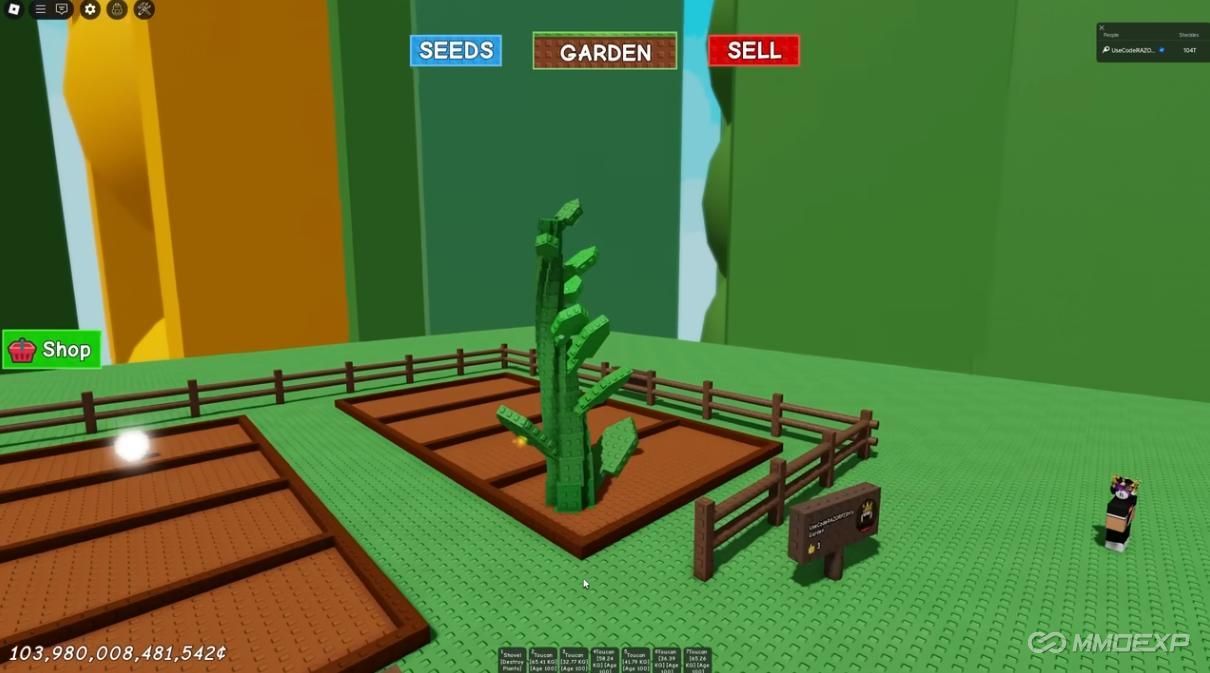
In the world of farming simulators and sandbox games, growing a simple seed into a towering plant is usually just part of the fun. But when you take modded tools, experimental commands, and a little creativity, those ordinary crops transform into massive, glitch-defying marvels."Grow a Garden," a popular modded game experience, takes farming to absurd new levels. What begins with a small beanstalk seed can escalate into plants weighing thousands of kilograms, donuts larger than houses, and mysterious admin-only plants that most players will never even glimpse.
This article dives into the incredible journey of cultivating these oversized creations, the mechanics behind them, the thrill of discovering hidden seeds, and the sheer chaos of trying to manage crops so big they literally break the game's logic.
From Tiny Beanstalk to 6,500 Kilograms
The adventure begins with what looks like an ordinary beanstalk seed. At first glance, nothing about it screams"record-breaking harvest." Yet, with a mix of persistence and experimental farming techniques, this small seed produced a crop weighing an unfathomable 6,500 kilograms.
The result? A plant so large that the game itself struggled to render it. Even when holding it, the player couldn't see the beanstalk—it was simply too massive for the camera and environment to handle. A free-cam mode revealed the full extent of this virtual monster, defying the intended mechanics of the game.
And this wasn't just about size. That colossal beanstalk came with a mutation, boosting its value astronomically. On its own, that plant was valued at 35 billion in-game currency. For comparison, a smaller"normal" harvest of 3,600 kilograms—already far beyond what one might expect in a farming game—was still worth nearly 4 billion.
It was clear from this experiment: scale wasn't just cosmetic. Bigger crops meant bigger payoffs, both visually and economically.
The Struggle of Harvesting the Unharvestable
As thrilling as these giant plants were, actually collecting them presented a new challenge. Basic harvesting commands like pressing"E" simply didn't register—the game's systems couldn't recognize the oversized crops as interactable objects.
The solution? Specialized harvesting tools with limited uses. Once applied, all crops within a radius were selected and harvested at once, bypassing the broken mechanics. This"all or nothing" approach added another layer of chaos: harvesting meant managing a flood of oversized, glitched-out items that barely fit on screen.
This difficulty underscored a central theme of"Grow a Garden": the bigger your ambition, the more the game pushed back against your attempts to tame it.
The Mystery of Admin-Only Seeds
As impressive as the gigantic beanstalks were, they weren't the only curiosity hidden within the game. A whole tier of admin-only seeds existed—rare, powerful, and usually unobtainable by normal players.
Among the most famous of these was the Purple Cabbage, widely regarded as the most well-known admin seed. Unlike other secret crops, the Purple Cabbage could sometimes be"stolen" from admin gardens, making it one of the few exclusive plants that players outside the dev team might actually encounter.
Other seeds, however, remained far more elusive:
Crimson Vine – rumored but unplantable in most builds.
Mega Mushroom – so secret that even modded versions of the game excluded it.
Golden Variants – ultra-rare versions of plants like the Purple Cabbage, shimmering with prestige.
These admin seeds represented both aspiration and frustration. Their existence teased players with possibilities, fueling experimentation and community speculation. But their inaccessibility reminded everyone that some mysteries of the garden were locked behind developer walls.
Beyond Beans: Donuts, Moon Cats, and Size Multipliers
Experimenting with seeds quickly grew beyond beans and cabbages. Why stop at plants when you could cultivate giant donuts glazed with sugar, stretching across fields like edible monuments?
Using a combination of admin commands, multipliers, and assistive creatures, players discovered ways to maximize size and yield. Two mechanics in particular stood out:
Moon Cats – special creatures that"napped" every few seconds, boosting the growth of nearby crops by massive multipliers. At base level, their presence made fruits 7x larger. But with size multipliers stacked, a Moon Cat could push that boost to over 37x, turning even modest crops into titanic harvests.
Sugar Glaze Donuts – not just a novelty, but a viable crop to push scaling experiments. By combining Moon Cats with massive planting commands, donuts weighing over 20,000 kilograms became possible. Some even transformed into golden variants, amplifying their value.
The result? A farming system that blurred the line between agriculture and alchemy, where donuts rivaled skyscrapers and cats shaped the laws of physics.
Mutations and the Jando Monkey
Another fascinating layer of the game came with mutations. Certain creatures, like the Jando Monkey, could rapidly apply mutations to plants, stacking dozens of variations onto a single crop.
In one experiment, a massive beanstalk was infused with nearly 30 unique mutations—everything the Jando Monkey could provide. On paper, this should have produced a plant of unparalleled value and uniqueness.
In practice? The game struggled once again. The crop became visually glitched, with overlapping effects that made it look more like a surreal hybrid of chocolate and frozen textures than a coherent plant. Worse still, attempts to collect the mutated beanstalk often failed—the system simply couldn't process the combination of massive size and layered mutations.
Still, the concept was clear: mutations represented another frontier for growth. It wasn't enough to just go bigger—you could also go stranger.
When Growth Breaks the Game
The real magic of"Grow a Garden" lies not in its polished farming mechanics but in its chaotic unpredictability.
Every step toward a larger harvest also pushed the game closer to collapse. Invisible crops, broken harvesting commands, and visual glitches weren't bugs to fear—they were badges of honor. They showed that you'd gone beyond the boundaries of what was possible.
This tension between intended play and experimental excess gave the game its unique charm. A regular farming simulator might pride itself on balance and realism."Grow a Garden," in contrast, thrived on imbalance, encouraging players to see just how far they could push the system before it snapped.
The Community and Future Updates
Much of the excitement around these experiments comes from the community. Players share screenshots of glitched harvests, speculate about admin seeds, and trade tips on stacking multipliers. The question is rarely"How do I play efficiently?" but rather,"How can I break the game in the most spectacular way possible?"
With new updates on the horizon, there's anticipation for more admin seeds, new creatures, and possibly expanded systems for mutations and scaling. Rumors swirl about unreleased mushrooms, ice cream plants, and other whimsical additions. Each update feels less like routine patchwork and more like an invitation to unleash new chaos.
Why We Love Growing the Impossible
At its core, the thrill of"Grow a Garden" isn't really about farming. It's about creation, discovery, and absurdity. Watching a tiny seed balloon into a 6,500 kg monster, or holding a donut so massive it doesn't fit on screen, taps into something deeply satisfying.
It's the joy of bending rules, the delight of stumbling across hidden content, and the wonder of seeing how far a system can be stretched. In a digital garden, imagination becomes as important as sunlight and water.
Final Thoughts
"Grow a Garden" may look like just another farming game on the surface, but its modded systems and secret mechanics elevate it into something far stranger and more exciting. From colossal beanstalks to golden donuts, from admin-only seeds to mutation overloads, the game transforms the simple act of gardening into a sandbox of chaos and creativity.
It's not about efficiency. It's not even really about farming. It's about asking a simple question—what happens if I make this bigger?—and then watching in awe as the answer spirals into the absurd. MMOexp provides abundant Grow a Garden Sheckles and Grow a Garden Items to help you build your gaming dreams and enjoy the fun of the game.
As new updates roll out and the community continues experimenting, one thing is certain: the garden will keep growing, both in size and in imagination.
MMOexp Grow a Garden Team