









For years, multi-platform sports titles have struggled to reach their full potential whenever the Nintendo Switch has been part of the release lineup. The reasoning is straightforward: while next-generation consoles such as the PlayStation 5 and Xbox Series X/S push graphical, performance, and physics standards forward, the original Switch has remained technologically stagnant. Developers have been forced to scale games down, delay updates, and sacrifice visual fidelity to keep titles running across all systems.
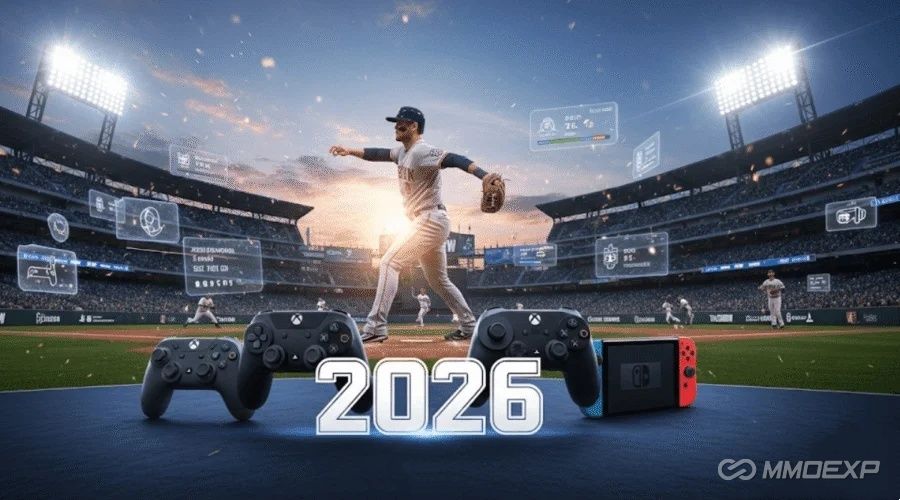
MLB The Show has been one of the most visible victims of this dynamic, with its Switch versions consistently failing to match the experience offered on Sony and Microsoft platforms. But MLB The Show 26 may be the turning point. With rumors increasing that the title could ship on Nintendo’s upcoming Switch 2 rather than the aging original hardware, expectations for the franchise’s visual quality, performance, and development workflow are higher than ever.
Below is a comprehensive breakdown of what went wrong with the Switch release, why those issues mattered, and how a transition to the Switch 2 could dramatically reshape the future of MLB The Show.
What Went Wrong With MLB The Show on the Switch?
The irony is that the Switch version of MLB The Show 25 did not technically “fail.” It behaved exactly as expected given the hardware limitations. The problem stemmed from the console’s dated specifications—limitations that ultimately dragged down the entire multi-platform development pipeline.
Aiming for Cross-Platform Support Created Compromises
San Diego Studio (SDS) designed MLB The Show 25 to be fully cross-platform, ensuring that players on all consoles could compete and share the same experience. On paper, this sounds ideal. In practice, it forced the studio to design around the lowest common denominator: the original Nintendo Switch.
Instead of building feature sets tailored to each platform’s strengths, SDS had to scale back or simplify various components to ensure the game ran consistently across all systems. This ultimately hurt all players, not only Switch users.
Lower Graphics and Simplified Assets
The most visible compromise came in the form of downgraded graphics.
Switch players faced:
• Significantly reduced texture quality
• Lower polygon counts on player models
• Minimal stadium detail
• Simplified animations and cutscenes
Sports games thrive on immersion, and MLB The Show places heavy emphasis on crowd fidelity, batter rituals, stadium lighting, and the visual drama surrounding each pitch. On the Switch, these details were often stripped out or minimized entirely.
Even worse, PlayStation and Xbox players indirectly suffered. SDS spent so much time optimizing assets for the weaker Switch hardware that opportunities for major visual upgrades on next-gen consoles were reduced.
Engine Optimization Bottlenecks and Feature Limitations
Optimizing MLB The Show for the Switch’s limited GPU and RAM created additional pressure on SDS’s engineering team. Instead of pushing forward with ambitious new features—improved physics, smarter AI, deeper simulation layers—they often had to rework existing components to avoid crashes or performance drops on the Switch.
This resulted in:
• Fewer meaningful gameplay engine enhancements
• Smaller year-over-year improvements
• Recycled animations and assets
• Stagnant presentation updates
The Switch wasn’t just visually weaker; it slowed game evolution across the board.
Platform Certifications and Delayed Releases
Nintendo’s certification process is stricter—and often slower—than Sony’s or Microsoft’s. Combined with the extra QA required to account for Switch-specific bugs and performance issues, MLB The Show 25’s development timeline suffered additional delays.
These delays reduced the time SDS had for polishing next-gen versions and directly contributed to the underwhelming launch experience many players reported.
How MLB The Show 26 Could Benefit from the Switch 2
The rumored Switch 2 represents a massive leap in hardware capability for Nintendo. While official specs have not been confirmed, reputable leaks point to a custom NVIDIA chip, stronger GPU performance, modern DLSS or DPSS upscaling technology, and even ray tracing support.
If MLB The Show 26 releases on the Switch 2 instead of the original Switch, the improvements could be substantial.
Stronger Hardware Means Better Visual Quality
The Switch 2 is expected to support much higher graphical fidelity, allowing SDS to deliver:
• Higher-resolution textures
• More realistic stadium lighting
• Improved player animations
• Better crowd detail
• Smoother environmental effects
Critically, the Switch 2 should finally be capable of running MLB The Show at a consistent 60 FPS—something the series has struggled to achieve on the original Switch without severe compromises.
Fewer Crashes and Smoother Framerates
With more CPU and RAM headroom, the console should handle:
• Faster loading times
• More stable gameplay
• Less hitching during fielding and batting
• Better performance in high-intensity moments
This alone would dramatically improve the quality of the Switch-based MLB The Show experience.
Development Efficiency Will Improve Across All Platforms
By no longer needing to fully optimize for outdated, underpowered hardware, SDS could reallocate developer time toward designing next-gen features rather than disabling them.
That opens the door for:
• More advanced physics
• Better AI and deeper simulation layers
• More frequent and robust content updates
• Higher-quality presentation packages
In short: fewer compromises, more innovation.
Will the Switch 2 Compete With PlayStation 5 and Xbox Series X/S
While the Switch 2 is expected to be a major upgrade, it is unrealistic to assume it will match next-gen hardware from Sony and Microsoft. The PlayStation 5 and Xbox Series X/S still hold a massive performance edge—especially in raw GPU power and high-end storage architecture.
Realistically:
• MLB The Show 26 on Switch 2 should exceed PlayStation 4 quality.
• It may approach early PS5/Xbox Series standards in some areas with upscaling.
• But it will not rival the premium fidelity available on next-gen platforms.
However, matching or surpassing PS4 quality alone would be a monumental improvement over what Switch players previously experienced.
The One Unknown Variable: Platform Confirmation
As of now, SDS has not formally confirmed the complete platform lineup for MLB The Show 26. Most industry analysts expect the Switch 2 to be included, but there is always a little possibility that the developers stick to the original Switch for one more year to maintain market reach.
If that happens, the consequences would be severe:
• MLB The Show’s visuals would stagnate again.
• Next-gen improvements would be limited.
• Performance issues could reappear.
• Community frustration would likely spike.
Given the industry reaction to MLB The Show 25, SDS would face heavy criticism if it remains tied to a platform that clearly cannot support the modern gameplay standard.
Final Thoughts
MLB The Show 26 represents an important crossroads for both the franchise and its multi-platform development strategy. The original Switch held back innovation, reduced graphical quality, and forced widespread compromises that affected the entire player base. The upcoming Switch 2 has the potential to reverse that trajectory, allowing SDS to deliver a more modern, visually impressive, and smoother baseball experience. This time, players will definitely not be disappointed. MMOexp will also provide users with ample MLB 26 Stubs to ensure that players can enjoy the game as soon as possible.
While the Switch 2 will not rival the PlayStation 5 or Xbox Series X/S, it does not need to. It simply needs to be powerful enough to handle MLB The Show without forcing SDS to downgrade next-gen releases.
If SDS embraces the Switch 2, MLB The Show 26 could mark the franchise’s most meaningful leap forward in years. If not, history may repeat itself—and players across all platforms will once again feel the consequences.
MMOexp MLB 26 Team