

Summary
Recruiting in College Football 27 is more competitive than ever, and mastering the new NIL system is essential for building championship-caliber teams. This guide explains why offering the right NIL package early is far more effective than waiting, how compounding recruiting interest works with College Football 27 Coins, and the smartest way to allocate your recruiting budget throughout a Dynasty season.
Step 1: Understand How the New NIL Recruiting System Works
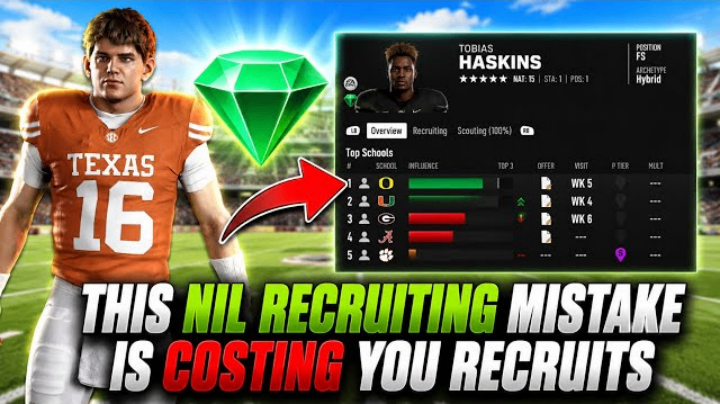
One of the biggest additions to College Football 27 Dynasty Mode is the expanded NIL (Name, Image, and Likeness) recruiting system. Unlike previous recruiting mechanics that mainly revolved around scholarships and recruiting hours, NIL now plays a critical role in determining whether elite prospects commit to your program.
Many players make the mistake of assuming they should begin every recruitment with the recruit's expected NIL amount before increasing their offer later if competition appears.
While this sounds like a safe strategy, it ignores one of the most important mechanics in the game:
Recruiting interest compounds every single week.
That single mechanic completely changes how you should approach recruiting.
Step 2: Why Waiting to Increase NIL Is Usually a Mistake
A common strategy among Dynasty players is to offer only the recruit's expected NIL amount at first.
The logic seems reasonable:
Wait to see what competing schools offer.
Save NIL resources early.
Increase the offer only if necessary.
Unfortunately, this approach sacrifices valuable recruiting momentum.
Imagine two schools recruiting the same five-star cornerback.
School A immediately offers a premium NIL package.
School B offers only the expected baseline amount.
After Week 1, School A has already gained significantly more recruiting interest.
Even if School B increases its offer in Week 2, it can never recover the recruiting interest that was lost during Week 1.
The recruiting race isn't reset each week—it builds over time.
Every week starts from where you finished the previous one.
That makes early investment much more valuable than late investment.
Step 3: Create NIL Tiers Instead of Using One Offer for Everyone
Instead of treating every recruit equally, successful Dynasty players divide prospects into recruiting tiers.
A simple NIL allocation strategy looks like this:
Tier 1 — Generational Players
Offer close to the maximum NIL package.
These are franchise-changing recruits.
Examples include:
Elite quarterbacks
Five-star pass rushers
Game-breaking wide receivers
If missing this player hurts your entire recruiting class, don't hesitate.
Tier 2 — Must-Have Starters
Offer approximately 1.5× the expected NIL amount.
These players perfectly fit your scheme and are expected to start immediately.
They're not once-in-a-generation talents, but they are priorities.
Tier 3 — Valuable Targets
Offer roughly 1.25× expected NIL.
These recruits improve your roster but aren't irreplaceable.
If another school wins them, your recruiting class remains strong.
Tier 4 — Depth Players
Offer only the expected NIL amount.
These include:
Backup corners
Developmental linebackers
Third-string safeties
Future rotational players
There's little reason to overspend on players who aren't critical to your future lineup.
Step 4: Recruiting Is a Race, Not a Bidding War
Many players think recruiting is about matching whatever another school offers.
It isn't.
It's about reaching the finish line first.
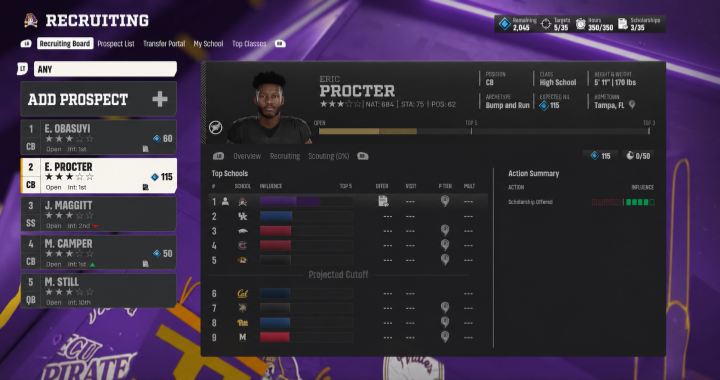
Every recruiting week adds more influence to your total score.
Think of it like running a mile.
If one runner sprints ahead during the first lap, matching their speed later doesn't erase the early advantage.
The same applies to recruiting.
Early NIL creates momentum.
Late NIL simply helps maintain pace.
By the time you finally match another school's offer, they may already have multiple weeks of accumulated recruiting interest.
That lead often becomes impossible to overcome.
Step 5: Opportunity Cost Matters More Than Saving Money
One of the biggest misconceptions is believing delayed NIL offers save resources.
In reality, they usually don't.
Eventually, if the recruit becomes highly contested, you'll still end up offering nearly the same NIL package.
The difference is:
You spent the same amount.
You earned fewer weeks of recruiting interest.
You entered the final weeks behind competing schools.
That is classic opportunity cost.
Instead of saving NIL, you're sacrificing recruiting efficiency.
Step 6: Prioritize Your Recruiting Board Correctly
Not every recruit deserves maximum attention.
A successful Dynasty class requires balancing priorities.
For example:
Your board may include:
One elite cornerback
One future starting safety
One backup safety
Two developmental receivers
The elite cornerback deserves aggressive NIL investment immediately.
The backup safety doesn't.
If another school lands your backup plan, your class remains intact.
But if you lose your top corner because you tried to save NIL during Week 1, rebuilding that position becomes much harder.
The best recruiters spend aggressively only where it truly matters.
Step 7: Don't Be Afraid to Overestimate Early
Some Dynasty players hesitate because they fear overpaying.
Fortunately, College Football 27 gives you flexibility.
If a recruit receives almost no competition, you can always remove them from your board later.
You aren't permanently committed.
It's much easier to scale back recruiting than it is to recover weeks of lost recruiting interest.
Missing an elite recruit is far more damaging than slightly overestimating their market value.
Step 8: Rainmaker Makes Early NIL Even Stronger
Players using the Rainmaker recruiting upgrades gain an even greater advantage from early NIL offers.
Rainmaker boosts recruiting influence generated from NIL.
That means an aggressive Week 1 offer receives bonus value every single recruiting cycle.
For example:
Week 1:
Larger NIL influence
Week 2:
Larger NIL influence again
Week 3:
Another boosted recruiting gain
Waiting until Week 3 to increase your NIL means you only receive the bonus once instead of benefiting from multiple weeks of compounding influence.
The earlier you invest, the more valuable Rainmaker becomes.
Step 9: Support Staff Can Stretch Your Recruiting Budget
One underrated Dynasty strategy involves hiring support staff that reduce NIL expectations.
Lower NIL expectations allow your recruiting budget to stretch further.
Instead of paying premium prices across your entire recruiting board, you can afford stronger opening offers for priority recruits while still maintaining financial flexibility later in the season.
Combined with smart NIL tiering, this creates one of the most efficient recruiting systems available.
Step 10: Build Recruiting Momentum From Week One
The biggest takeaway is simple:
Don't wait to decide how much a recruit is worth.
Determine that value before recruiting begins.
Once you've categorized each prospect, offer the appropriate NIL package immediately.
This approach provides:
Maximum weekly recruiting interest
Stronger long-term momentum
Better positioning against user-controlled schools
Greater success during competitive recruiting battles
Players who aggressively target their must-have recruits early often finish with stronger recruiting classes than players who carefully conserve every NIL dollar.
Winning recruiting battles isn't about spending the least amount of money—it's about investing your resources at the right time.
Final Thoughts
The NIL system in College Football 27 rewards proactive recruiting rather than reactive bidding. Because recruiting interest compounds week after week, delaying competitive NIL offers often leaves your program permanently behind in close battles. Organizing recruits into priority tiers, investing aggressively in elite targets from Week 1, cheap College Football 27 Coins, and using support staff or recruiting upgrades to maximize value will consistently produce stronger recruiting classes. Whether you're competing against the CPU or battling other users in an online Dynasty, mastering NIL strategy is one of the fastest ways to build a championship program and dominate College Football 27 for years to come.