Weekend Drop -











With only a couple of months to go before the launch of Diablo IV's second expansion, anticipation is building. Blizzard has already outlined sweeping changes, new content, and major system updates designed to push the endgame forward. But while much of the discussion has focused on expansion-specific features, there's one core system that likely won't see significant changes-at least not yet-and that's the Paragon Board.
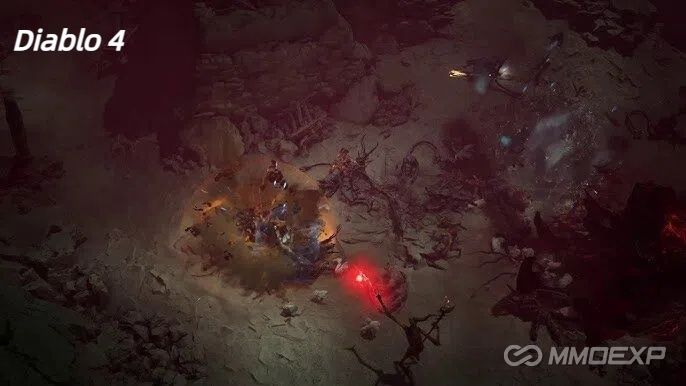
Interestingly, the Paragon system isn't broken. In fact, it's one of the more thoughtfully designed endgame progression systems in Diablo IV. It accomplishes what it sets out to do: provide incremental power growth after hitting max level, without devolving into an infinite grind. Compared to the Paragon levels of Diablo III, Diablo IV's board system is more structured, more strategic, and far less about endless stat stacking.
But "not broken" doesn't mean "perfect." The Paragon system is ripe for meaningful refinement-particularly in how it handles quality of life and long-term itemization. A well-executed overhaul could transform it from a solid progression system into one of Diablo IV's most compelling endgame pillars.
Let's break down how.
The Paragon Board: Solid Foundations
At its core, the Paragon Board is meant to extend character progression beyond level cap. It provides gradual increases in power, primarily through:
Board selection
Glyph selection
Rare and Magic node optimization
Importantly, it isn't designed to redefine your build the way skills or legendary aspects do. Instead, it enhances and reinforces what you've already built.
And in that sense, it works.
Unlike Diablo III's endlessly scaling Paragon system, Diablo IV's boards are finite. There's a clear ceiling. You plan routes, optimize efficiency, and make meaningful structural decisions about which boards to attach and how to rotate them. That finite nature gives it structure and identity.
But once you understand the optimal paths-and especially once the community has solved them-the system starts to feel routine rather than expressive.
That's where improvement becomes possible.
Quality-of-Life Upgrades: Small Changes, Big Impact
Before diving into larger structural ideas, there are several quality-of-life (QoL) improvements that could dramatically enhance the Paragon experience without reinventing it.
1. Savable Paragon Profiles
Diablo IV already has an Armory system for builds, but Paragon Boards deserve deeper flexibility.
Imagine being able to:
Save full Paragon configurations under custom names
Instantly swap between them in town
Maintain multiple variations for different content (PvP, bossing, speed farming, etc.)
While Diablo 4 gold costs for respecs are relatively insignificant in the late game, the time cost and friction remain real. Players who experiment with multiple builds-or even slight content variations-would benefit tremendously from profile-based switching.
This encourages experimentation instead of discouraging it.
2. Paragon Code Sharing
Borrowing from systems like talent builds in World of Warcraft, Paragon Boards could support import/export codes.
You could:
Copy your Paragon setup into a sharable code
Paste someone else's code to instantly replicate their layout
Let's be honest: most players already copy optimized boards from build guides. The current system simply makes that process more tedious than it needs to be.
Code sharing wouldn't reduce creativity-it would streamline accessibility and community collaboration.
3. Auto-Pathing to Selected Nodes
Applying Paragon points can be unnecessarily click-heavy. Much of the time, players are simply navigating the shortest route to a specific node or glyph socket.
An auto-pathing feature could:
Let players click a target node
Automatically assign the most efficient route
Save time on repetitive manual clicking
Strategic node selection would still matter, especially around glyph radii and rare clusters. But the "busywork" portion would disappear.
4. Auto-Allocation for Future Levels
Planning a full Paragon layout before you've earned all the points is currently awkward.
Instead, players could:
Pre-map their entire intended board
Assign future points
Have new levels auto-apply to pre-selected nodes
This would make long-term planning far more intuitive and satisfying. It also reinforces a sense of character growth consistency.
These QoL improvements alone wouldn't radically alter the system-but they would make interacting with it smoother and more enjoyable.
Now let's move into the more transformative ideas.
The Real Opportunity: Turning Glyphs into Chase Items
Here's the core issue: glyphs are currently too easy to obtain and too static.Once you reach the appropriate progression point, you quickly acquire all available glyphs. From there, the only progression is leveling them up. There's no loot chase, no rarity excitement, no meaningful variation.
That's a missed opportunity.
Glyphs could become one of Diablo IV's most exciting endgame itemization layers.
Glyph Rarities and Drop-Based Progression
Instead of unlocking glyphs automatically, imagine if they dropped as loot with varying rarities:
Magic Glyphs-Basic stat enhancers
Rare Glyphs-Conditional bonuses
Legendary Glyphs-Powerful build-defining effects
Unique Glyphs-Special mechanics with trade-offs
Set Glyphs-Bonuses activated when multiple are equipped
Mythic Glyphs-Ultra-rare, high-impact items
This immediately introduces a loot chase dynamic similar to core gear progression.
Rather than "unlock and level," glyphs would become:
Farmable
Tradeable (if allowed)
Highly customizable
Suddenly, Paragon Boards gain longevity.
Randomized Effects and Stat Variation
Glyphs don't necessarily need full affix systems like gear, but some variability would add depth.
Possible approaches:
Slightly randomized stat ranges
Variable radius sizes
Conditional modifiers
Unique synergy triggers
Some glyphs might focus purely on empowering surrounding nodes, while others could sacrifice radius entirely for a massive standalone buff.
That trade-off creates decision-making.
Inspiration from Path of Exile
A strong comparison can be made to jewels in Path of Exile.
PoE's passive tree allows players to socket jewels that:
Modify surrounding nodes
Provide unique stat effects
Alter build functionality
These jewels are loot drops with varying power levels and rarity. They represent a massive layer of build customization and loot excitement.
Diablo IV's glyph sockets are conceptually similar-but currently underutilized.
By expanding glyph diversity and making them drop-based, Blizzard could introduce a compelling hybrid of Paragon Boards and itemization depth-without overwhelming system complexity.
More Glyph Slots, More Expression
Currently, players are limited to five glyph sockets across their boards.
If glyphs became more interesting and varied, increasing socket availability could unlock new levels of customization.
Blizzard could implement constraints such as:
Only one Unique glyph allowed
Limited total rarity points
Board-specific socket restrictions
This would maintain balance while increasing player expression.
Right now, Paragon Boards are largely solved templates. Adding more dynamic glyph options could encourage genuine experimentation-or as some players call it, "cooking."
The Problem Today: Minimal Build Diversity in Boards
In the current system, most Paragon Boards look similar for players using the same build.
Power primarily comes from:
Board selection
Glyph choice
Defensive rare nodes
There's very little room for personalized optimization beyond those decisions.
That's not inherently bad-but it limits creativity.
By making glyphs true chase items with meaningful differences, players might begin crafting unique board combinations rather than simply replicating the meta.
Maintaining Simplicity While Adding Depth
One of Diablo IV's design philosophies is balancing approachability with endgame complexity.
Overcomplicating Paragon Boards with too many interacting mechanics could undermine that philosophy.
But converting glyphs into farmable, rarity-based Diablo 4 items strikes a strong balance:
The board structure remains intact
Complexity increases through loot, not UI clutter
Endgame players gain depth
Casual players still engage with a familiar system
It's evolution-not reinvention.
Why This Matters Post-Expansion
After a major expansion launches, player engagement inevitably settles into long-term systems. Once the campaign content, seasonal mechanics, and new features are explored, players return to the core progression loop.
Paragon Boards are a key part of that loop.
If Blizzard wants Diablo IV's second expansion to have lasting impact, enhancing Paragon Boards afterward could provide a second wave of engagement momentum.
It's not about fixing a broken system.
It's about unlocking its full potential.
Final Thoughts
The Paragon Board system in Diablo IV is fundamentally well-designed. It avoids the pitfalls of infinite scaling, encourages structured planning, and complements build identity rather than replacing it.
But it currently lacks one critical ingredient: excitement.
Quality-of-life improvements could make interacting with the system smoother and less tedious. Yet the true transformative opportunity lies in reimagining glyphs as meaningful, farmable loot.
By introducing glyph rarities, randomized effects, and expanded socket potential-while preserving overall system clarity-Blizzard could turn Paragon Boards into one of Diablo IV's most engaging endgame systems.
MMOexp Diablo 4 Team