

summary
Ground vehicles in Star Citizen provide a unique and immersive combat experience but currently struggle against aircraft due to limited mobility, weak situational awareness, and heavy logistical demands. By using concealment, coordinated teamwork, mobile convoys, disciplined missile tactics, and reliable logistics, players can improve their effectiveness, especially after acquiring the necessary vehicles and equipment through gameplay or buy Star Citizen AUEC, though air superiority remains difficult to overcome under the current game balance.
Why Ground Vehicles Struggle
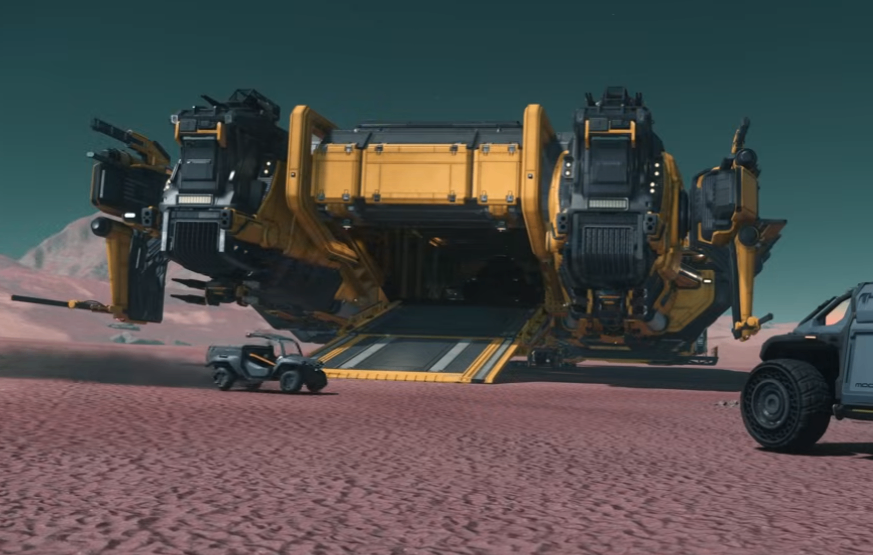
Ground combat in Star Citizen delivers an immersive experience unlike anything found in traditional space simulators. Driving across massive planetary landscapes, navigating hills and valleys, and coordinating convoys creates memorable combined-arms gameplay.
Unfortunately, effectiveness is another matter.
Ground vehicles face several major disadvantages:
· Limited mobility compared to aircraft.
· Poor situational awareness.
· Difficulty detecting incoming threats.
· Heavy logistical requirements.
· Vulnerability to bombs and capital ship weapons.
Ships control almost every engagement by choosing when, where, and how to attack. Unless ground forces create the perfect ambush, they usually begin every battle at a disadvantage.
Lesson 1: Surprise Is Your Greatest Weapon
The first experiment involved building an anti-air ambush around Brio's Breaker's Yard on Daymar.
The team deployed a combination of Ballista missile vehicles and Centurion anti-air platforms around the settlement while using one player with a CrimeStat as bait. The goal was simple: attract bounty hunters, allow them to fly into missile range, then destroy them before they could react.
Several factors made this strategy promising:
· Buildings concealed vehicle positions.
· Terrain blocked enemy sightlines.
· Ballistas could launch missiles before aircraft detected them.
· Centurions defended against closer threats.
This setup highlighted an important principle:
Ground vehicles rely on concealment far more than armor.
Unlike ships, vehicles can hide behind terrain and structures. Remaining undetected until enemies enter effective missile range gives defenders their best opportunity to score kills.
Lesson 2: Always Prepare for Unexpected Threats
The ambush quickly encountered an unexpected problem.
Instead of a fighter, the first bounty hunter arrived in an Idris capital ship.
Large capital ships possess overwhelming firepower capable of hovering safely above defensive positions while destroying vehicles from long range.
The carefully prepared missile site was demolished within seconds.
Although the team eventually destroyed the Idris using improvised bombing tactics and eliminated the surviving pilot, the battle demonstrated another key lesson:
Never design a defense for only one type of opponent.
Star Citizen's open sandbox means attackers can arrive with:
· Fighters
· Heavy fighters
· Bombers
· Gunships
· Capital ships
Flexible planning always outperforms specialized defenses.
Lesson 3: Open Terrain Creates New Problems
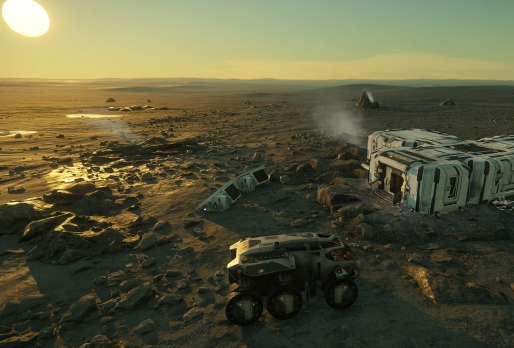
The second deployment moved to Eager Flats.
Instead of hiding among buildings, vehicles spread across open ground with long lines of sight.
The advantages seemed obvious:
· Earlier aircraft detection.
· Better spacing between vehicles.
· Reduced vulnerability to concentrated attacks.
However, new weaknesses appeared almost immediately.
Without natural cover, an incoming bomber flew directly overhead before defenders could respond. Explosive payloads devastated the entire defensive line in moments.
Open ground improved visibility but eliminated protection.
This demonstrated the constant tradeoff facing ground commanders:
· More visibility usually means less cover.
· Better cover often limits detection.
· No single location solves every problem.
Lesson 4: Mobility Is Better Than Static Defense
After multiple failed defensive positions, the team completely changed tactics.
Instead of building another stationary SAM site, they organized a mobile convoy.
Several improvements made this approach significantly stronger:
· Vehicles traveled together instead of remaining stationary.
· One vehicle served as a VIP requiring protection.
· Transport ships carried replacement missile ammunition.
· Logistics aircraft followed overhead for resupply.
· Formation spacing reduced the effectiveness of concentrated attacks.
This transformed the mission from static defense into mobile combined-arms warfare.
The convoy successfully detected and repelled multiple attackers, including heavy fighters and even a Perseus gunship, without suffering immediate catastrophic losses.
Movement forced enemies to continuously locate and track the formation instead of attacking known positions.
Lesson 5: Missile Discipline Matters
One recurring issue throughout the tests involved Ballista operators firing too early.
Experienced crews learned several best practices:
· Wait until aircraft enter visual range.
· Avoid locking targets prematurely.
· Maintain the element of surprise.
· Fire coordinated volleys instead of individual missiles.
· Preserve ammunition for high-value targets.
Radar lock warnings immediately alert experienced pilots.
If aircraft detect missile locks too early, they can simply deploy countermeasures or change course before entering effective range.
Patience dramatically increases missile effectiveness.
Lesson 6: Logistics Win Long Engagements
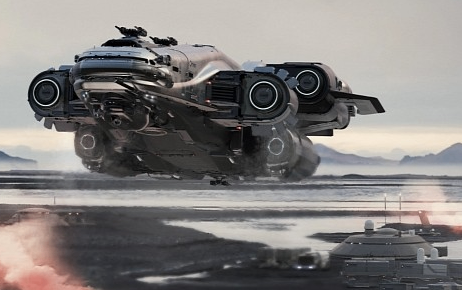
One of the convoy's greatest strengths was its ability to reload.
Support ships carried replacement missiles for Ballistas, allowing damaged vehicles to return to combat without abandoning the operation.
This proved especially valuable after multiple engagements exhausted available ammunition.
Unlike static defenses, mobile logistics provide:
· Extended operational endurance.
· Continuous missile replenishment.
· Better survivability.
· Greater battlefield flexibility.
Although logistics require additional planning, they significantly improve sustained combat capability.
The Biggest Weakness: Stealth Bombers
Despite all tactical improvements, the convoy ultimately fell victim to a stealth Eclipse bomber.
While defenders focused on rearming after successfully driving off a Perseus, the bomber approached unnoticed and released a massive payload.
One perfectly timed bombing run erased nearly the entire convoy.
This highlights perhaps the greatest weakness of current ground combat:
Ground vehicles lack reliable early-warning systems against stealth aircraft.
Without advanced radar coverage or dedicated reconnaissance, defenders often receive only seconds of warning before devastating attacks arrive.
Final Thoughts
Ground vehicles remain one of Star Citizen's most immersive gameplay experiences, even if they are currently underpowered. Traveling across planetary terrain with a coordinated convoy feels fundamentally different from flying through space, offering memorable combined-arms gameplay that few other games can replicate. For players looking to expand their fleet and experiment with more vehicles, cheap Star Citizen AUEC can help accelerate access to the equipment needed for these large-scale ground operations.
For now, success depends on careful planning, concealment, disciplined missile use, mobile logistics, and strong teamwork rather than raw firepower. While aircraft continue to dominate the battlefield, future balance improvements—such as enhanced radar systems, stronger anti-air capabilities, and better combined-arms mechanics—could finally give ground forces the meaningful role they deserve. Until then, mastering these tactics is the best way to survive, adapt, and enjoy Star Citizen's unique planetary warfare.