










Summary
CFB 27 has changed dynasty mode significantly, and understanding how to earn dynasty points is essential for success. Dynasty points, which function as the overall NIL budget, determine a program's ability to recruit, hire staff, and upgrade facilities. This guide covers everything needed to maximize dynasty points from day one and grow them over time.

Part 1: Understanding the Starting Budget
Available Budget vs. Total Budget
When evaluating schools, pay attention to the available budget rather than the total budget. The number on the left is the usable amount in season one. The remaining amount is already allocated toward coordinators, existing staff, facilities, and NIL on the current roster.
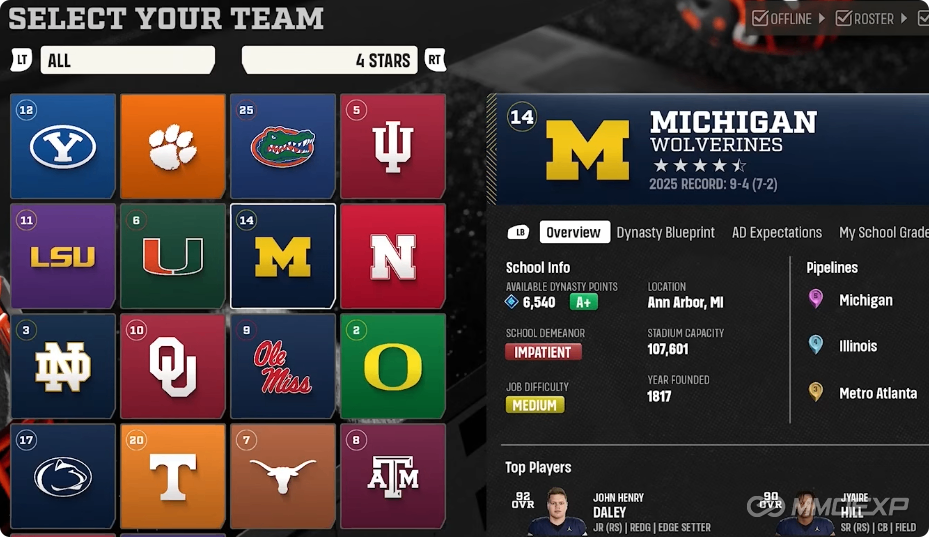
For example, Michigan shows a total budget of 11,630, but only 6,540 is available. The remaining 5,090 is tied up in existing commitments. Oregon, despite having an elite roster, starts with only 2,900 available-one of the lowest in the game. Oregon's roster is arguably the most well-rounded day one, but wholesale changes in year one are difficult with a limited budget.
Why Some Schools Have More
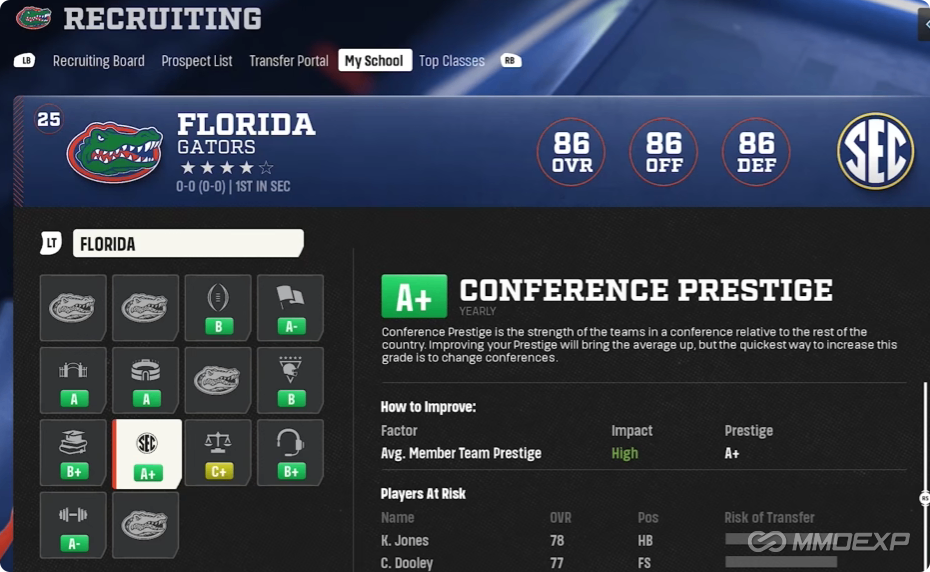
The available budget is determined by school grades across several categories. Conference prestige is one of the most significant factors. Schools in A+ conferences like the Big Ten or SEC receive up to 2,000 dynasty points from this category alone. A C- conference like Akron's provides far less.
Other controllable factors include:
Brand exposure (up to 6,000)
Stadium atmosphere
Program tradition
The key difference from previous years is that none of these are static. All are controllable through gameplay decisions.
Part 2: Conference Prestige
The Conference Bonus
Conference prestige is one of the most controllable factors affecting dynasty points. Moving a program to a better conference provides an immediate boost. A+ conference prestige grants up to 2,000 points, while C-tier conferences provide significantly less.
Strategic Considerations
In previous years, players sometimes avoided the SEC to face weaker competition. In CFB 27, moving to a stronger conference provides resources that can accelerate program growth. The trade-off is more difficult competition, but the extra dynasty points allow for better staff, improved recruiting, and faster facility upgrades.
Conference Grade Tips
A and above is the ideal range
B+ is acceptable but not optimal
C-tier conferences significantly limit dynasty point generation
For smaller schools, moving to a better conference may not be realistic, but it remains an option for players willing to accept the challenge.
Part 3: Brand Exposure, Stadium Atmosphere, and Program Tradition
Brand Exposure
Brand exposure is determined by:
National championships in the last five years
Playoff appearances
Games of the week
National TV appearances
Scheduling big games helps increase brand exposure. Scheduling a weak non-conference schedule may hurt the dynasty budget long-term.
Stadium Atmosphere
Stadium atmosphere measures home-field advantage. Factors include:
Home game win percentage
Home game winning streaks
Program prestige (minor factor)
Winning home games consistently is the most effective way to improve this grade. Unlike other categories, prestige alone does not determine stadium atmosphere-it is directly tied to performance at home.
Program Tradition
Program tradition is influenced by:
National championships
Playoff appearances
Heisman winners
Conference championships
Bowl game appearances
Conference championships and bowl games are the most controllable factors. National championships and Heisman winners provide the largest boosts but are harder to achieve.
Part 4: Coaching Packages and Rainmaker
Rainmaker Ability
The Rainmaker's coaching ability provides a significant boost to dynasty points. Specifically, budget booster increases the maximum budget from each school grade category. An A+ conference prestige that normally provides 2,000 points can provide approximately 2,300 points with a budget booster.
This ability is considered essential for maximizing dynasty point generation.
Contract Incentives
Contract incentives increase rewards for achieving specific goals. For example, "Beat Michigan by 3" might provide 250 points normally but can be increased to 350-450 with the right coach build. Every additional 300-500 points per year can fund an extra support staff package.
Support Staff Packages
Support staff packages provide bonuses, and one of the most valuable is the dynasty points increase package. This package costs 1,250 and provides 1,700 dynasty points-a net gain of 450. This is a no-brainer investment for most programs.
Important: Once a support staff package is purchased, it is locked in for the season. Spending too much on staff packages can leave insufficient points for recruiting and hiring coordinators. Always check the remaining budget before confirming purchases.
Part 5: AD Expectations and Contract Goals
AD Expectations
AD expectations vary by school and can provide substantial dynasty point bonuses. Some goals are achievable in the first season, while others take multiple years.
Examples of AD expectations:
"Beat Michigan by 3 points" (achievable early)
"Win conference title"
"25 turnovers in season one"
"Be ranked 5"
"Make the national championship in seven seasons"
"Maintain national powerhouse status for seven seasons" (takes seven full seasons)
Choosing a School
When selecting a school, review the AD expectations. Schools with goals achievable in year one provide faster dynasty point returns. Goals that require seven seasons delay the payoff significantly.
Part 6: Year One Strategy
Prioritize the Easy Wins
The first season should focus on achievable goals:
Win home games
Complete early AD goals
Improve conference prestige if moving conferences
Upgrade the stadium atmosphere through home wins
Avoid Overspending
The most common mistake in year one is overspending on support staff packages. Purchasing too many packages can leave the program with insufficient points for recruiting and coordinators. Always keep enough points for:
Recruiting hours
Coordinator hiring (conference championship week)
Facility upgrades (end of season)
Plan for Retention
Mistakes in year one compound over time. Poor spending decisions lead to:
Weak coordinators
No facility upgrades
Limited recruiting budget
Overpriced NIL retention for underperforming players
These mistakes can set a program back multiple seasons. Avoid the temptation to spend all available points immediately.
Key Takeaways
Available budget matters more than total budget-Michigan has 6,540 available, Oregon has 2,900
Conference prestige provides up to 2,000 dynasty points-moving to a stronger conference is valuable
Brand exposure, stadium atmosphere, and program tradition are all controllable through performance
Rainmaker ability increases the maximum budget from school grades
Support staff packages provide net gains-the 1,250 cost for 1,700 return is a no-brainer
Overspending on staff locks in purchases for the season and can leave no points for recruiting
Early mistakes compound-poor year one decisions affect year two and beyond
Conclusion
Earning dynasty points in CFB 27 requires a strategic approach from day one. Understanding the available budget, conference prestige, and controllable school grades provides the foundation for growth.
The easiest way to increase dynasty points is to start with a school that already has a strong available budget. From there, focus on home wins to improve stadium atmosphere, schedule big games to boost brand exposure, and pursue achievable AD goals.
Avoid overspending on support staff in year one-leaving enough points for recruiting and coordinators is essential for long-term success. The Rainmaker ability should be prioritized as soon as possible, as the budget booster provides immediate and lasting returns. Having enough CUT 27 Coins can also be very helpful.
With the right strategy, any program can grow its dynasty points and NIL budget year over year, building a foundation for sustained success. Good luck, and dominate your dynasty.