

Can the Atlanta Falcons become a Super Bowl champion without immediately replacing Michael Penix Jr.? Absolutely, but only if you build around Bijan Robinson, strengthen the passing game, and stop wasting draft capital on mediocre quarterbacks. This Falcons rebuild strategy transforms an inconsistent 6-11 roster into a 14-3 powerhouse by acquiring Marvin Harrison Jr., developing hidden-trait defenders, trading down for premium picks, and building an elite defensive front. The biggest lesson? Do not force the quarterback decision. Give Penix time, create a dominant supporting cast, and use smart trades to turn Atlanta’s young talent into a complete championship roster.
1. Start With the Real Problem: Quarterback Consistency
Atlanta begins with more talent than its reputation suggests. Bijan Robinson is a franchise centerpiece, Drake London is a dependable target, Chris Lindstrom anchors the offensive line, and the defense features valuable players such as Jessie Bates III, A.J. Terrell, Xavier Watts, and James Pearce Jr.
The problem is offensive consistency. Michael Penix Jr. has the physical tools to produce, but inaccurate throws and uneven decision-making can destroy drives. Tua Tagovailoa may provide a short-term upgrade in some rosters, but he is not necessarily the ideal long-term solution.
Do not panic and draft a weak quarterback simply because the position is important. Start Penix, invest in his development, and evaluate him across multiple seasons. If he reaches approximately 80 overall and produces more than 4,000 passing yards with a respectable touchdown-to-interception ratio, he can remain a viable starter while the rest of the roster improves.
Key strategy:
• Build a run-first offense around Bijan Robinson.
• Use short and intermediate concepts to protect Penix.
• Prioritize receiver, cornerback, safety, and linebacker in scouting.
• Draft a quarterback only when an accurate, high-upside prospect appears.
Best for: Players who prefer patient, realistic franchise development.
Value: Prevents wasted first-round picks and gives Penix a legitimate opportunity to become a championship quarterback.
2. Make Bijan Robinson the Center of Everything
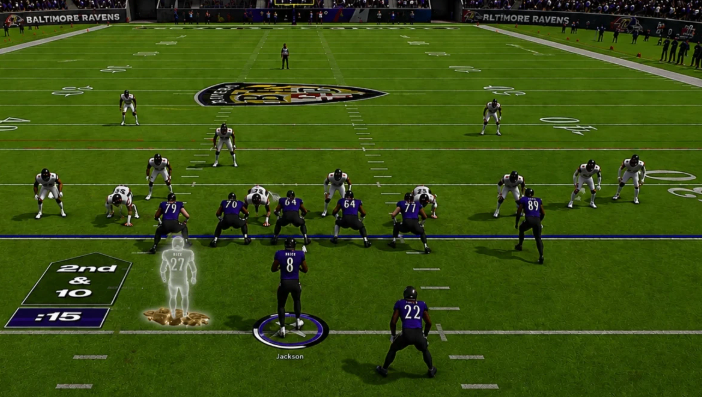
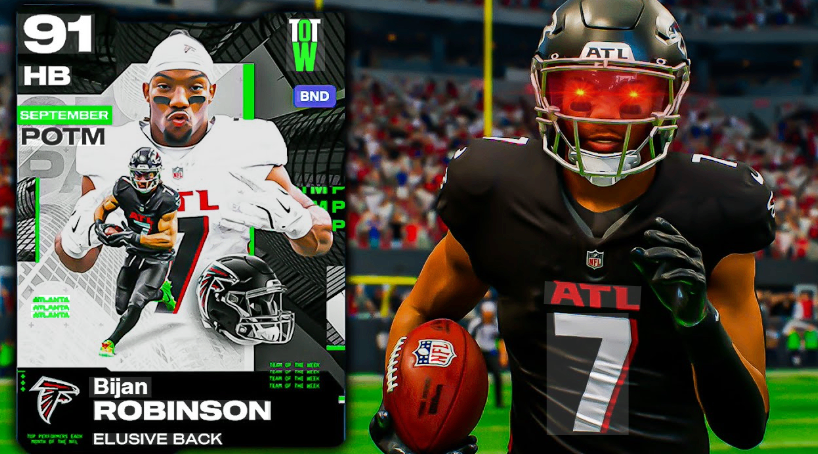
Bijan Robinson should not be treated like a standard running back. He is Atlanta’s offensive identity and one of the best dual-threat weapons on the roster.
Run outside zone, inside zone, stretch, toss, and counter concepts to make defenders attack horizontally. Once opponents begin committing extra defenders to the box, punish them with play-action passes to Drake London and deep crossers to your fastest receiver.
Bijan should also receive meaningful passing-game usage. Use angle routes, Texas routes, screens, swings, and slot formations to create favorable matchups against linebackers. His receiving ability can keep the offense moving even when Penix struggles with deeper throws.
Recommended workload:
• 18 to 24 rushing attempts per game.
• Four to seven receiving targets.
• Heavy red-zone involvement.
• Occasional two-running-back formations after adding a capable backup.
Best for: Players who enjoy run-first football and clock control.
Value: Reduces quarterback pressure, improves offensive consistency, and turns Atlanta’s best player into a weekly matchup problem.
3. Transform the Receiver Room With a Blockbuster Trade
Atlanta’s original receiving group lacks enough explosive depth to support an inconsistent quarterback. Drake London is a strong possession target, but the offense needs another receiver who can win outside, create separation, and develop into a superstar.
If the opportunity appears, trading Tua Tagovailoa for Marvin Harrison Jr. is a franchise-changing move. Harrison immediately gives Atlanta a premium receiver with elite long-term potential. A short extension can also reduce risk while allowing the team to evaluate his development.
To accelerate a breakout challenge, target Harrison aggressively with:
• Deep crossers.
• Corner routes.
• Slot fades.
• Play-action posts.
• Red-zone isolation routes.
• Designed screens and quick touches.
If the challenge requires 110 receiving yards and a touchdown, do not rely only on deep passes. Use high-percentage crossers to accumulate yardage, then isolate Harrison near the goal line.
Roster grinding can get exhausting, so buy madden coins at mmoexp, save your sanity, and enjoy the real endgame while focusing your energy on lineup construction and championship decisions.
Best for: Players whose passing offense lacks explosiveness.
Value: Gives Penix a true number-one target and creates an elite trio with Harrison, London, and Bijan.
4. Trade Veterans Before Their Value Disappears
A successful rebuild requires knowing when to compete and when to sell. If Atlanta opens 2-5 and sits at the bottom of the NFC South, moving nonessential veterans can produce valuable draft capital.
Devon Diablo and Aziz Ojulari can be packaged for a second-round pick if they are not central to the long-term plan. Cam Taylor-Britt may also become expendable once a young corner such as Derell Cross is ready to start.
However, do not trade every veteran automatically. Jessie Bates III remains valuable while the roster is close to contention, and Chris Lindstrom should stay because elite offensive linemen are difficult to replace. A.J. Terrell is also worth extending unless his contract demands become completely unmanageable. Buy cheap mut coins for PS5, Xbox Series X and PC at MMOexp.
Trade these players:
• Veterans blocked by younger talent.
• Players with expiring contracts you do not plan to renew.
• Expensive backups.
• Defenders who do not fit the scheme.
Keep these players:
• Elite offensive linemen.
• Prime-age shutdown corners.
• Versatile safeties.
• Young players with hidden, star, or superstar development.
Best for: Players stuck between rebuilding and competing.
Value: Converts short-term roster surplus into picks that can become long-term starters.
5. Trade Down Instead of Forcing a Bad Quarterback Pick
One of the most important Falcons rebuild lessons is simple: never draft a quarterback early just because you need one.
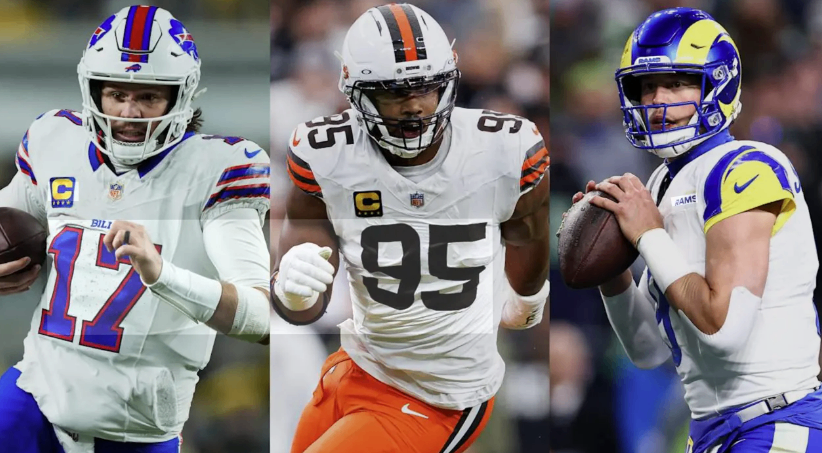
If the available quarterback class lacks elite accuracy, awareness, or athletic upside, trade down. Moving the fifth overall pick to a division rival such as Tampa Bay can generate multiple first-round selections and give Atlanta greater control over future drafts.
Trading down is especially effective when:
• No quarterback deserves the current selection.
• Several similarly rated defenders remain available.
• Another team offers a future first-round pick.
• Your roster has multiple medium-level needs.
• Hidden-development prospects are projected later.
Small trade-downs can also accumulate second-, third-, and fourth-round picks without moving far from your target. The objective is not merely to collect selections. It is to stay inside the range where your preferred prospects are likely to remain available.
Best for: Strategic franchise players who value long-term roster control.
Value: Increases the number of high-upside prospects you can acquire while reducing the risk of a major draft bust.
6. Target Speed, Athleticism, and Hidden Development
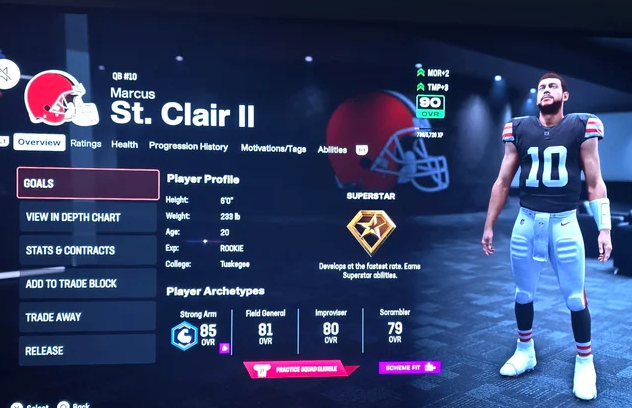
Atlanta’s strongest draft classes are built through athletic upside rather than overall rating alone. Prospects such as Allan Hollowman, Derell Cross, Ben Montgomery, Germaine Brown, and Juan Fowler can outperform their draft position because of elite physical traits and hidden development.
Priority attributes by position:
Linebacker:
• Speed and acceleration.
• Tackle and pursuit.
• Block shedding.
• Coverage potential.
Safety:
• Speed.
• Zone coverage.
• Hit power.
• Change of direction.
Cornerback:
• Speed and acceleration.
• Man coverage.
• Press.
• Size and jumping.
Defensive tackle:
• Strength.
• Acceleration.
• Power moves.
• Block shedding.
Offensive line:
• Strength.
• Pass-blocking traits.
• Awareness upside.
• Hidden development.
A player such as Hollowman becomes particularly valuable because he can play safety in base formations and sub-linebacker in nickel packages. That flexibility creates more tackle opportunities and can trigger development upgrades.
Best for: Players who want to find draft steals beyond the first round.
Value: Builds a fast, versatile defense without spending premium selections at every position.
7. Use Sub-Linebacker Roles to Accelerate Development
Safeties with speed, tackling ability, and coverage skills can develop rapidly at sub-linebacker. Xavier Watts and Allan Hollowman are ideal examples because they can defend passes while collecting tackles near the line of scrimmage.
Place a versatile safety at sub-linebacker in nickel and dime formations. This produces more snaps in high-traffic areas, increasing opportunities for tackles, interceptions, forced fumbles, and development events.
A strong sub-linebacker should have:
• Enough speed to cover tight ends