







Scouting and drafting in MLB The Show 26 have evolved into a far more nuanced system than in previous iterations. While many long-standing strategies still apply, subtle mechanical changes—particularly to scouting efficiency, discovery, and pitcher evaluation—have shifted the optimal approach.
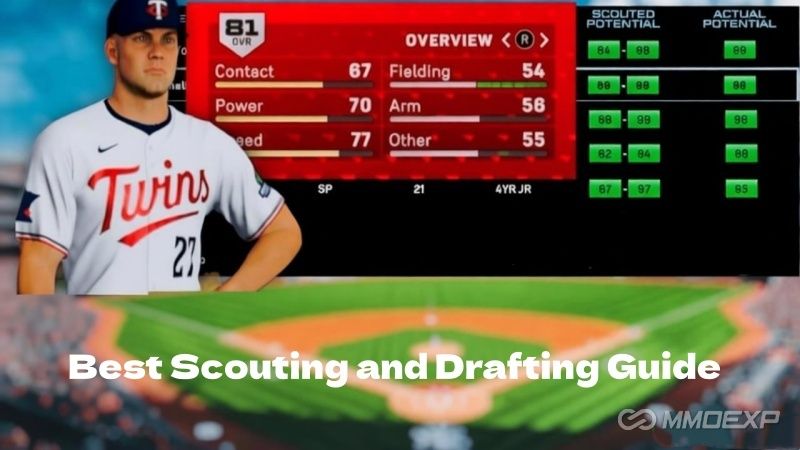
This guide breaks down a refined, data-driven scouting method that emphasizes efficiency, probability, and value extraction across the entire draft cycle. The objective is simple: consistently build elite draft classes anchored by generational talent and late-round steals. Enabling you to save more time, effort, and MLB The Show 26 Stubs.
Understanding the Four Core Scout Attributes
Four key ratings define every scout in the game:
• Efficiency
• Discovery
• Pitcher Accuracy
• Position Player Accuracy
Each rating serves a distinct function, and misallocating your scouting budget is one of the most common mistakes players make.
Efficiency: The Threshold Mechanic
Efficiency dictates how quickly scouting progress accumulates—but only for scouting, not discovery.
• Position Players:
Efficiency ≥95 provides a tangible boost. This is a hard threshold—anything below is suboptimal.
• Pitchers:
Efficiency caps at 10% scouting per week between 90–99.
However, dropping to 89 cuts that in half to 5%, which is catastrophic.
Conclusion:
• Position scout → prioritize 95+ efficiency
• Pitching scout → just ensure 90+, then ignore it
Discovery: Volume Over Certainty
Discovery determines how many new prospects you uncover weekly.
• 90+ Discovery = up to 4 players per week
• RNG still applies—you won’t always hit max
Because discovery operates independently of efficiency, it becomes the most cost-efficient stat in the early season.
Accuracy Ratings: Managing Uncertainty
Pitcher and position player ratings control the reliability of scouting reports. Since randomness is baked into the system, higher ratings simply reduce variance. These should be maximized—but only after role specialization is established.
Optimal Scout Setup (New Meta)
Instead of the traditional “one of each” approach, a more efficient early-game setup is:
• 2 Discovery Scouts
• 1 Position Player Scout
• (Temporarily ignore pitching)
Why Double Discovery Works
Early discovery allows you to:
• Populate your board with high-upside prospects
• Avoid wasting scouting cycles on players not yet revealed
• Maximize information asymmetry before the AI catches up
Key insight:
Scouting pitchers while discovering them simultaneously is inefficient—newly discovered pitchers remain at ~10% regardless.
Scouting Timeline Strategy
Weeks 1–4: Discovery Phase
Double up on discovery (all regions), use position scout on individual players only (not regions). Avoid region-based position scouting—it dilutes efficiency.
Weeks 5+: Transition to Pitching
Fire discovery scouts, Hire 2 pitching scouts, Scout pitchers by region (excluding West, based on empirical inefficiency)
Pitching Rules:
• 2 weeks per region
• ~4 total scouting passes per player is sufficient
• Expect incomplete data—projection matters
Identifying Generational Talent
Generational players follow consistent statistical patterns:
Key Indicators
• Potential: 99 (initial)
• Overall: 77–82 range
• Age: Usually 18
• Balanced attributes: No extreme stats
Red Flags (Avoid These)
• Inflated stats (e.g., 95+ contact or power early)
• Unrealistic ceilings (e.g., 99 speed)
• “Too good to be true” profiles
The Regression Signal
After 1 week of scouting:
• Potential drops (e.g., 99 → 95)
After 2–3 weeks:
• Returns to elite range
This fluctuation is a reliable confirmation marker.
Evaluating Prospects: Core Heuristics
1. Low Overall = Higher Upside
Players with:
• Low overall + high potential gap
are significantly more likely to hit their ceiling.
2. Look for “Unnatural Lows”
Prospects with:
• 0–10 ratings in secondary stats (discipline, clutch, etc.)
are often high-variance, high-ceiling players.
The game engine rarely generates such extreme lows in balanced prospects—making them predictive markers.
3. Avoid “Perfect” Prospects
If a player has:
• Multiple elite ratings already
They are almost always bust candidates.
Late-Round Gem Strategy
Around Weeks 11–12:
• Check “Not Ranked” players
• Target:
• Age 18–20
• 95+ potential
• Low overall
Risk/Reward
• Some won’t enter the draft board → wasted scouting
• Others become elite steals
Rule:
Never scout not-ranked players aged 21+
Pitchers: Special Considerations
Regional Bias
Empirical observation suggests:
• West region = low yield
Focus on:
• International
• Central
• East
Relievers Are Overpowered
Closers and relievers are:
• Easier to evaluate
• Consistently high potential (mid-80s floor)
Strategy:
• Draft them when uncertain
• Do not waste scouting resources on them
Draft Strategy Blueprint
Early Rounds (1–2)
• Prioritize:
• Generational talent
• High-upside position players
Mid Rounds (3–5)
• Best player available
• Emphasize positional scarcity (SS, C)
Late Rounds (6+)
• Target:
• High-upside pitchers
• Not-ranked gems
• Relievers as fallback
Signing Phase Optimization
• Offer contracts to all players above 50% interest
• Spam minimum offers to build motivation
• Not-ranked players:
• Easier to sign
• Lower bonus demands
Final Takeaways
Drafting in MLB The Show 26 is not about brute-force scouting—it’s about information efficiency and pattern recognition. When executed correctly, this system consistently produces draft classes loaded with 90+ potential players—even in weaker years.
MMOexp MLB 26 Team