






This guide provides a systematic approach to improving hitting performance in MLB The Show 26. The following instructions cover optimal settings, controller mechanics, visual techniques, and strategic plate discipline. Implementation of these methods will increase run production for both new and experienced players.
1. Configure Settings for Optimal Performance
Proper configuration of the game settings establishes the foundation for consistent hitting.
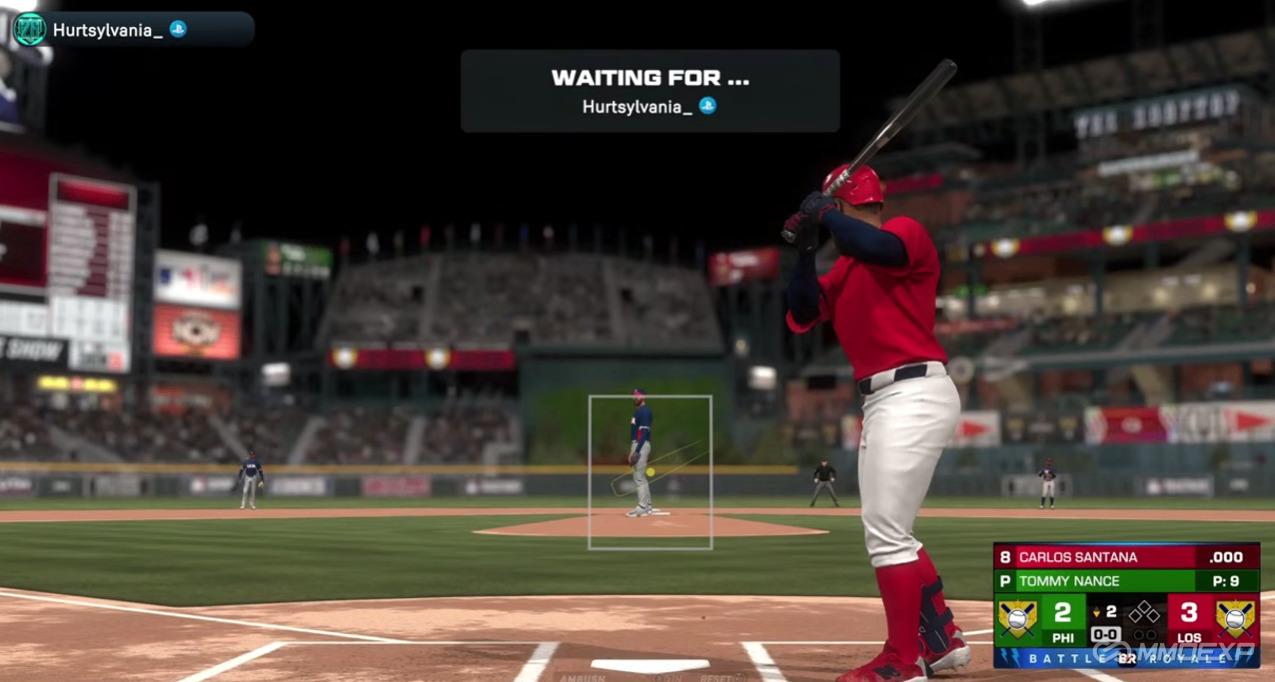
Hitting Interface: Zone. This setting provides full control of the Plate Coverage Indicator (PCI). The Directional interface relies on statistical probability, whereas Zone requires direct user input to track the pitch.
Camera Angle: Strike Zone. This angle removes visual distractions, including the batter, catcher, and umpire. The interface displays only the pitcher and the ball. Additionally, this camera aligns the pitcher with the center of the strike zone.
PCI Appearance: Miimalist. Reduce on-screen elements to minimize distraction. Select a PCI center design based on personal preference (for example, the bat shape). Disable the inner and outer PCI components.
PCI Anchor: Free. This setting allows manual PCI placement before each at-bat. Players who struggle against up-and-in fastballs may anchor the PCI in that location. Similarly, anticipation of a low-away pitch permits anchoring in that quadrant.
Background Blur: On. This feature, new to MLB The Show 26, blurs the stadium background to enhance focus on the pitcher and ball. Note: If frame rate reduction occurs, disable this feature until a software patch is released.
Swing Input: Buttons (Normal Swing). Use the normal swing (X on PlayStation, A on Xbox) as the default. Power swings should be reserved for specific scenarios, such as moments requiring a home run from a player with low power statistics. Contact swings are not recommended, as they reduce home run potential.
2. Correcting Excessive PCI Movement
Many players exhibit a tendency to move the PCI abruptly and excessively, often in the direction opposite the pitch. This behavior is correctable through two methods.
Method A: Adjust PCI Sensitivity
Initial setting: Move the PCI Sensitivity slider fully to the left (slowest response).
Testing: Play several games or enter Practice Mode. If the PCI moves too slowly to reach high or low pitches, increase the slider by one increment to the right.
Repetition: Continue this adjustment process until the optimal sensitivity for controlled movement is identified.
Outcome: This adjustment is the most effective in-game modification for improving PCI accuracy.
Method B: Install Precision Rings (External Accessory)
Precision rings are rubber attachments placed around the analog stick. They provide physical resistance that prevents abrupt stick movement. Their use is permitted in competitive play.
3. The Crossover Method for Lower Difficulties
For players competing on Rookie, Veteran, or early All-Star difficulty levels, the Crossover Method simplifies pitch recognition.
During the initial frames following pitch release, direct visual attention to the pitcher's body rather than the ball.
Determine whether the ball crosses the pitcher's body.
If the ball does not cross the pitcher's body: the pitch is likely outside, inside, or out of the strike zone. Do not swing.
If the ball crosses the pitcher's body early after release: the pitch is likely centered in the strike zone. Execute a swing.
On lower difficulties, the PCI is sufficiently large that horizontal movement is unnecessary. Only vertical PCI adjustment is required.
4. Advanced Techniques: Inside Anchoring and Release Point Identification
After mastering fundamental techniques, players should adopt advanced strategies.
PCI Anchor Position: Inside Quadrant
The inside fastball (up-and-in or low-and-in) is the most difficult pitch to hit without prior positioning.
Rationale: Reaction time is insufficient for both horizontal and vertical adjustment. Anchoring inside limits required movement to the vertical axis only.
Secondary benefit: Slower breaking balls moving away from the batter are easier to track. If a fastball is thrown away, a later swing timing is desirable to drive the ball to the opposite field.
Timing Improvement: Identify the Release Point
First at-bat procedure: Refrain from swinging for the first three to five pitches. Focus visual attention on the pitcher's release point, ignoring the windup.
Result: Earlier pitch recognition by several frames. Observation also reveals specific pitch movements, such as a changeup dipping out of the zone or a slider's late break.
General rule: Anticipate the fastball. Anticipating a fastball while receiving an off-speed pitch results in early timing, which is correctable. Anticipating an off-speed pitch while receiving a fastball results in no opportunity for contact.
5. Plate Discipline and Count Management
Indiscriminate swinging reduces batting averages. A structured approach is necessary.
For Online Competition: Select a Single Pitch
Strategy: Identify one pitch type and location that the opponent consistently throws for a strike (for example, an up-and-in fastball or a low-away slider).
Execution: Do not swing at any other pitch, regardless of its location.
Rationale: Opponents typically cycle through three to four pitch types. They will eventually return to the selected pitch and location. While this may result in called strikes, eventual hard contact is probable.
For Offline Competition (Conquest, Mini Seasons, Showdowns): Take Two Strikes
Strategy: Refrain from swinging until the pitcher has thrown two strikes.
Rationale: The computer-controlled pitcher's energy depletes over time. After approximately 40–50 pitches, energy reaches minimal levels, resulting in reduced pitch break and lower velocity. This approach forces walks and increases the frequency of hittable pitches.
6. Alternative Mental Framework: Catcher's Glove Visualization
Players who struggle to move the PCI through the ball may benefit from a cognitive reframing technique.
Standard approach: Identify as the batter. This often results in incomplete PCI movement.
Alternative approach: Assume the role of the catcher's glove.
Execution: As the pitch approaches, move the PCI as though guiding a glove to the ball. This visualization encourages complete follow-through and reduces abrupt or incomplete movement.
7. Deliberate Practice Protocol
Extended gameplay without targeted practice does not guarantee improvement. Repetition of incorrect mechanics reinforces errors.
Enter Practice Mode.
Select the pitcher who presents the greatest difficulty.
Choose the difficulty level intended for regular play.
Program the pitcher to throw the same pitch type and location (for example, an up-and-in fastball) repeatedly.
Repeat for 50 or more repetitions.
Objective: Train visual recognition to identify the pitch type and location within the initial frames of release.
Implementation of these instructions in sequential order will produce measurable improvement in hitting performance within mlb the show 26 stubs. Consistent application of proper settings, controlled PCI movement, visual discipline, and strategic patience is the most reliable path to increased run production. For players looking to acquire MLB 26 Stubs efficiently, we recommend MMOEXP as a trusted provider.