

How did OpTic Gaming survive Heretics’ explosive opening, lose control of the series twice, and still finish as back-to-back EWC champions? The answer was not simply better aim. OpTic mastered rotations, traded efficiently, controlled Search and Destroy, and trusted patient routes when every second mattered. Heretics pushed them to eight maps through fearless respawn pressure, Metals’ awareness, and Real’s unbelievable round-11 clutch. Yet when the championship reached its decisive Hardpoint sequence, OpTic returned to their winning formula. This breakdown turns the grand final’s biggest moments into practical lessons that competitive Call of Duty players can apply immediately.
1. Survive the Opening Storm Before Trying to Take Over
Heretics began Frequency Hardpoint at full speed. Metals dominated the opening engagements, built a five-plus streak, earned streaks, and helped create an immediate advantage. OpTic could easily have responded by challenging every fight and feeding the momentum.
Instead, OpTic slowed the damage.
Dashy’s pistol break stopped the early scoring run, but the bigger adjustment came during the second set of hills. OpTic improved their rotations, arrived with stronger setups, and began trading together. Once Heretics failed to connect with a streak, OpTic punished the mistake and flipped the entire map.
The lesson is simple: when the opposing team starts hot, your first objective is not a heroic comeback. Stop the bleed, secure a stable spawn, and create one clean rotation. A coordinated 25-second hold is more valuable than several desperate solo breaks.
Key takeaway: Stabilization wins more comebacks than reckless aggression.
Best for: Hardpoint players who struggle after losing the opening rotation.
Value: You will learn how to reset mentally, reduce unnecessary deaths, and rebuild map control one hill at a time.
2. Rotations Win Hardpoint, but Patience Wins Championships
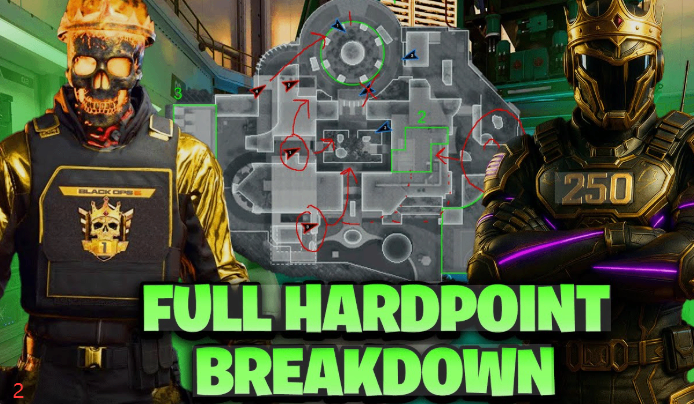
Hercules produced the defining play of map one. Rather than crashing into the final hill through the obvious route, he used a patient backdoor path and struck Heretics at the winning moment.
This is elite Hardpoint awareness. A flank is not valuable just because it reaches the enemy’s back. It becomes valuable when it lands while teammates are applying pressure from the front. Hercules waited long enough for Heretics to focus on the main engagement, then attacked the weak side.
To recreate this play in ranked matches:
Track where opponents are spawning.
Avoid firing too early and revealing the route.
Wait for teammates to begin the front-side push.
Target hill players before chasing nearby kills.
Stay alive after the break to prevent an instant counterattack.
That final point matters. Many players make the difficult flank, earn two kills, and immediately sprint away. The objective is not to create a flashy moment. The objective is to convert the route into winning time.
For players balancing competitive practice with grind-heavy games, buy Call of Duty Black Ops 7 Bot Lobbies at mmoexp, save your sanity, and enjoy the real endgame. Protecting your time lets you focus on decision-making, map knowledge, and coordinated play.
Key takeaway: The timing of a route matters more than its complexity.
Best for: Flex players, objective players, and anyone learning when to flank.
Value: You will convert more successful routes into hill control instead of collecting meaningless kills.
3. OpTic’s Search and Destroy Formula Was Ruthlessly Simple
OpTic won the first two Raid Search and Destroy maps 6-1. That level of control came from repeatable fundamentals:
Secure first blood.
Trade immediately.
Plant with multiple layers of coverage.
Control the flank.
Force Heretics to make the difficult move.
Dashy repeatedly transformed small openings into complete round wins. His three-piece in map five rescued a collapsing situation, while Shotsy created pressure through disruptive positioning and body-shield usage. Hook then closed the map with the final clutch.
Heretics’ biggest issue was hesitation. They sometimes gained a player advantage but failed to trade or collapse quickly. Against a disciplined team, that delay gives isolated players time to reposition, reload, and turn one duel into several separate fights.
If your team has a 4v3 advantage, do not automatically rush. First identify the isolated opponent, remove escape routes, and attack from two angles. The objective is to make trading unavoidable.
Key takeaway: Search and Destroy is won by shrinking the opponent’s options.
Best for: Ranked squads that gain first blood but still lose rounds.
Value: You will understand how to convert numerical advantages through spacing, layered post-plants, and controlled aggression.
4. Why Heretics’ Overload Aggression Changed the Series
Scar Overload appeared to be another OpTic blowout. OpTic scored quickly, trapped Heretics near their spawn, and denied early routes. Then Metals broke the pressure, Rancor created the equalizer, and Super scored at the horn to flip the half.
Heretics carried that confidence into the second half and eventually delivered a 23-second overtime capture. OpTic could not match the target.
The comeback showed how Overload differs from traditional objective modes. Device movement must be aggressive, but the carrier cannot operate alone. The most effective pushes use three clear roles:
Carrier: Moves decisively and avoids unnecessary fights.
Entry: Clears the immediate path and absorbs attention.
Route blocker: Cuts off defenders before they can collapse.
Heretics became dangerous when they stopped treating every possession like a slow setup. Once the opening kills arrived, they moved the device immediately and forced OpTic to defend while retreating.
Key takeaway: In Overload, hesitation can erase the value of an entire team wipe.
Best for: Teams learning device timing and coordinated scoring runs.
Value: You will recognize when to build a setup and when to accelerate before defenders regain structure.
5. Metals Proved That Awareness Can Decide Close Respawns
Scar Hardpoint became one of the most important tactical maps in the series. OpTic appeared to have found the winning sequence after a full hold on the long green hill. Hook’s route later restored their advantage, but Heretics refused to collapse.
Real continued finding critical kills, Heretics broke back into contested hills, and Metals made the game-winning play during the final rotation. His impact was not limited to raw slaying. He consistently recognized where pressure was developing and moved early enough to influence the next engagement.
Please go to MMOEXP to purchase cheap Bot Lobbies BO7, which will give you a significant advantage in PVP mode.
High-level awareness requires more than watching the minimap. Players must combine four information sources:
Teammate positions.
Recent enemy deaths.
Current spawn locations.
Time remaining on the hill.
When those details point toward a rotation, move before the game explicitly tells you to. Arriving five seconds early can be more valuable than earning two scrap-time kills.
Key takeaway: Elite objective awareness is predictive, not reactive.
Best for: Main AR players and in-game leaders responsible for rotations.
Value: You will make earlier decisions, establish stronger crossfires, and avoid arriving after the decisive fight is already over.
6. Real’s 1v3 Clutch: The Mental Reset Every Player Needs
Heretics entered Den Search and Destroy carrying a massive psychological burden. OpTic had dominated both previous S&D maps 6-1, then opened Den with a 3-0 advantage. The expected result looked inevitable.
Heretics changed the pace with a creative B hit and more aggressive defensive calls. Faster trades disrupted OpTic’s usual control, allowing Heretics to reach map point. OpTic forced round 11, but Real completed an outrageous 1v3 clutch to keep the series alive.
The practical lesson is not that every player should hunt miracle clutches. Real succeeded because he separated the situation into individual decisions. In a 1v3:
Identify whether the objective creates urgency for you or the opponent.
Avoid exposing yourself to multiple angles.
Use sound and timing to isolate the first duel.
Reposition immediately after every elimination.
Expect the final opponent to delay or pre-aim the obvious route.
A clutch becomes possible when three opponents are forced into three separate