









Summary
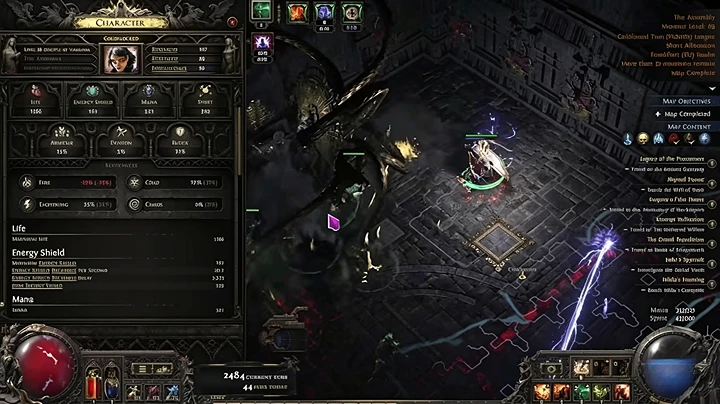
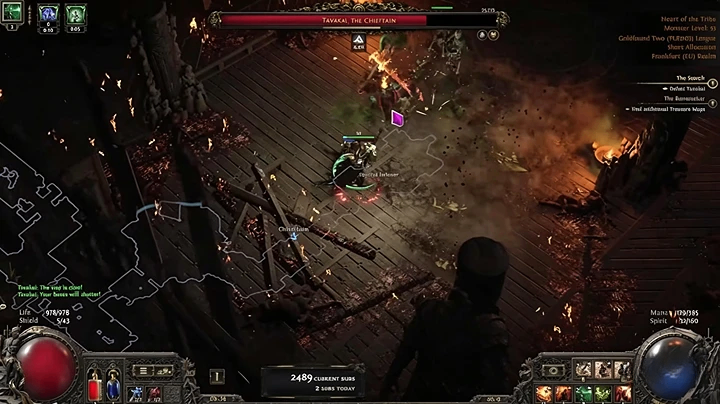
Most Path of Exile 2 progression assumes players constantly upgrade through dropped equipment, currency, flasks, and crafting materials. This challenge removes that entire progression system. Every item hidden by the loot filter is ignored, meaning no gear, no currency, no flasks, and no ordinary drops can ever be picked up. Only gold and Waystones are collected to enable endgame progression.
This guide explains how a "Gold Locked" account progresses under these restrictions, what sources of equipment remain available, how gold should be spent, why support gems become a major bottleneck, and how to reach maps despite severe gearing limitations.
Part 1: Understand the Challenge Rules Before You Start
The challenge revolves around one simple rule:
Everything on the loot filter remains on the ground.
That means you cannot pick up:
Equipment
Currency
Flasks
Crafting materials
Random item drops
The only exceptions are:
Gold
Waystones, since they are required for endgame progression.
Because dropped gear is completely unavailable, every equipment upgrade must come from one of only three sources:
Quest rewards
Vendor purchases using gold
Ritual rewards
Everything else is inaccessible.
The long-term objective is to defeat both the Arbiter of Ash and the Arbiter of Divinity while playing Softcore Solo Self-Found.
Part 2: Plan Around Limited Gem Progression
One of the first major problems appears much earlier than gear.
Since gems normally come from loot progression, this challenge limits available upgrades dramatically.
The highest active skill gem available is only:
Level 13
Support gems are even more restrictive.
During progression, only Level 1 and Level 2 Support Gems become realistically available.
There are no practical opportunities to obtain higher-tier support gems, forcing careful planning instead of simply waiting for stronger drops.
Rather than replacing supports freely, every support gem choice should be considered permanent until another farming opportunity appears.
Part 3: Spend Gold Carefully Instead of Gambling
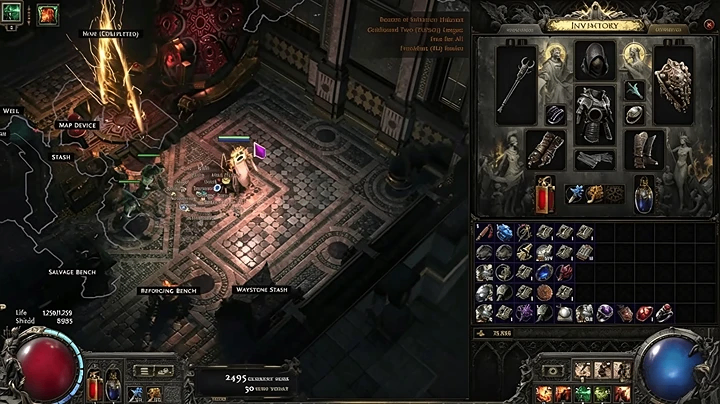
Because gold replaces virtually every normal progression system, managing it becomes the most important resource decision.
Although gambling for equipment exists, it proves extremely inefficient.
Only a handful of gamble attempts are affordable, and those items are usually random blue equipment with little chance of becoming meaningful upgrades.
Vendor purchases provide much better value.
Instead of spending gold on uncertain gambles, saving 20,000–30,000 gold for a high-quality vendor item offers a much greater chance of improving the build.
Throughout progression, repeatedly checking vendor inventories becomes a core gameplay loop.
Important upgrades include:
Better shields
Improved life flasks
Resistance gear
Minion equipment
+2 Minion Helmet
The search for a +2 Minion Helmet continues throughout much of the challenge because it represents one of the strongest available upgrades under these restrictions.
Players looking to optimize similar challenge runs should also manage POE2 Currency efficiently on normal characters, as understanding item values and upgrade priorities helps determine when vendor purchases are actually worth the investment, even if this challenge itself prohibits collecting ordinary currency.
Part 4: Solve the Support Gem Problem
As progression reaches higher levels, support gems become an even larger obstacle than equipment.
Several decisions illustrate this limitation.
Initially, Brutality is used.
However, replacing Brutality becomes desirable because it restricts elemental scaling.
Possible replacements include:
Concentrated Effect
Magnified Effect
Additional Chaos Damage
Added Fire Damage
The planned approach is to swap between:
Magnified Effect for map clearing
Concentrated Effect for single-target encounters
Since support gem availability remains extremely limited, farming additional low-level support gems becomes necessary.
At one point, even a single support gem upgrade is considered valuable enough to justify creating another character if required.
This illustrates how restricted progression fundamentally changes build planning.
Part 5: Adapt Passive Choices Around Available Gear
Without dropped equipment, passive skill adjustments become an important source of damage.
After deciding to move away from Brutality, the build shifts toward elemental conversion.
Cold damage becomes the preferred choice.
The reasoning is straightforward:
Physical damage remains the base.
Cold conversion adds Chill.
Chill improves survivability.
Future support gems interact more effectively with elemental damage.
Rather than fully respeccing, passive progression simply continues toward the desired nodes, allowing the character to retain previous investments while gradually increasing cold scaling.
This transition also raises tooltip damage from roughly 2.7 to approximately 3.1, although the tooltip is noted to update inconsistently.