







Path of Exile (PoE) has one of the most intricate and fascinating in-game economies in the world of action RPGs. Unlike many games that rely on gold or traditional coins, PoE's system revolves around various items that function both as crafting materials and as trading currency. These items form the backbone of the player-to-player economy and operate under a constantly shifting system of exchange rates. Understanding how these exchange rates work is essential for both new and experienced players who want to maximize their efficiency in trading and avoid being taken advantage of.
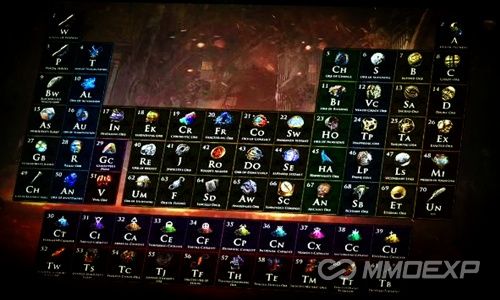
The value of PoE currency lies in its dual role—each piece of currency is useful in crafting, while also serving as a medium of trade with both NPC vendors and other players. Because of this, the worth of an item is never static and depends heavily on supply, demand, league conditions, and ongoing game updates. For beginners, this can make trading intimidating, as seasoned players often have more knowledge of true item values, which occasionally leads to scams. To combat this, PoE developed a ratio system to make trades clearer, though exchange rates still vary across leagues and platforms.
Let's examine the relative value of some of the most popular currencies and how players can use them effectively.
Exalted Orbs
Exalted Orbs are among the most coveted currencies in PoE. Their main use is adding new modifiers to rare items, making them indispensable in endgame crafting and high-value trading. Because of their rarity, finding one is a stroke of luck, and most players reserve them for essential purchases. In terms of exchange, Exalted Orbs are often measured against Chaos Orbs—the standard trading currency. For example, in Expedition League, the exchange rate is roughly 1 Exalted to 124 Chaos Orbs, while in Standard League, it is about 1 to 95.
Chaos Orbs
The Chaos Orb is the foundation of the PoE economy. Players rely on it for everyday trades, and almost every item can be valued in terms of Chaos. Its relative abundance makes it easy to acquire and spend, but its role as a universal currency gives it stability. For example, if a player wants to buy a Mirror of Kalandra with Exalted Orbs in Standard League, the ratio shows that 95 Chaos equals 1 Exalted, and the Mirror is worth around 10,000 Chaos. This works out to roughly 100 Exalted Orbs, giving players a clearer picture of large-scale trade values.
Divine Orbs
Another valuable currency, Divine Orbs are essential for crafting. They reroll the values of explicit modifiers on unique items, which can dramatically increase their worth. Though powerful in the right hands, many players choose to trade them for Chaos Orbs. In Standard League, a Divine Orb is typically valued at around 40 Chaos Orbs, while in Expedition League it trends closer to 46.
Regal Orbs
Regal Orbs are used to upgrade a magic item into a rare one while preserving its modifiers. They play an important role in multi-step crafting, particularly when combined with Exalted Orbs for further enhancement. However, many players who don't focus on crafting prefer to sell them for Chaos. In Standard League, Regal Orbs often trade for about 20 Chaos each.
Mirror of Kalandra
The Mirror of Kalandra is the rarest and most valuable item in PoE's currency system. Its function is to create a duplicate of a non-unique, non-corrupted item or map, making it extremely powerful for replicating top-tier gear. Because of its scarcity, its market value is astronomical. In Standard League, the going rate is approximately 10,000 Chaos Orbs or 100 Exalted Orbs.
How Exchange Rates Are Determined
Trade ratios are shaped by a variety of factors, including item drop frequency, vendor prices, player demand, and league-specific mechanics. Each new league introduces changes that shift the economy, meaning exchange rates fluctuate regularly. Vendor prices act as a baseline to prevent runaway inflation, though the player market often sets different values. For example, vendors establish that a Chromatic Orb should never be worth more than three Jeweller's Orbs, but players may still sell them for less depending on supply.
Vendor Prices and Recipes
Vendors are NPCs who sell or trade items at set values, which players can use as a reference. Include: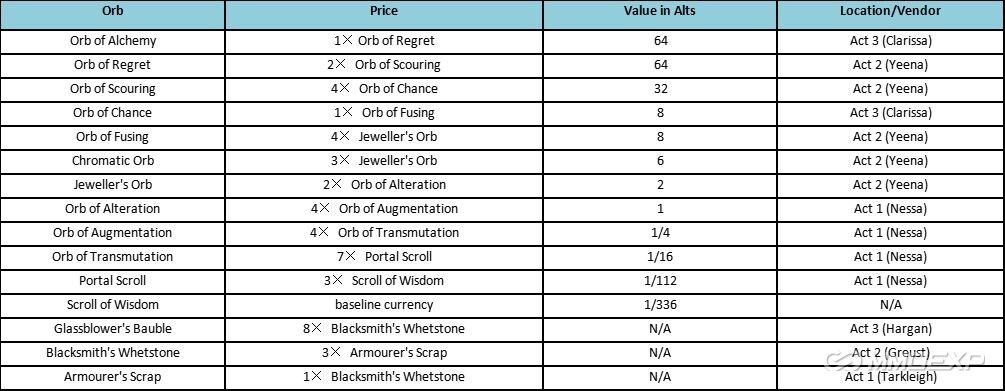
Related: PoE 2 Currency Exchange Rates Guide - PoE 2 Trade
These fixed ratios help stabilize the economy, ensuring certain items retain a baseline worth even in fluctuating player markets. Additionally, Masters in the game offer bulk trades. For instance, Zana sells 20 Cartographer's Chisels for 12 Chaos Orbs, allowing players to stock up efficiently.
Bulk Trading
Some players prefer selling currency in bulk rather than in small amounts. While this usually comes at a slightly lower exchange rate, it provides a faster way to liquidate large stores of items or quickly obtain specific currencies for crafting or major purchases.
Currency Calculators
Given the complexity of the PoE economy, many players turn to online currency calculators. These tools allow players to select the league, the item they want to sell, and the item they want to acquire, generating an up-to-date exchange ratio. To ensure accuracy, players should only use reliable trading websites that update regularly with current market data.
In conclusion, POE currency exchange system is one of the most sophisticated aspects of the game. From everyday trading with Chaos Orbs to the rare and life-changing find of a Mirror of Kalandra, each currency has its own role and fluctuating value. By keeping an eye on vendor prices, league conditions, and reliable exchange calculators, players can trade with confidence, avoid scams, and make the most of their loot. Understanding exchange rates isn't just about knowing the numbers—it's about mastering the economy that drives Path of Exile forward.
MMOexp POE Team