









Summary
Dynasty Points, essentially your NIL budget, are one of the most important resources in College Football 27 Dynasty. You use the same pool of points to recruit high school prospects, retain players, hire coordinators, upgrade facilities, and improve your program.
Because your budget is limited and changes as your program develops, wasting NIL can seriously slow down a rebuild. This guide explains how Dynasty Points work, how to earn more, and where to spend them for the best long-term results. To build a competitive roster without wasting NIL, buy CUT 27 Coins and unlock premium recruiting tools.
How Dynasty Points Work in CFB 27
Dynasty Points function like your program's annual operating budget. Your starting amount depends heavily on your school's overall strength and program grades.
A powerhouse can begin with thousands of available points, while a smaller program may have only a few hundred. That difference makes NIL management especially important during a rebuild.
What Determines Your NIL Budget?
Several school grades influence how much NIL you can generate:
Brand Exposure: Improved by winning games and increasing your program's visibility.
Championship Contender: Winning consistently and competing for major titles improves this grade.
Coach Stability: Keeping your coaching staff together helps maintain stability.
Coach Prestige: Better coaches and sustained success improve your program's reputation.
Conference Prestige: Moving into a stronger conference can significantly improve this grade.
Athletic Facilities: Upgrading facilities can improve player development and your overall program strength.
The key takeaway is simple: winning games and improving your school grades are the best long-term ways to increase NIL.
Complete Your Athletic Director Expectations
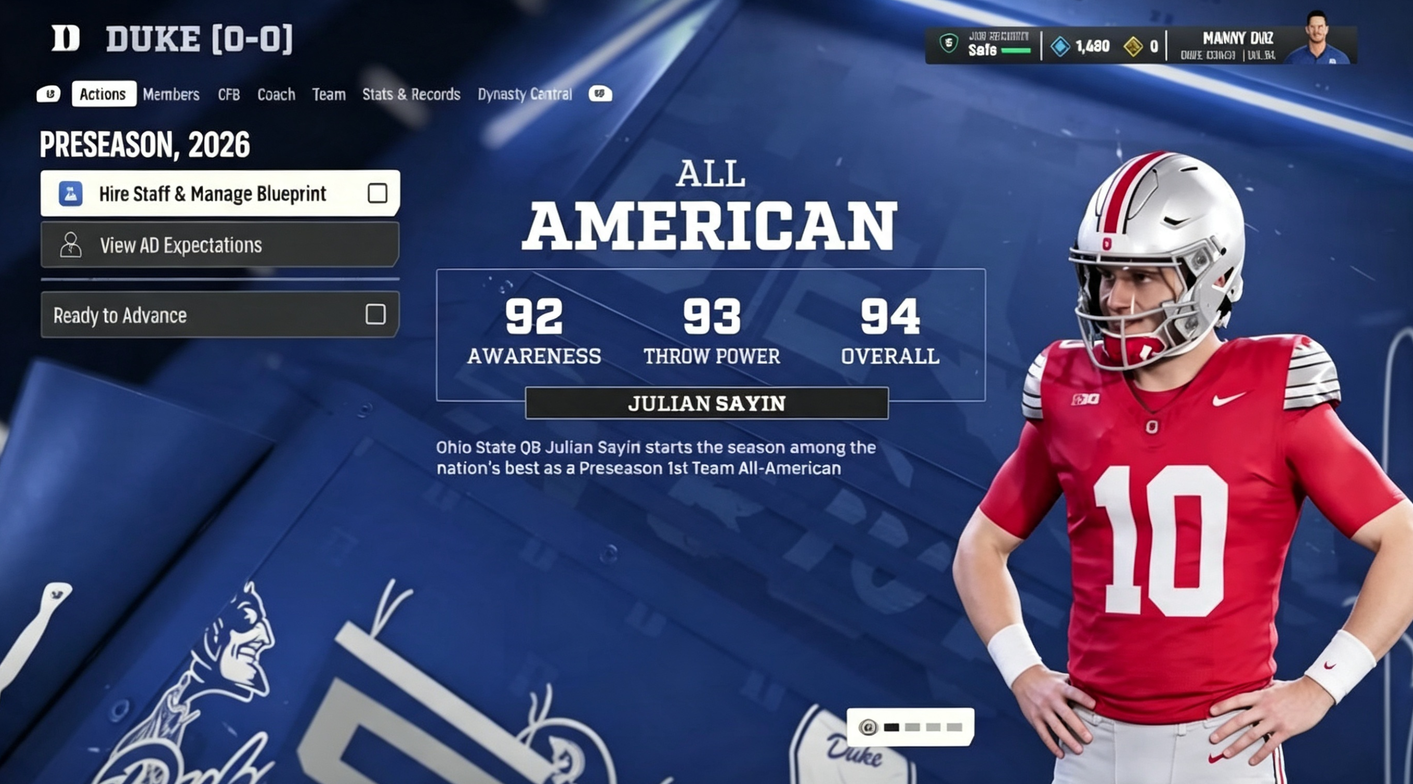
Your Athletic Director expectations are another important source of Dynasty Points.
These objectives vary depending on your school and season. They can include goals such as:
Defeating a major rival
Winning a percentage of home games
Producing an award winner
Reaching postseason milestones
Completing these objectives can provide additional NIL while also helping you satisfy your AD and avoid job-security problems.
Check your expectations regularly because they are dynamic rather than fixed for every Dynasty.
Use the Dynasty Blueprint to Manage NIL
The Dynasty Blueprint is the central hub for managing your NIL budget. It divides your spending into several major categories:
1. Hire Staff
2. Manage Facilities
3. Recruiting NIL
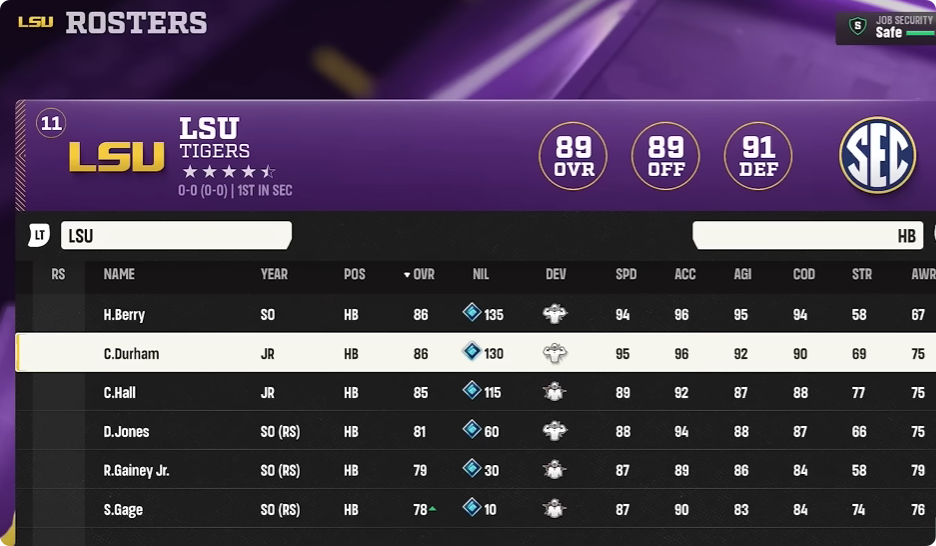
4. Roster NIL
The blueprint lets you see how much of your budget is going toward each category, making it easier to identify where your NIL is being spent.
Best Staff Investments for Smaller Programs
If you're rebuilding a small program, one of your first priorities can be a fundraising-related staff investment.
When to Prioritize Fundraising
Fundraising can be especially valuable if you expect to struggle on the field during your first few seasons. Instead of relying entirely on wins and AD objectives, a fundraising investment can provide an additional boost to your NIL generation.
However, don't treat it as a replacement for winning.
Once your program becomes competitive, spending NIL on recruiting, roster retention, and development can provide significantly more long-term value.
The Three Best Staff Upgrades
For a developing program, prioritize staff upgrades that improve:
1. Support Staff Costs
2. Recruiting Hours
3. Reduced NIL Expectations
If you can only afford two, reducing NIL expectations is arguably the most valuable because expensive players can quickly consume your entire budget.
Upgrade Athletic Facilities for Long-Term Growth
Facility upgrades can have an enormous impact on player development.
A strong facility investment can increase your progression bonus, allowing players to develop faster every season.
For example, elite programs can achieve significantly higher progression bonuses than small schools. That creates a snowball effect: better development creates better players, better players produce more wins, and more wins improve your program grades and NIL potential.
Why Facilities Matter in Rebuilds
Don't judge a facility upgrade only by its immediate cost.
A better progression bonus can benefit your roster for multiple seasons, making facilities one of the best long-term investments for a rebuilding program.
How to Spend NIL on High School Recruiting
Recruiting is likely to consume one of the largest portions of your NIL budget.
A balanced approach is important because spending too much on a handful of prospects can leave you without enough money for roster retention and staff.
Prioritize Pipeline Prospects
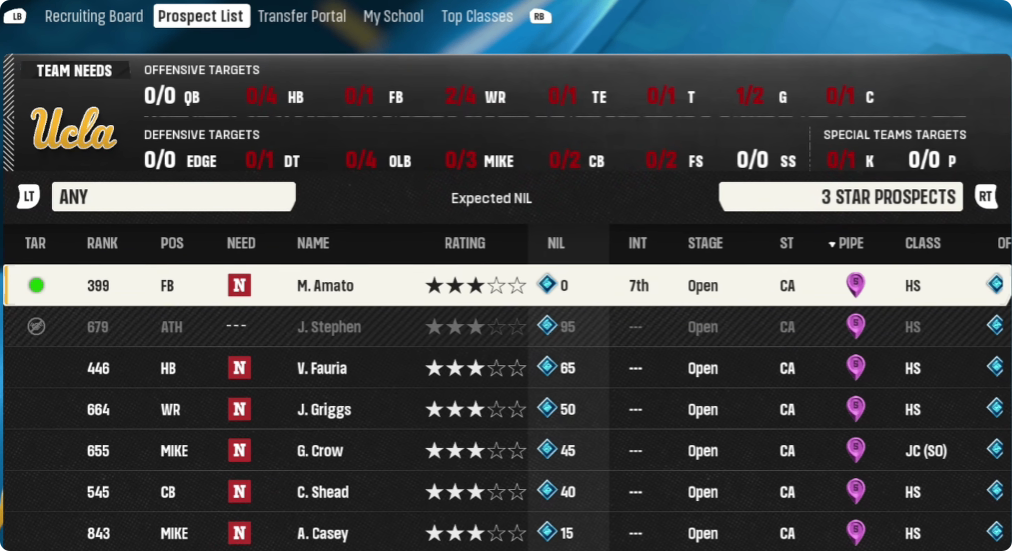
For three-star and four-star programs, prioritize recruits inside your pipelines.
Pipeline prospects generally require less NIL than recruits who have little connection to your program. A five-star prospect demanding 200 NIL may not be worth the cost when another highly rated prospect in your pipeline requires significantly less.
Your recruiting board position also matters. If you're already near the top of a prospect's list, you may need to spend less to secure the commitment.
Don't Ignore Three-Star Recruits
Three-star prospects can provide excellent value, particularly at positions such as offensive line, linebacker, and the secondary.
Instead of spending heavily on every five-star recruit, scout three-star players and look for hidden gems. These players can develop into important starters while costing substantially less in NIL.
For maximum efficiency, build around affordable prospects and save your premium NIL for elite players who genuinely improve your roster.
Save NIL for Coordinators
Coordinators can be surprisingly expensive.
Higher-quality offensive and defensive coordinators can cost hundreds of NIL, with elite options costing substantially more. Therefore, don't spend your entire budget during recruiting and leave nothing available for staff upgrades.
Good coordinators can improve recruiting, player development, and on-field performance, making them valuable investments throughout a Dynasty.
Manage Roster NIL Carefully
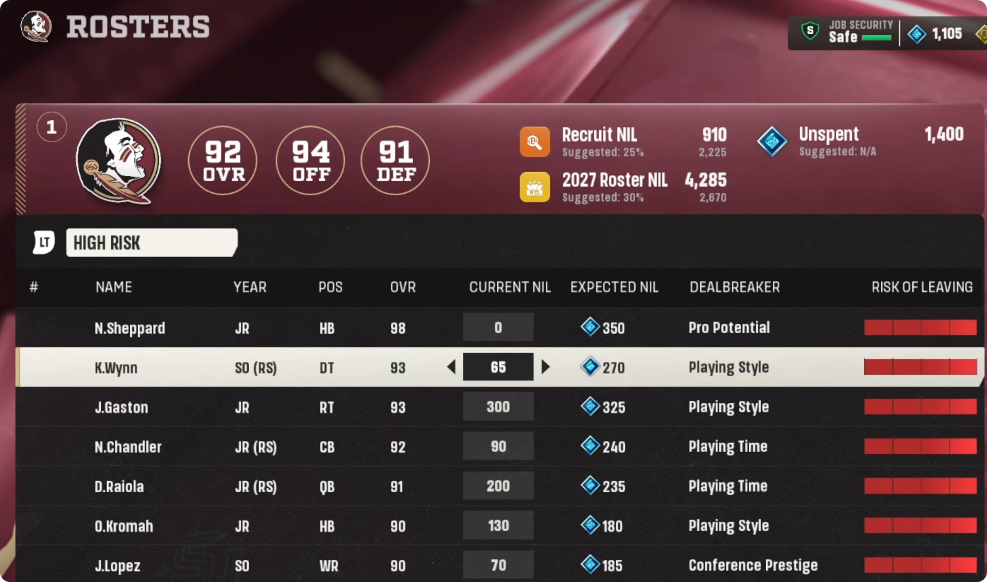
Roster retention is another major expense, particularly when your best players enter the offseason.
Pay Your Must-Keep Players
If a player is essential to your roster, spend the NIL required to retain him. Losing an elite quarterback, pass rusher, or other cornerstone player can create a much bigger problem than the cost of retaining him.
However, don't automatically pay every player.
If you're comfortable losing a player, reduce his NIL allocation and keep those points available for more important roster needs.
Review Every Player, Not Just High-Risk Players
The high-risk filter is useful, but it shouldn't be the only thing you check.
Some players may be receiving NIL despite being relatively low priorities. Review your entire roster and determine whether each player's cost matches his value.
This can free up a surprising amount of NIL for recruiting or transfers.
Use the Transfer Portal to Maximize NIL
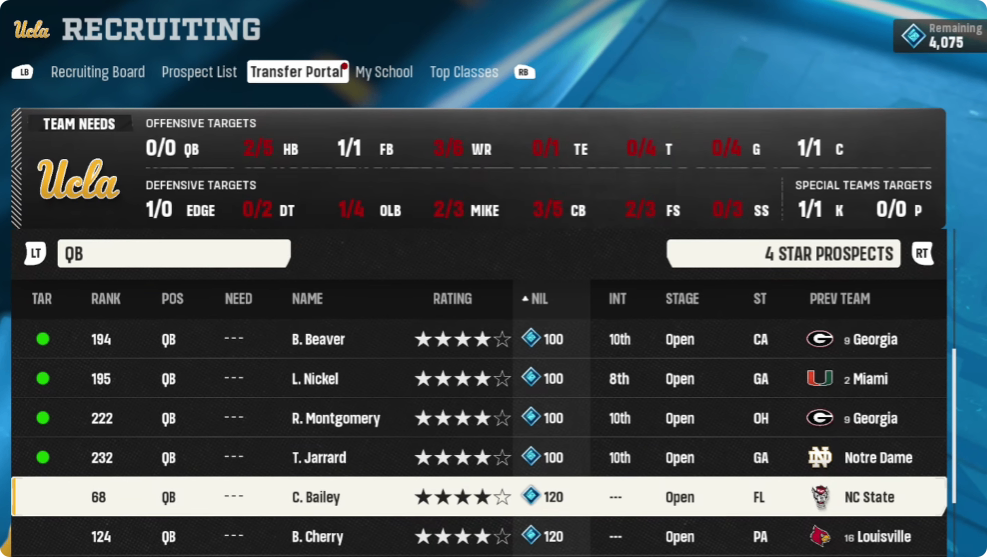
The transfer portal is one of the most efficient ways to improve a roster without spending huge amounts of NIL on high school recruiting.
Why Transfers Can Be Better Value
A highly rated high school recruit may require a large NIL investment before ever taking the field. Transfer players, meanwhile, can sometimes provide a much higher overall rating for a similar or lower cost.
You may also find players with strong development traits who were underused at their previous schools.
That makes the transfer portal particularly powerful for rebuilding programs that need immediate upgrades.
Balance High School Recruiting and Transfers
Don't completely abandon high school recruiting.
For a realistic Dynasty, dedicate roughly 20–30% of your recruiting budget to high school prospects so you can develop players over four seasons.
Use the transfer portal for immediate roster upgrades, especially when you're trying to close the talent gap quickly.
The Best NIL Strategy for a Dynasty Rebuild
There is no instant way to become an NIL powerhouse. The strongest strategy is to build a positive cycle:
Win games → improve school grades → increase NIL → improve recruiting and facilities → develop better players → win more games.
In the short term, prioritize affordable recruiting targets, essential roster retention, and valuable staff upgrades. In the long term, invest in facilities and program development, so your annual NIL budget continues to grow.
The most important rule is to avoid spending NIL simply because you have it. Every point should either improve your current roster, strengthen future recruiting, or increase your program's ability to generate more resources.
With disciplined NIL management, even a small-school rebuild can gradually become a national contender without wasting its most valuable Dynasty resource. To accelerate that rise, CUT 27 Coins can unlock premium recruiting and development tools that help you build a powerhouse program faster.