






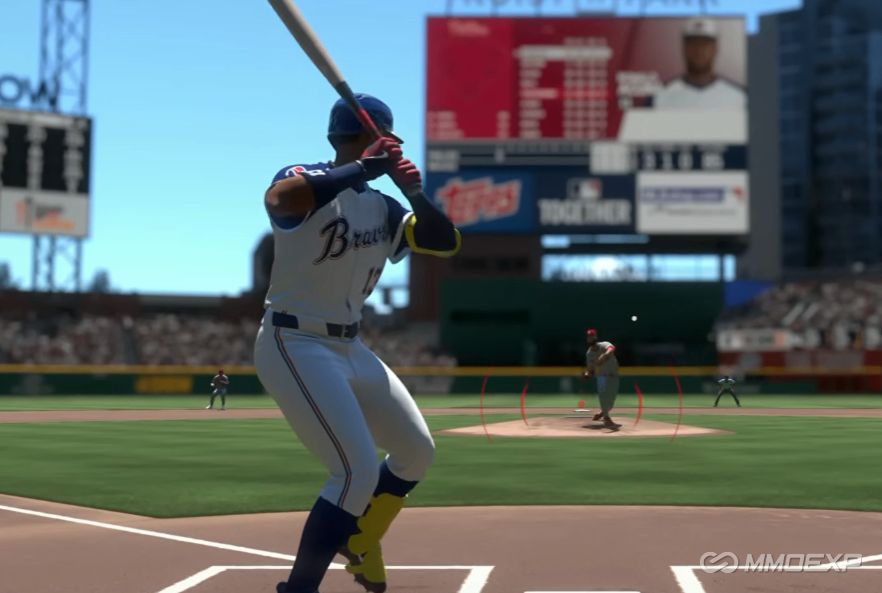
In MLB The Show 26, do you often feel like you swung at nothing? You clearly saw the pitch coming in, but your PCI ended up flying somewhere else completely? Don't rush to blame yourself-the issue is very likely your settings and equipment. I used to struggle with the same problem, but once I adjusted everything properly, I started actually winning games. This guide is not theory-heavy. It's a practical breakdown of MLB The Show 26 Stubs the settings, budget-friendly gear, and core hitting mindset that helped me improve. Whether you are a new player or stuck at a skill plateau, applying these adjustments will quickly make you realize-you really can hit the ball consistently.
STEP ONE:SETTINGS DETERMINE YOUR CEILING
If you want consistent contact, don't start by practicing mechanics-start with your settings. First, you must enable Zone Hitting; without it, you cannot properly control the PCI.
PCI sensitivity should start at default and then be fine-tuned. If your PCI feels too twitchy, lower it. If it feels too sluggish, raise it. Finding your personal balance is key.
PCI visibility should be reduced to below 30%. Not being able to see the ball clearly is less damaging than an uncontrollable PCI-this is where many players lose games.
For batting view, Strike Zone or Strike Zone 2 is highly recommended, as both make it much easier to read pitch movement and release points.
STEP TWO:GEAR IMPROVES PERFORMANCE BEYOND EXPECTATION
A gaming monitor significantly reduces input delay, helping you react to fastballs more consistently.
Thumbstick rings prevent over-aiming the PCI, improving stability and control consistency.
Concave thumbstick caps improve grip and comfort, especially during long competitive sessions.
Do not underestimate sweat control. Even something as simple as a towel can noticeably improve your consistency and precision.
STEP THREE:HITTING IS ABOUT STRATEGY, NOT PURE REACTION
Do not swing at the first pitch. Instead, study the pitcher's tendencies and pitch sequencing.
Focus first on fastballs, which make up the majority of pitches. Inside fastballs are the foundation of high-level hitting.
When facing sinker and cutter combinations, avoid guessing. Instead, read release points and velocity differences.
Remember:being slightly early is always better than being consistently late and striking out.
STEP FOUR:PCI AND MINDSET DEFINE STABILITY
Do not stare directly at the PCI. Focus on the pitcher's release point instead.
Pre-position your PCI slightly downward to increase your chances of hard contact and line drives.
Stay relaxed. The more tense you are, the more your PCI will become unstable.
The goal is not mechanical perfection-it is consistent repetition of correct habits.
WHO THIS IS FOR AND VALUE SUMMARY
This guide is designed for beginners, mid-level players stuck at a plateau, and competitive players aiming to improve their ranked performance.
You will gain more stable pitch recognition, higher batting averages, fewer wasted swings, and a cheap MLB 26 Stubs clearer understanding of advanced hitting progression, while also reducing frustration from "seeing the ball but not hitting it."
QUICK TIPS
Do not constantly change your settings; stick with one setup for at least one week
Ranked online play is the best training environment, not offline practice
Master fastballs first before focusing on breaking pitches
Track your opponent's pitch patterns each inning instead of guessing
CORE BENEFITS BY PLAYER TYPE
New Players:Build correct fundamentals from the start, avoid bad habits, and quickly overcome the beginner frustration phase.
Players At A Skill Plateau:Identify hidden weaknesses such as PCI control, patience, and pitch recognition to break through performance ceilings.
Free-To-Play Players:Use low-cost key equipment upgrades to improve consistency and compensate for weaker lineups without spending money.
Competitive Ranked Players:Master sinker and cutter pitch patterns, develop structured hitting strategies, and improve win rate stability in high-pressure matches.