










Summary
After finishing the campaign in Path of Exile 2 0.5, many players reach the Atlas only to find that their map rewards feel inconsistent. Some players invest heavily into Waystones but receive little value, while others lose maps because they increased the difficulty before their build was ready.
This guide explains a practical progression path for juicing Waystones efficiently. Instead of focusing on advanced mechanics immediately, it shows when to upgrade maps, how to use Orb of Alchemy, Exalted Orb, Vaal Orb, Precursor Tablets, and Atlas passives, and how to scale rewards without taking unnecessary risks. By following these steps, you can improve map efficiency, earn more valuable drops, and build a stable endgame farming routine.
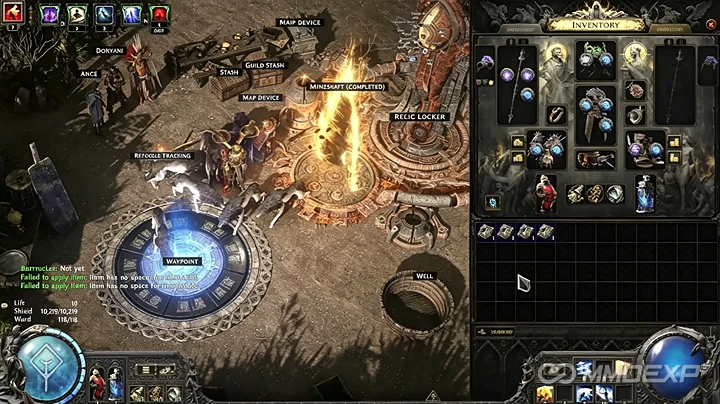
Part 1: Build a Stable Mapping Foundation Before Investing
Many players begin upgrading every Waystone as soon as they reach the Atlas. This often leads to failed maps because stronger modifiers reduce the number of available revives while increasing monster difficulty.
When entering the Atlas from Ziggurat Refuge, your first objective is not maximum loot—it is consistent map completion.
Start by clearing Atlas nodes around the Fortress while learning enemy modifiers and your character's limits. Completing Atlas maps unlocks passive points, which provide long-term value that far outweighs the rewards from a few heavily modified maps.
If your build still struggles with survivability or damage, continue running lower-risk Waystones until map completion becomes reliable.
Part 2: Understand When a Waystone Is Worth Upgrading
Every modifier added to a Waystone increases both rewards and danger.
A normal Waystone provides the highest number of revives, making it suitable for early progression. As modifiers are added, available revives decrease significantly. Six-modifier corrupted Waystones provide no revives at all, meaning a single death ends the run.
Because of this, upgrading every map is rarely efficient.
A simple rule is:
Normal or Magic Waystones for progression.
Rare Waystones for routine farming.
Fully corrupted six-modifier Waystones only after your character consistently survives Tier 15 content.
Avoid chasing maximum rewards until your build can comfortably clear difficult encounters.
Part 3: Use the "Alchemy and Go" Strategy First
One of the safest and most cost-effective mapping methods is the Alchemy and Go strategy.
Simply use an Orb of Alchemy on a normal Waystone.
This immediately upgrades it into a rare Waystone with four modifiers, giving noticeably better rewards without requiring additional crafting investment.
For newer players, this offers several advantages:
Low crafting cost.
Better monster density.
Higher Waystone drop chance.
Faster Atlas progression.
Running many affordable rare maps is usually more profitable than risking expensive corrupted maps too early.
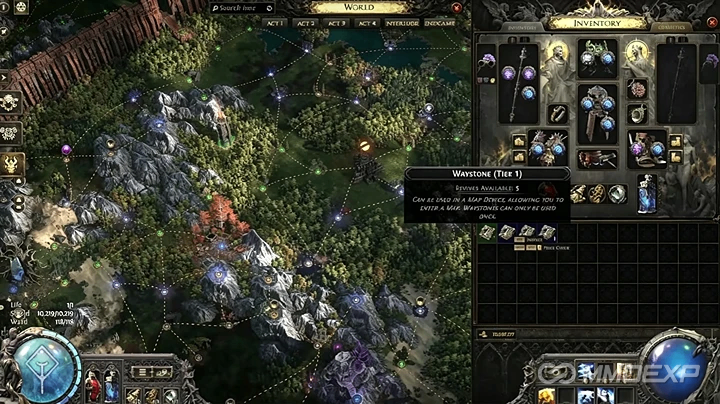
Part 4: Upgrade to Six Modifiers Only When Your Build Is Ready
Once Tier 15 maps become comfortable, begin investing slightly more into each Waystone.
After using an Orb of Alchemy, apply two Exalted Orbs to reach six modifiers.
This creates a stronger map with improved bonuses such as:
Increased Item Rarity
Monster Pack Size
Waystone Drop Chance
Monster Effectiveness
At this stage, your objective is not perfect modifiers. Instead, focus on increasing the overall value of every completed map while maintaining a high completion rate.
Consistent success is more valuable than occasionally clearing an extremely difficult map.
Part 5: Corrupt Valuable Waystones with Vaal Orbs
After preparing a six-modifier Waystone, use a Vaal Orb.
Corruption can produce several useful outcomes:
Upgrade a Tier 15 Waystone into Tier 16.
Increase the total modifier count.
Randomly change existing modifiers.
Although corruption carries risk, successful outcomes significantly improve monster level and potential loot quality.
Tier 16 maps also allow higher-level item bases to drop, making them an important milestone for long-term progression.
If a corrupted map becomes too dangerous for your build, save it until your gear improves instead of forcing the run.
Part 6: Unlock the Most Valuable Atlas Passives Early
Atlas passive points provide permanent improvements to mapping efficiency.
One of the earliest priorities is Industrial Improvements, which allows an additional Tablet to be used in City Maps.
Another important passive is Partial Translation, enabling Tablets to become rare and gain additional modifiers.
These upgrades increase the number of effects that can be stacked onto valuable maps, especially those surrounding Citadels.
Instead of spreading points randomly across the Atlas tree, prioritize passives that directly increase map rewards before specializing in individual league mechanics.