





Summary
The Trial of Sekhema is currently the most profitable farming strategy in Path of Exile 2. After completing 100 runs on stream, this guide breaks down the exact profits generated and provides a replicable framework for players at any budget level.
Why Trial of Sekhema?
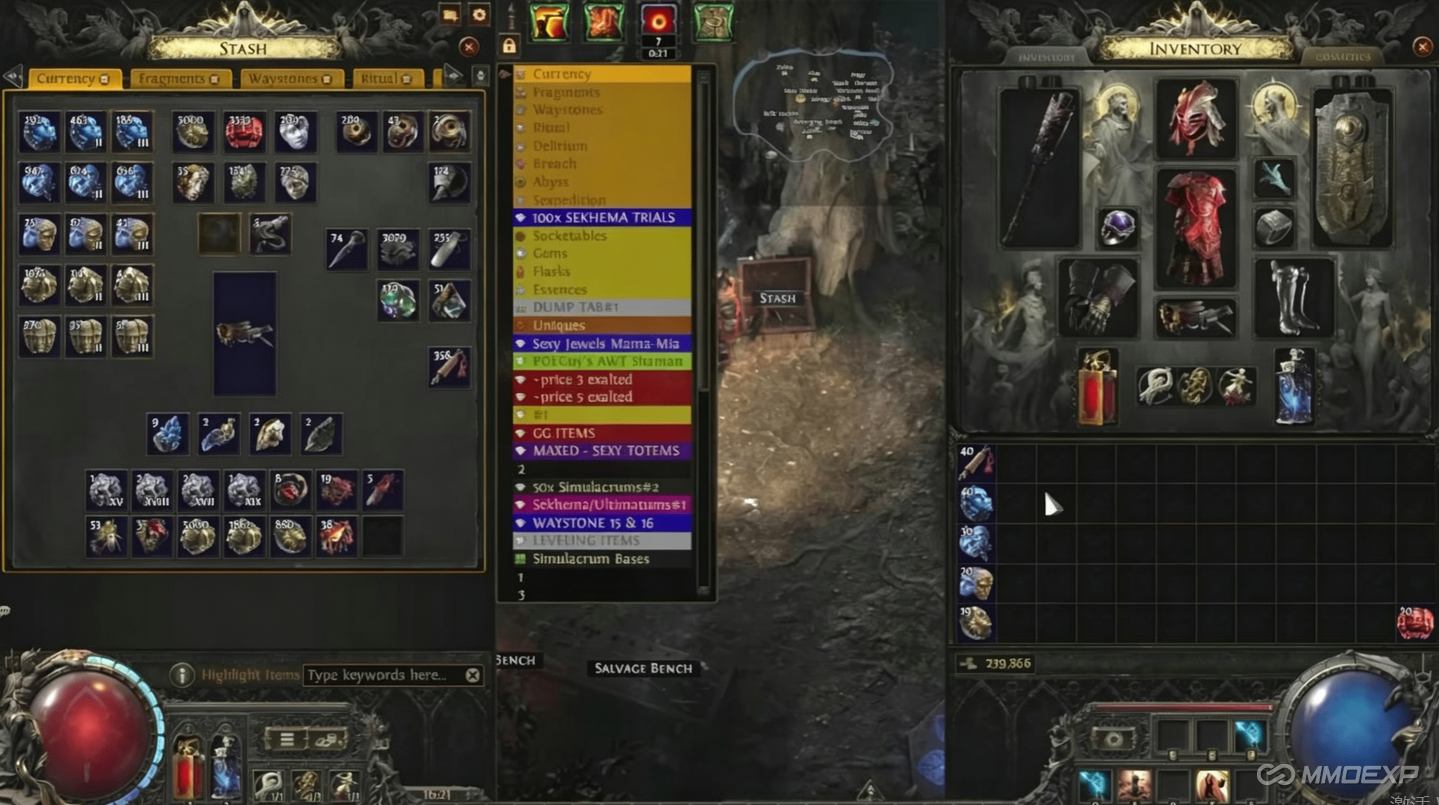
The Trial of Sekhema offers multiple overlapping revenue streams that compound into exceptional profitability. The primary sources include the ascendancy carry service, unique relics such as the Desperate Alliance vase and Last Flame, magic relics that frequently sell for 40 or more Divines, timeless jewels crafted at minimal cost and sold for substantial profit, and raw divine orb drops from chests and bosses.
The Relic Setup
The relic configuration determines the efficiency of the entire farming operation. For the two medium relic slots, prioritize all resistance—aim for approximately 75%. This protects the honor bar and reduces honor loss when taking damage. For the secondary modifier, select merchant has an additional choice, which improves access to powerful boons that accelerate runs and increase rewards.
For small relics, prioritize increased quantity of relics dropped by monsters. At 120% or higher, the final boss guarantees at least two unique relic drops per run, and occasionally three. This directly increases the probability of obtaining the Last Flame and Desperate Alliance bases. Movement speed serves as the second priority, directly correlating to more trials completed per hour—this setup enables three and a half to four runs per hour. Players new to the strategy should consider adding maximum life to small relics to prevent unexpected one-shots while learning encounter mechanics.
The Core Strategy: Ascendancy Carry Service
Many players require ascendancy points but prefer to avoid engaging with the Trial of Sekhema directly. This creates an opportunity to provide carry services. By inviting players into a full party of five customers, completing the trial, and defeating the final boss, the service provider collects payment from each participant.
For these 100 runs, the fee was set at two Divine Orbs per player. While some operators charge three or four Divines, the lower price point facilitates faster party filling, increasing the total number of runs completed per hour.
Profit Breakdown for 100 Runs
The carry service alone generated 1,000 Divines—five players paying two Divines each per run, multiplied by 100 runs.
Twenty-five Desperate Alliance vases dropped across the sample. While prices fluctuate between nine and twelve Divines, consistent sales at twelve Divines yielded 300 Divines from unique relics.
Raw divine orb drops from Arcanist's boxes and boss kills totaled approximately 40 Divines. The majority originated from silver and gold chest clusters encountered at the end of each trial.
Magic relics accounted for the remaining 360 Divines. Individual magic relics frequently sold for 13, 20, 25, and occasionally 40 Divines or more. These items represent a consistently underestimated revenue source.
The total of 1,700 Divines excludes the Last Flame and timeless jewels.