









Summary
If you're looking for a low-investment PoE 2 currency farming strategy, Abyss is one of the most efficient options for quickly generating raw currency and valuable fragments. Instead of investing heavily into expensive Omen-focused tablets, this strategy concentrates on Abyssal Chests, Abyssal Coffers, map rarity, and fast Atlas travel.
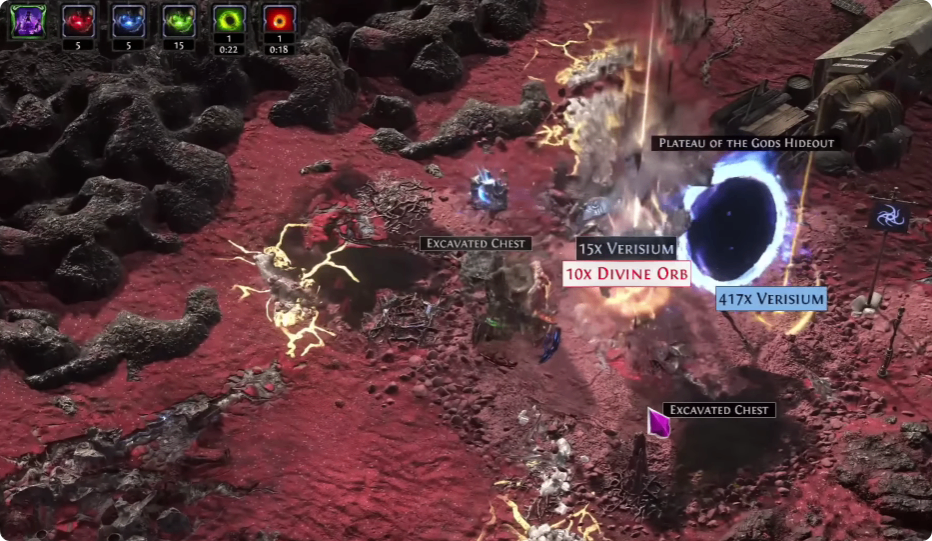
In testing, the strategy generated approximately 2.7 Divines per map, or around 27 Divines per hour at 10 maps per hour, before counting additional gear, tablets, and other sellable drops.
Why Use the Budget Abyss Farm?
The main advantage of this strategy is its low entry cost.
A heavily juiced Omen of Light setup can require a substantial investment in tablets. The alternative here focuses on opening large numbers of Abyssal Chests and Coffers instead.
The basic setup can cost less than one Divine, while a more optimized version costs roughly three Divines per 10 maps.
This makes it particularly attractive for players who don't want to risk a large amount of currency before seeing returns.
What Makes Abyss Effective?
Abyss works especially well for a travel strategy because it doesn't significantly interrupt your route through the endgame world map.
Mechanics such as Breach, Ritual, and Delirium can pull your progression toward separate sections of the map, while Temple can consume additional time outside your normal route. Abyss allows you to continue traveling toward profitable areas while completing the mechanic along the way.
Set Up Your Atlas for Abyss
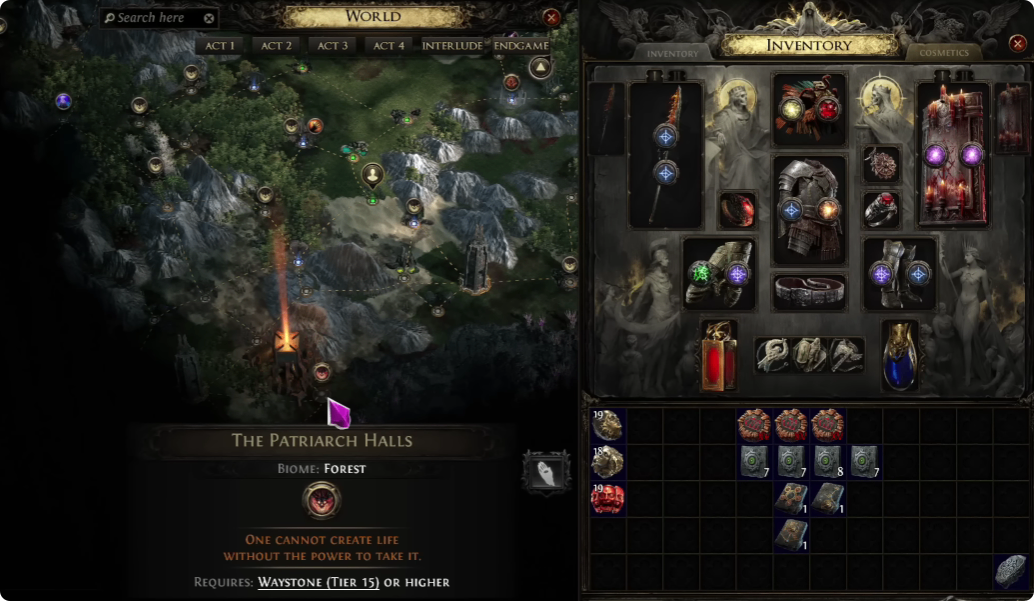
The Atlas setup should focus on increasing Abyss rewards while maintaining fast map completion.
A key part of the setup is Ulaman, combined with nodes that improve Abyssal Chest rewards. The goal isn't to chase the most expensive Omen. Instead, you're creating a large number of opportunities to open currency-producing chests.
Prioritize Abyssal Chest Rewards
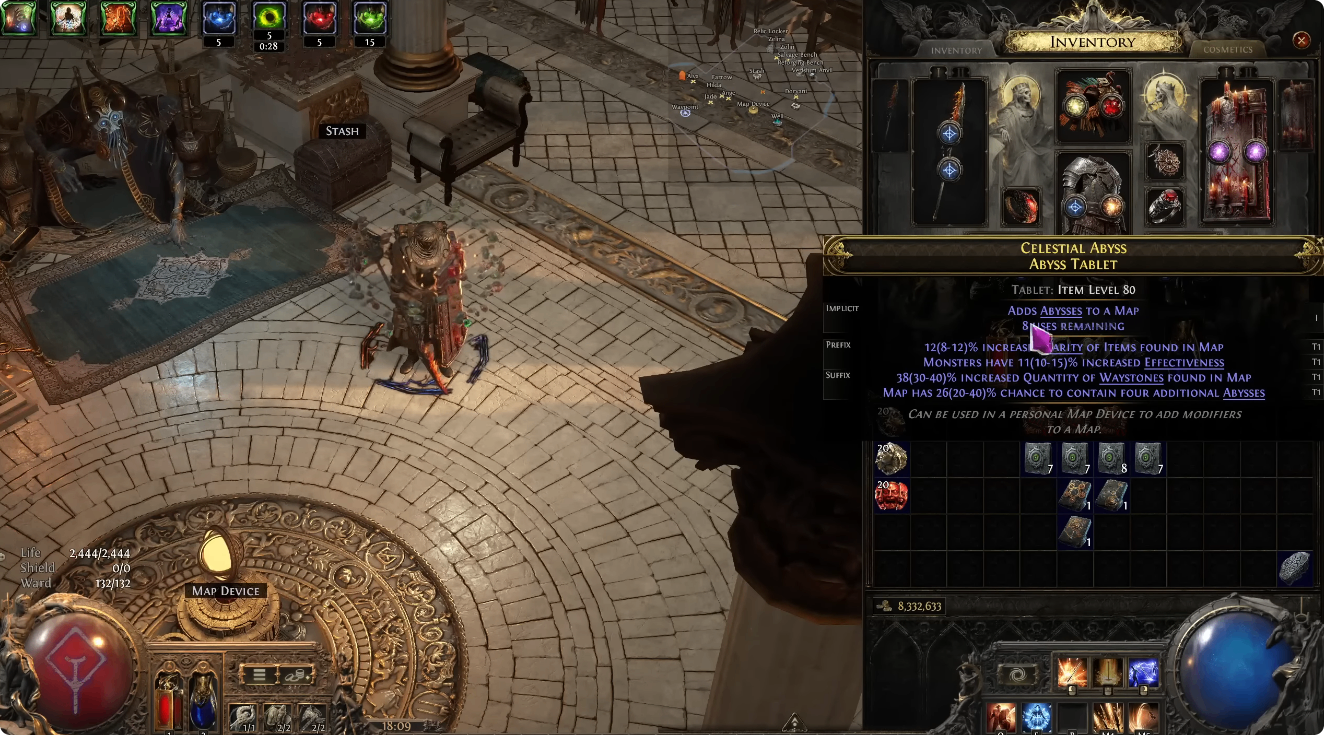
The most important tablet modifier is:
Abyss Pits in the Map are twice as likely to have rewards.
Using this modifier on two tablets can make the Abyss pits consistently produce rewards. However, the source notes that this effect can occasionally stop working after opening many chests, so don't assume it is completely guaranteed in every situation.
For another tablet, you can instead target a modifier that gives a chance for four additional Abysses.
These three modifiers form the foundation of the strategy.
How to Roll Your Tablets
You don't need extremely expensive tablets to begin.
Start by targeting the essential Abyss modifiers, then add other useful stats as your budget allows.
Tablet Priority
A practical priority list is:
1. Abyss Pits are twice as likely to have rewards
2. Increased rarity of items found in the map
3. Increased monster effectiveness
4. Increased quantity of Waystones found
Rarity is particularly useful because it improves the value of the chest rewards, while monster effectiveness increases the amount of loot generated by monsters. Waystone quantity is less important for ordinary maps but becomes useful when you're running Citadels, Halls, and anomaly maps.
You can therefore start with just the critical Abyss modifiers and improve your tablets gradually rather than trying to create perfect tablets immediately.
Choose the Right Endgame Route
This strategy is designed as a travel farm.
Instead of repeatedly running the same isolated map, move through the world map in one direction while opening new areas and targeting valuable locations.
Target Citadels and Cleansed Areas
Watch for Citadels with the distinctive beam of light.
The endgame setup also includes corrupted areas. Once you complete the relevant corrupted Nexus, the area becomes cleansed, making its maps considerably more attractive for farming.
Cleansed monsters can also have a chance to drop Fracturing Orbs, giving these areas additional value beyond ordinary Abyss rewards.
You should therefore continue traveling normally and prioritize particularly valuable areas whenever they appear.