









A Vessel Wrapped in Legend and Silence
In Skull and Bones, ship skins Skull and Bones Items are more than decoration they are identity, reputation, and sometimes even warning signs on the open water. Lestari’s Skin s tands out among them as something unusually restrained yet deeply evocative, a design that feels less like a cosmetic upgrade and more like a preserved memory drifting across the waves.
At first glance, the skin appears elegant and deliberate, echoing the silhouette of a well-traveled vessel shaped by years of conflict and survival. It does not rely on excessive ornamentation or flamboyant symbolism. Instead, it carries a quiet authority, as though the ship has already seen too much to bother proving anything further.
The name "Lestari," often associated with endurance and continuity, reinforces this idea. Rather than presenting a ship defined by conquest or wealth, the skin suggests persistence something that continues forward despite storms, battles, and time itself trying to erase it.
This subtle storytelling is what makes Lestari's Skin distinctive. It is not loud or theatrical. It is controlled, almost reflective, as if the vessel has learned to move through the world without demanding attention.
Design Forged by Sea and Time
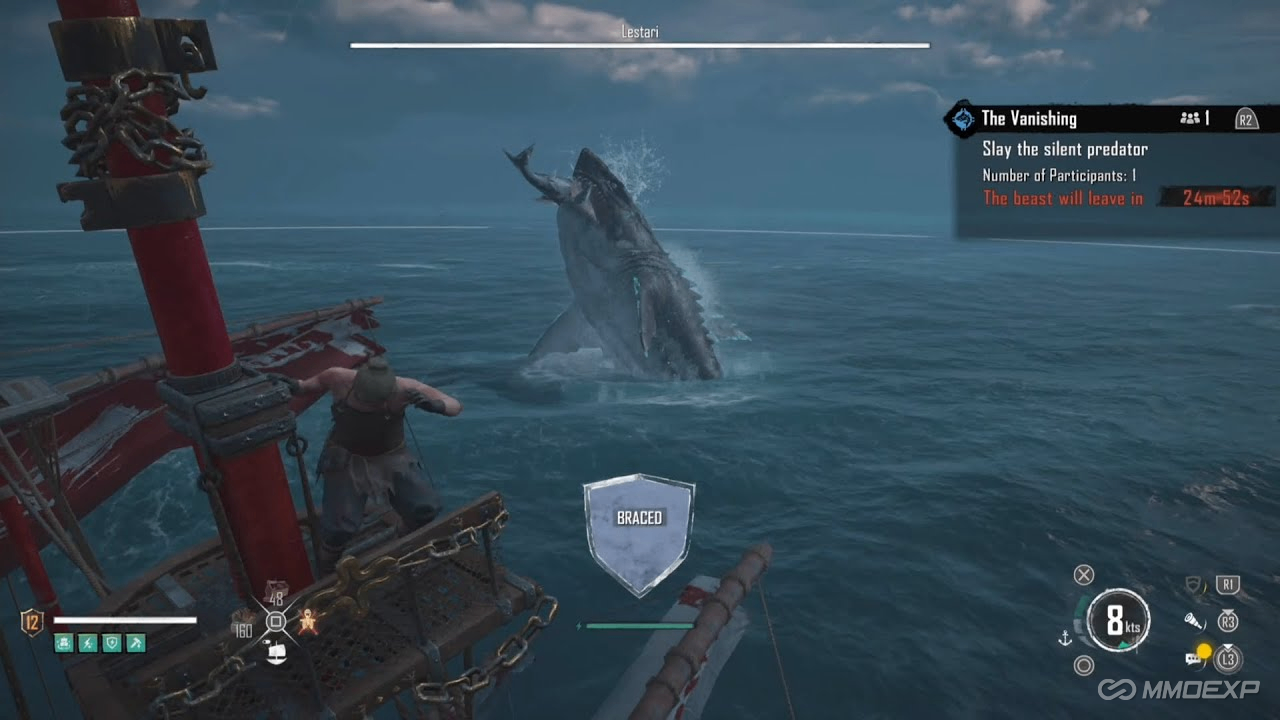
The visual identity of Lestari's Skin is built around weathered refinement. The hull appears shaped by long exposure to saltwater and conflict, where smooth surfaces are interrupted by scars that feel earned rather than inflicted. It gives the impression of a ship that has not been rebuilt, but rather continuously adapted.
Unlike more aggressive or fantastical skins, Lestari's design leans into realism infused with atmosphere. Wood textures appear aged but resilient, sails carry a muted tone that avoids spectacle, and structural details suggest practical reinforcement rather than aesthetic embellishment.
There is a sense of balance in its presentation. Nothing feels excessive, yet nothing feels neglected. Every element appears intentional, as if the ship has been refined through lived experience rather than designed in isolation.
Subtle environmental interaction enhances this effect. Under different lighting conditions, the ship shifts in tone sometimes appearing solemn and shadowed, other times catching light in a way that highlights its quiet strength. This variability reinforces the idea that the vessel is shaped as much by its surroundings as by its original design.
Presence Without Noise on the Open Waters
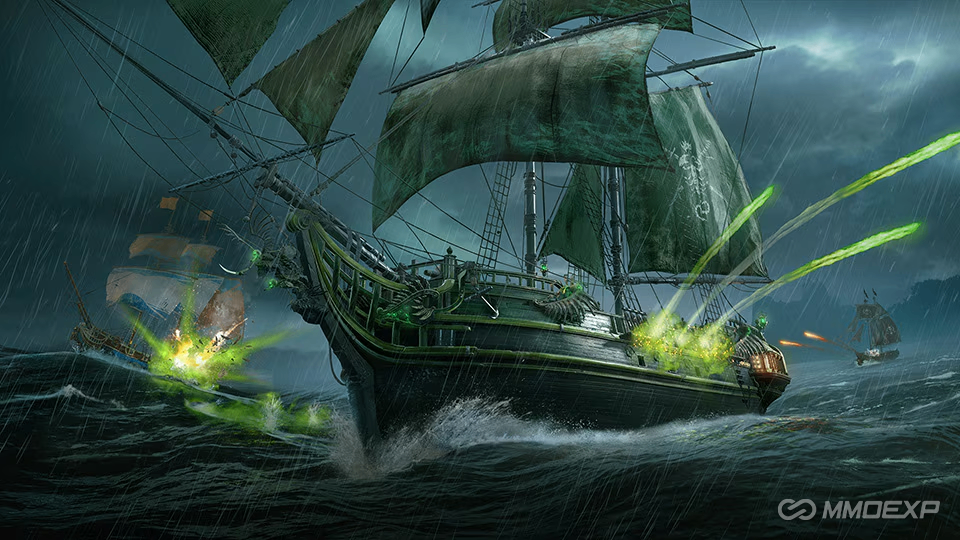
One of the most interesting aspects of Lestari's Skin is how it changes perception during gameplay encounters. While many ship skins in Skull and Bones are designed to intimidate through scale, brightness, or thematic extremes, Lestari's approach is the opposite. It communicates through understatement.
In naval encounters, this can be surprisingly effective. A ship that does not immediately reveal its intent or allegiance can create uncertainty in opponents. Without visual aggression to interpret, enemies are forced to rely more heavily on behavior and positioning rather than assumptions based on appearance.
This ambiguity becomes part of its strength. Lestari's Skin does not announce danger it allows danger to unfold naturally. In multiplayer settings, where split-second decisions often define outcomes, this lack of obvious signaling can influence how others engage, hesitate, or reposition.
There is also a psychological layer for the player themselves. Piloting a ship with such a restrained aesthetic can shift focus away from spectacle and toward awareness. It encourages attention to movement, timing, and environment rather than relying on visual dominance to shape encounters.
In this way, the skin subtly changes how battles feel, even though it does not alter any mechanics directly.
Identity, Legacy, and the Endgame Horizon
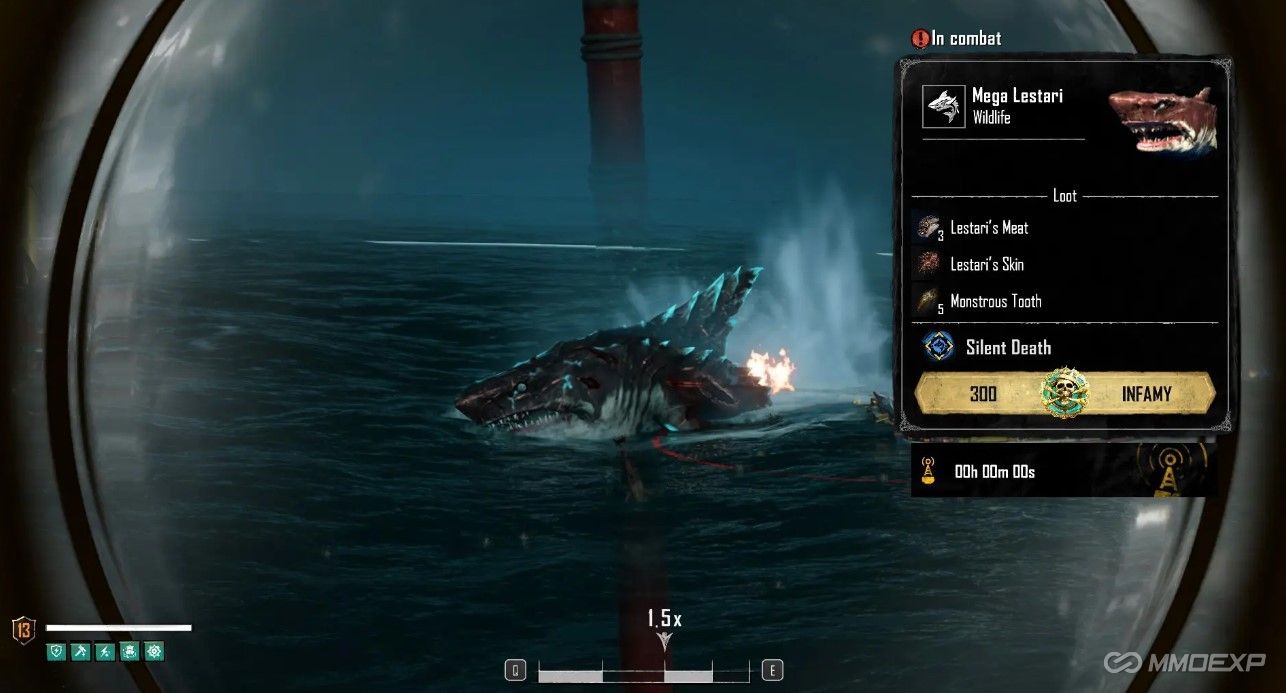
As players progress deeper into Skull and Bones, customization becomes increasingly tied to personal expression rather than simple upgrades. Lestari's Skin fits into this stage of the game as a form of quiet identity an aesthetic choice that reflects preference for control, balance, and endurance over chaos or excess.
It pairs naturally with disciplined playstyles, particularly those focused on survivability, tactical engagement, or long-range positioning. The skin does not clash with intensity, but it does not amplify it either. Instead, it stabilizes the visual identity of the ship, making it feel grounded even in the most chaotic encounters.
There is also a sense of narrative continuity attached to it. Skins like Lestari often feel as though they belong to a broader story one not explicitly told by quests or dialogue, but implied through design language. It suggests a vessel that has already lived through its defining moments and continues forward without needing to announce its past.
For collectors and long-term players, this kind of cosmetic carries additional weight. It is not about spectacle or rarity alone, but about what it represents in tone and philosophy. Owning it is less about showing off and more about aligning with a certain interpretation of the game's world one that values endurance over dominance.
In the broader ecosystem of Skull and Bones, Lestari's Skin occupies a space defined by restraint. It does not compete for attention in crowded harbors or chaotic battles. Instead, it stands apart by refusing to overstate itself.
And that is precisely its strength.
It turns the ship into something closer to a drifting legacy than a simple vessel. A presence that does not need to shout across the sea to be remembered only to keep moving forward, wave after wave, without losing its shape to the storms around it. Players can find Skull and bones items for sale cheap at MMOEXP with the 5% discount code "book".