

Summary
Path of Exile 2 contains countless quality-of-life features, shortcuts, and hidden mechanics that are easy to miss. Some can save seconds during every trade or map, while others can help you find better gear, manage your stash, level faster, and navigate the endgame more efficiently. For players who prefer to bypass the grind and get straight to the action, there are also platforms where you can find POE2 Currency for sale—just be sure to choose trusted sellers to protect your account. Here are some of the most useful Path of Exile 2 tips worth learning, based on the game's trade system, passive tree, campaign, stash management, and endgame tools.
1. Search for Similar Items on the Trade Site
One of the most useful trade shortcuts is Alt + Shift + Click.
Hold these keys and click an item to automatically create a trade search based on its stats. You can then remove unnecessary modifiers and adjust the values to find similar items.
The Filter by Item Stats button is also extremely useful, especially when searching for uniques with different roll ranges. Instead of manually entering every modifier, you can copy the item's stats and modify the values you actually care about.
This is a quick way to estimate an item's value or find a potential upgrade.
2. Test Expensive Upgrades in Path of Building
Before buying an expensive weapon, use the trade site's Copy Item function.
After copying the item, open Path of Building and press Ctrl + V in the Items section. You can then compare the potential upgrade with your current equipment and check its actual impact on your build.
This is especially useful for weapons because higher displayed damage doesn't always mean higher overall DPS once your build's mechanics are considered.
3. Make Trading and Currency Exchange Faster
The in-game trade market can be opened with /, allowing you to search for items without leaving the game.
You can also sort trade listings by modifier values, price, or listing age.
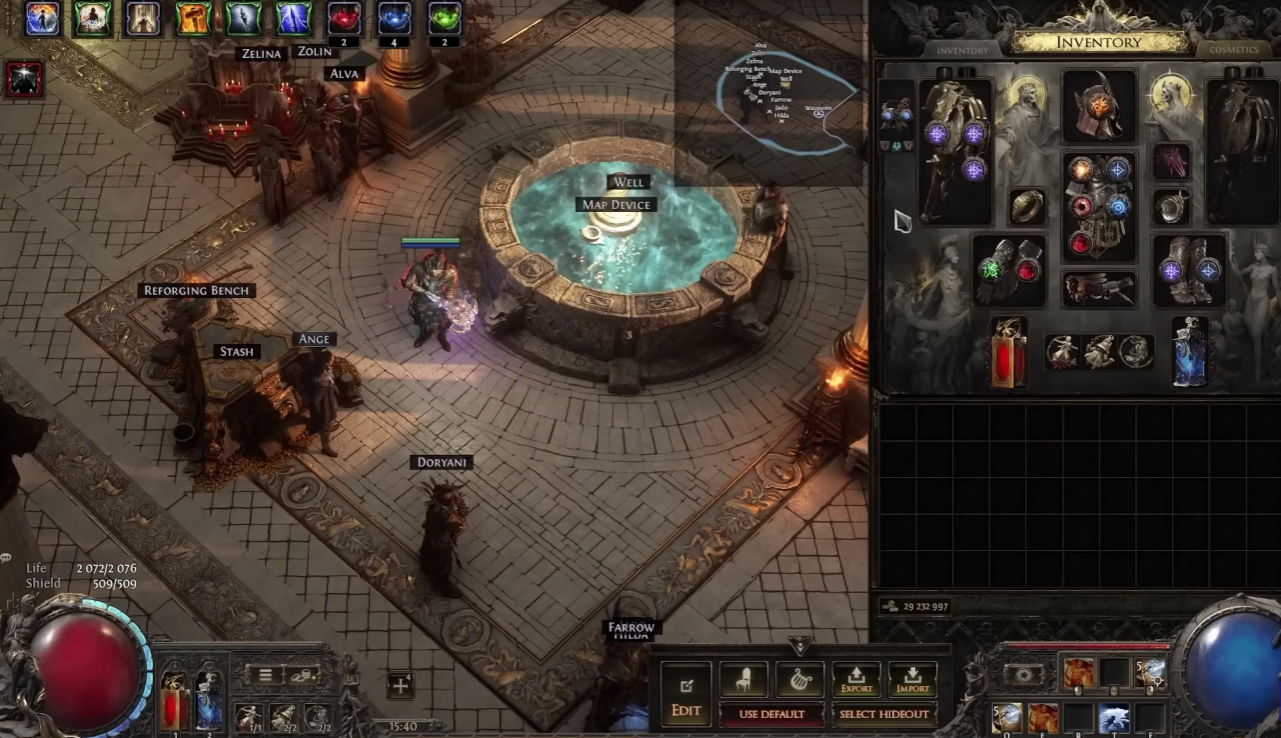
For currency exchange, Ctrl-clicking Ange opens the exchange interface quickly. You can also use Ctrl-click and Ctrl + Shift + Click to move currencies between the "I Have" and "I Want" sections.
These shortcuts are particularly valuable if you trade frequently.
4. Upgrade Items in Groups of Three
The reforging bench allows certain identical items to be upgraded using three copies.
For example:
3 Tier 14 Maps → 1 Tier 15 Map
Similar upgrading can also apply to certain runes and essences.
Specialized stash tabs may provide their own upgrade buttons, but the reforging bench is a useful alternative when those features aren't available.
5. Use Vendor Shortcuts
Different vendors offer different functions, and modifier-key combinations can open their interfaces directly.
Depending on the NPC, Ctrl-click, Alt-click, or Ctrl + Alt-click can open functions such as buying and selling, disenchanting, gambling, currency exchange, or merchant information.
Vendor inventories also partially refresh when your character levels up. During the campaign, check vendors after leveling because you may find a surprisingly strong upgrade.
6. Manage Your Stash Efficiently
Stash management becomes increasingly important as you progress.
Use Ctrl-click to quickly move items between your inventory and stash. Ctrl-right-click can move all items of the same type at once, making it much faster to unload repeated currency or materials.
You should also enable stash tab affinities. These automatically send certain items to the appropriate stash tab.
If you don't want an item to follow its normal affinity, use Ctrl + Shift + Click to place it into the currently selected tab instead.
You can also organize large collections of stash tabs into folders, making frequently used farming and currency tabs easier to access.
7. Search and Reset the Passive Tree
Use Ctrl + F on the passive tree to search for specific nodes.
For example, if a build guide tells you to take Mind Over Matter, search for it instead of manually looking through the tree. Press Enter to jump between matching results.
You can also use Refund All Passives to reset the entire passive tree. Remove your jewels first, and the game will display the required refund cost before you confirm.
For weapon-set passive points, Ctrl + Shift + Left Click can quickly assign Weapon Set 1, while Ctrl + Shift + Right Click assigns Weapon Set 2.
8. Compare Passives and Equipment
Hold Alt while examining a notable passive to view additional information. You can also pin passives for easier comparison.
The same idea works with equipment. Pin an existing weapon and compare it with a potential upgrade rather than relying only on the item's tooltip.
This makes build optimization much easier when you're deciding between several similar pieces of gear.
9. Improve Movement Controls
Path of Exile 2 allows you to customize sprinting and dodging.
The Keep Sprinting While Moving option lets your character continue sprinting after releasing the dodge button. This makes movement smoother, but it can also cause accidental deaths.
Hardcore players may prefer to configure a separate Dodge Only key so they can dodge without accidentally triggering sprint.
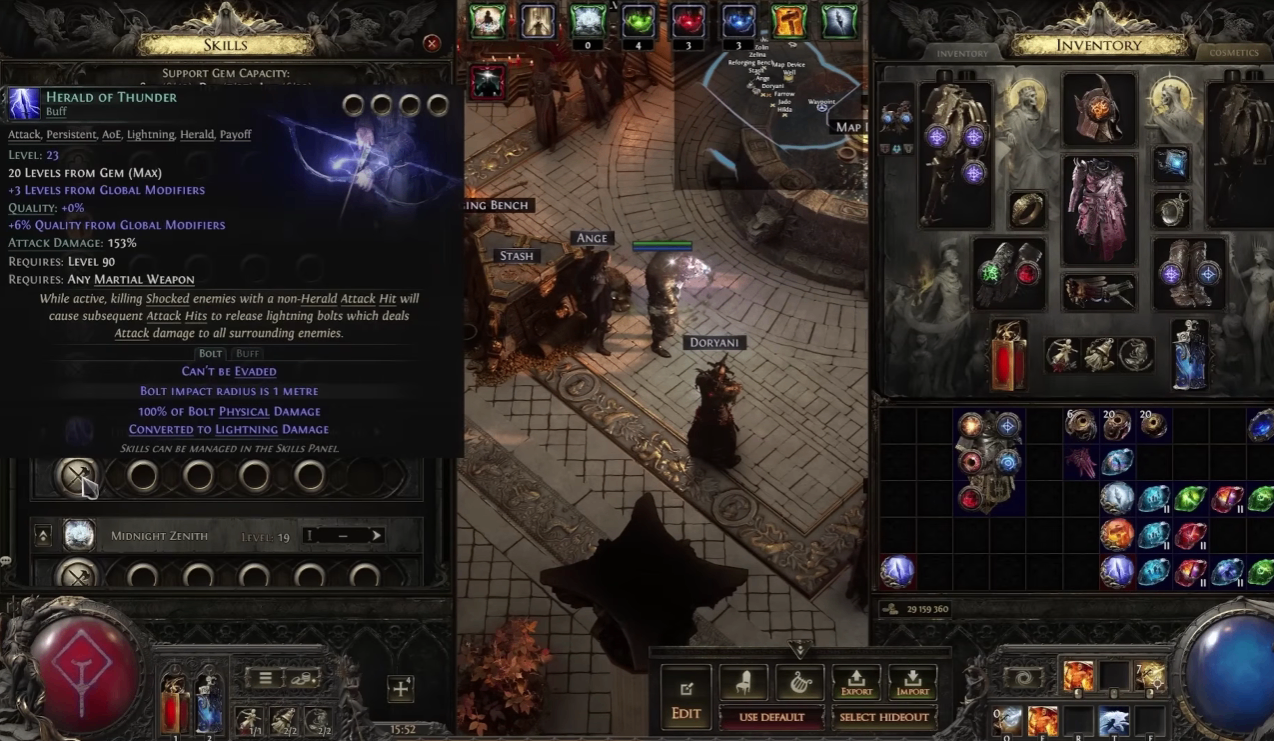
You can also Ctrl-click usable gems directly into your skill page.
10. Create New Campaign Instances
Want to farm a campaign area repeatedly?
Return to the entrance or waypoint and Ctrl-click it to open the instance manager. You can create a new instance, refreshing the area's monsters, rares, and bosses.
This is useful when farming experience, items, or specific campaign encounters.
11. Customize Your Minimap and Cursor
The minimap can be adjusted through Options → UI.
You can change its transparency, zoom, and position. The numpad plus and minus keys can also adjust its size.
If you frequently lose your cursor, change its size and color in the UI settings. A larger, brighter cursor can make combat much easier to follow.
Other useful settings include showing sockets, flask buffs, aura icons, life bars, and numerical life, mana, and Spirit values.
12. Don't Ignore Light Radius
Light Radius isn't only a visual modifier.
It also increases how much of the surrounding area is revealed on your minimap. This can make campaign navigation easier, particularly when exploring large zones.
You probably shouldn't sacrifice important combat stats just for Light Radius, but it isn't a completely useless modifier.
13. Track Permanent Campaign Rewards
Permanent campaign rewards are represented by special icons.
Press U to review your campaign progression and check whether you've collected all available passive rewards. The source notes that you should have 24 passive points from these rewards by the end of the campaign.
If you're missing points, revisit earlier areas and check for unfinished objectives.
Certain campaign areas can also contain valuable progression rewards. In Act 2, areas such as Cath, Valley of the Titans, and Marceron Badlands can provide useful league rewards. The source also identifies Sand Swamps Marsh in Act 3 as a guaranteed Lesser Jeweller's Orb location if you missed one earlier.
14. Use Atlas Search and Bookmarks
Endgame navigation becomes much easier when you use bookmarks.
You can right-click locations to mark them and later access them through the bookmark interface.
For the Atlas, use Ctrl + F to search for specific mechanics or locations. Type the name, press Enter, and the game can take you directly to the relevant area.
You can also use Ctrl-click on certain endgame destinations to quickly open a portal.
15. Learn Useful Chat Commands
Path of Exile 2 has several useful chat commands.
Type /help to see the available commands.
Some particularly useful ones include:
· /played — check character playtime.
· /deaths — check your death count.
· /kills — check monsters killed.
· /dnd — activate Do Not Disturb.
· /reset_xp — useful for measuring experience gains.
These commands can be particularly useful when testing builds or calculating farming efficiency.
16. Explore Hideout Features
Hideout objects can be moved and rotated precisely in edit mode. You can also export your hideout and import layouts created by other players.
If you don't want to build everything yourself, community-created hideouts can provide ready-made designs that you can import and customize.
You can also configure hideout access permissions if you want to prevent certain visitors from accessing your portals.
17. Check Hidden Build Options
Some mechanics aren't immediately obvious from the passive tree.
The source highlights special Instillment effects that don't appear as normal passive nodes. These can provide additional build customization through amulets.
There are also unusual interactions involving weapon-set passive points and class starting locations. Some of these may change in future updates, so treat them as advanced mechanics rather than permanent features.
Conclusion
Path of Exile 2 rewards players who understand its small quality-of-life systems. The most important habits are simple: learn the trade shortcuts, test expensive upgrades before buying them, organize your stash with affinities, search the passive tree instead of manually browsing it, refresh campaign instances when farming, customize your UI, and use Atlas bookmarks and chat commands to reduce unnecessary downtime. For those who need a boost, you can buy POE2 Currency through MMOEXP. None of these tricks will instantly transform your character into an endgame powerhouse. However, together they make trading, leveling, gearing, mapping, and build management considerably faster. The more efficiently you interact with the game's systems, the more time you can spend doing what actually matters: killing monsters, improving your build, and making progress through Wraeclast.