Weekend Drop -













Summary
A common assumption among players is that a substantial NIL budget is required to secure quality recruits at a small school, but this is incorrect. This system was tested for a full season at a one-star school and produced a top 40 recruiting class while expending less than 1,000 NIL points—and without needing to spend CFB 27 Coins on premium recruits to see results. The following guide provides the complete step-by-step methodology, including a component that most players overlook.
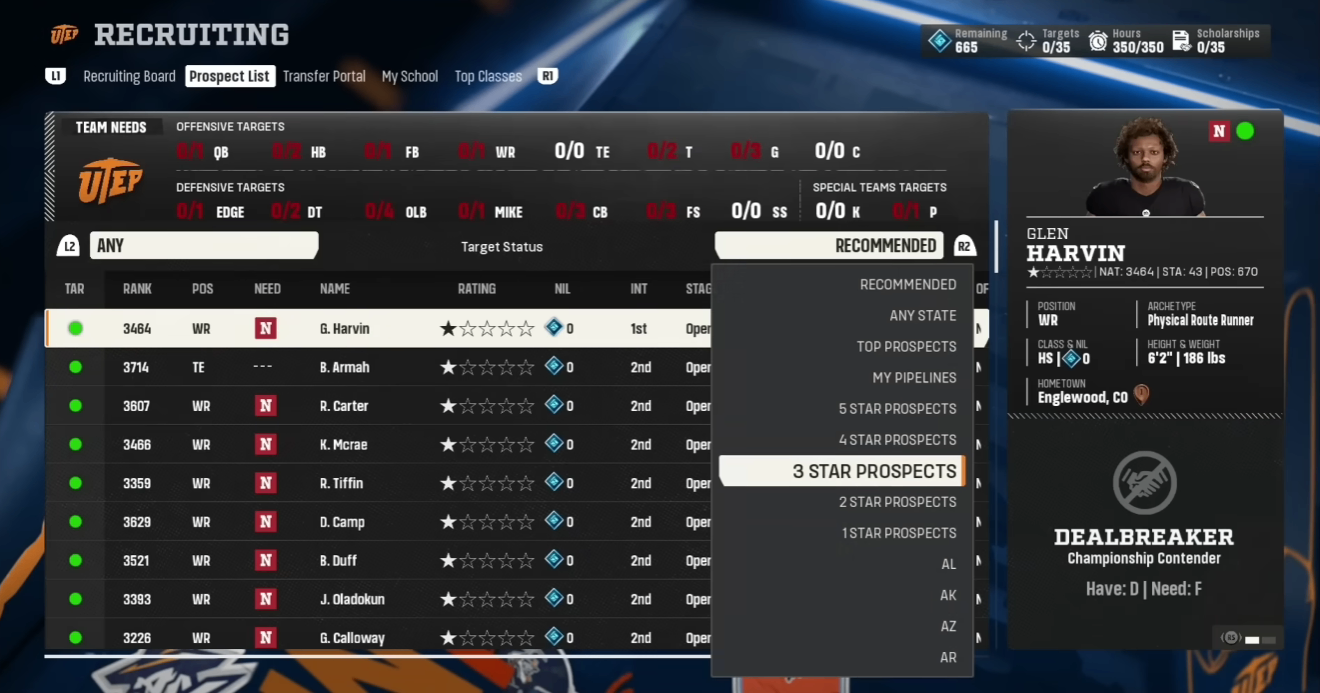
Preseason: Establishing the Foundation
Before examining the recruiting breakdown, a strategic overview is necessary. All dynasty points in the first season should be allocated toward recruiting and retention. Facility upgrades, equipment slots, and support staff should be deferred entirely. The singular focus should be acquiring talent.
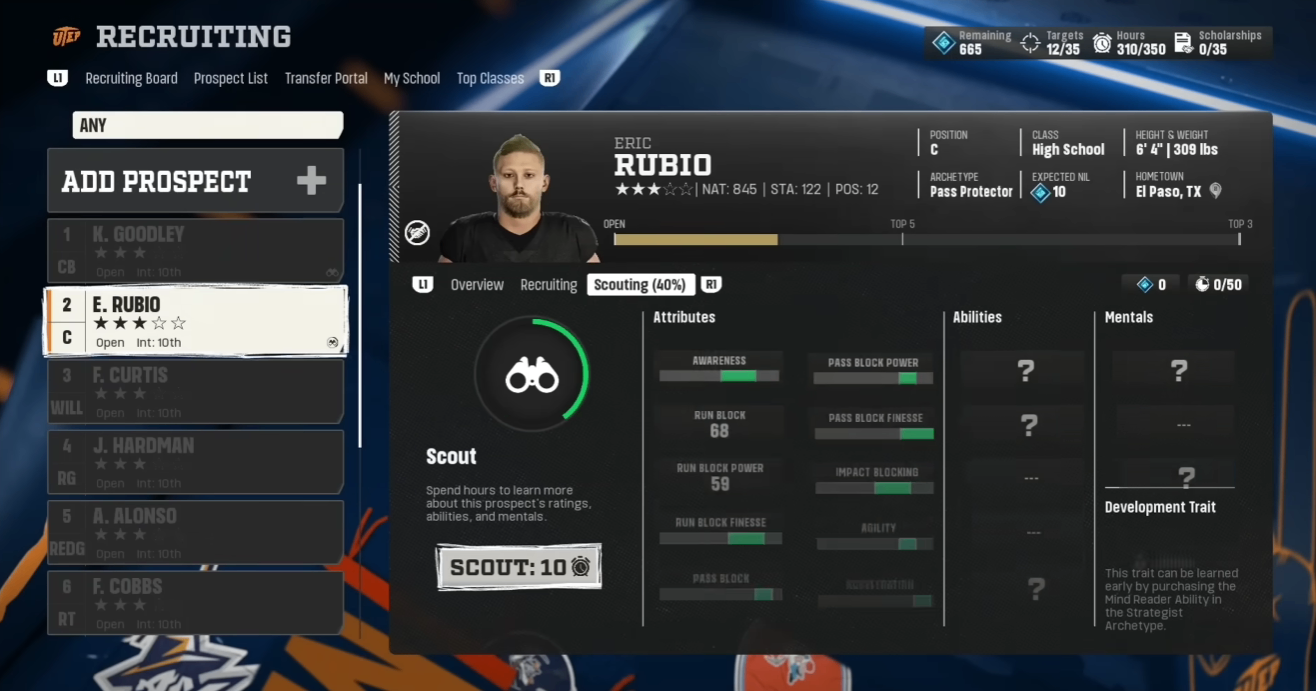
This process begins in the preseason, which is when all scouting should be conducted. Scholarship offers are not yet available. Given the limited hours available to small schools, comprehensive scouting of all prospects is not feasible. The objective is to identify three-star gems, which are identified through full scouting. The gem tag indicates a higher probability of star or elite development.
Positional Focus for Scouting:
Offensive line
All defensive positions
Positions to Exclude:
Quarterback
Running back
Wide receiver
These excluded positions are readily available later in the season and through the transfer portal.
The primary challenge is the rarity of gems. The gem tag appears on approximately 10 to 15 percent of fully scouted prospects. At a one-star school, one or two gems is a realistic expectation. The recruiting class should be constructed around this number.
Week Zero: Extending Offers to Gems
When week zero arrives and scholarship offers become available, any identified three-star gems should receive an offer. If the expected NIL requirement is reasonable, the offer should double the expected amount rather than match it. This accelerates the commitment timeline significantly.
For each gem, the "send the house" approach should be applied, allocating the maximum 50 hours. If multiple gems exist, hours should be distributed across them—approximately 10 to 25 hours each—allowing the NIL offer to serve as the primary incentive.
Week One: Identifying "Quiet Commits"
At this stage, the recruiting board should be reviewed for four-star prospects who have received no scholarship offers. The same positional priorities apply: defense, offensive line, with athletes now included. Athletes provide positional flexibility, which is valuable for small schools requiring depth across multiple positions.
Critical distinction: These prospects are not offered scholarships. This remains the case throughout the process. Instead, the maximum 50 hours should be allocated to each, utilizing the "send the house" approach. With sufficient influence accumulation, these players will commit without a scholarship offer, based on hours alone.
Notable benefit: These recruits carry zero NIL cost during their freshman season.
These prospects are referred to as "quiet commits." They exist beneath the radar of other programs and can be acquired at no NIL expense. This represents the most efficient recruiting method available in the current game.
Weeks 2-14: The Weekly Recruiting Cycle
From week two through the end of the regular season, the following cycle applies:
Primary Actions:
Allocate maximum hours to no-offer four-star quiet commits using the "send the house" approach
Monitor the recruiting board for competing offers from other schools
If a competing school enters the race and gains traction, redirect hours to the next available no-offer four-star
When a Recruit Reaches Top Five:
Evaluate the program's grades against the recruit's priorities
If grades meet the required threshold, apply the hard sell strategy with 10 additional hours
If grades do not meet the threshold (common for small schools), continue with the "send the house" approach
When No-Offer Four-Stars Are Exhausted:
Expand the search to three-star prospects
Apply the same rules, with one exception: if expected NIL is low enough, extend a scholarship offer and double the expected amount
Doubling the offer accelerates commitment, allowing progression to the next target
The Quiet Commit Caveat
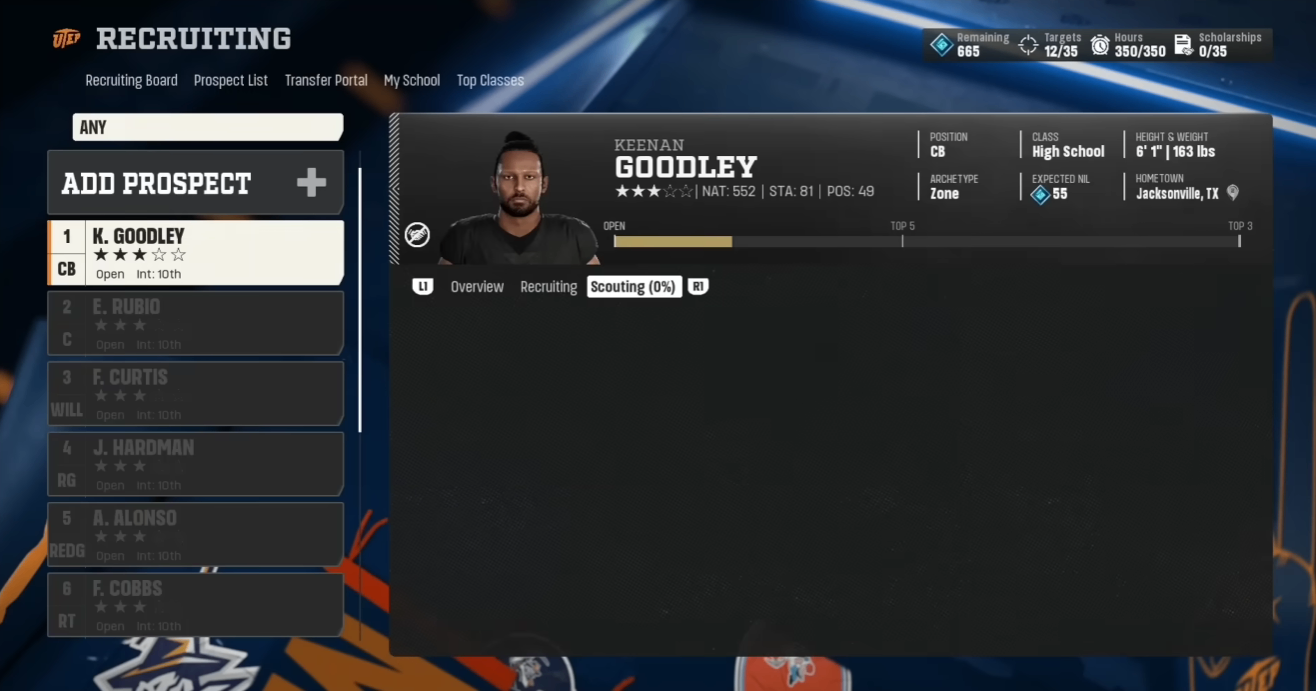
When a recruit is not offered a scholarship, his influence bar must be completely filled to secure a hard commitment before the transfer portal concludes. If this does not occur, the player may appear as signed during position change week but will not be present on the roster the following season.
Therefore, filling the recruit's influence bar is essential for the quiet commit strategy. Pipeline advantages and recruiting-related coaching upgrades significantly accelerate this process.
The Transfer Portal: Primary Roster Building Resource
For small schools, the most efficient path to program improvement is winning games. Victories increase team grades, prestige, and dynasty points, creating a compounding effect. To field the most competitive roster possible, the transfer portal should be utilized extensively. Portal acquisitions provide immediate impact players who contribute from day one.
Portal Strategy:
Target three-star prospects without offers and with low expected NIL
Many prospects have zero NIL requirements, while others range from 5 to 10 points
Double the NIL offer to secure commitments if competition emerges
Selective Premium Spending: On occasion, a prospect justifies a premium investment if the budget allows. A scouted 84 overall player with 90+ strength at a position of need warrants this expenditure.
Hour Distribution: Given the short transfer portal window, hours should be distributed across multiple targets rather than concentrated on a few. Scholarship offers and NIL contributions should carry the primary recruitment burden.
Progress Monitoring: Throughout the portal period, boards and influence bars should be monitored regularly. If significant ground is lost on a target, he should be removed and replaced with another prospect.
Position Focus in Portal: Quarterbacks, running backs, and wide receivers are abundant in the portal and should be acquired during this phase.
Results: System Performance
At UTP, a one-star school, this system produced the following results:
37th ranked recruiting class nationally
Four 4-star recruits
23 3-star recruits
Total NIL expenditure under 1,000 points
The following season, the roster's overall rating improved from 64 to 75—an 11-point increase in a single season. This improvement is sufficient to achieve competitiveness, and continued application in years two and three positions the program for sustained success.
Scaling the System
Zero-Star School:
Expectations should be moderated. A class of 10 to 15 three and four-star recruits is achievable and sufficient to begin program development.
Two or Three-Star Program:
This strategy yields even greater numbers of four-star quiet commits.
Final Takeaway
This system succeeds by targeting value where other players do not look. Quiet commits provide four-star talent at zero NIL cost. Gems offer elite development traits. The portal addresses immediate roster needs. Combined, these approaches build a competitive program without significant financial expenditure—though CFB 27 Coins for sale are available through platforms like MMOEXP for those seeking shortcuts, smart recruiting alone delivers excellent results without spending real money.