Weekend Drop -












Summary
Recruiting in CFB 27 has been transformed by the new NIL economy, where every prospect has a price tag and the old "four-star poaching" strategy no longer works. While high-talent players can still be signed, keeping them becomes the real challenge as their NIL demands escalate with on-field performance—managing resources is just as critical as earning College Football 27 Coins to fund your program's growth. This guide covers NIL budgeting, scouting, support staff, deal-breakers, and coach archetypes to give you a competitive edge whether you're rebuilding a one-star program or maintaining a blue blood.
The NIL Reality
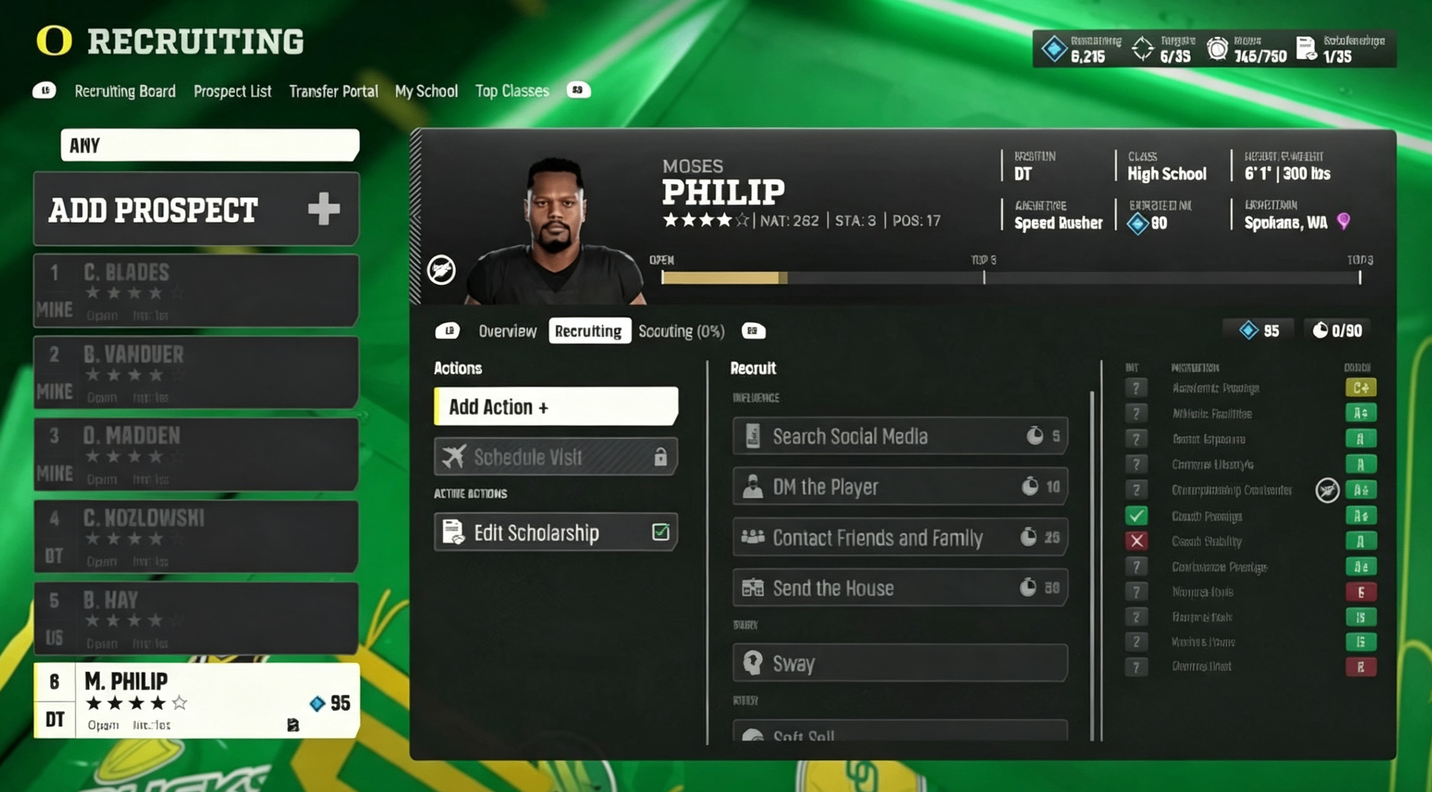
Every prospect has an expected NIL amount—the baseline offer required to keep them interested. Meeting the number yields a positive reaction; coming in under causes frustration. The expected NIL varies by school—a recruit who cares about brand exposure might demand a fortune from a smaller school while offering a discount to Oregon or Texas.
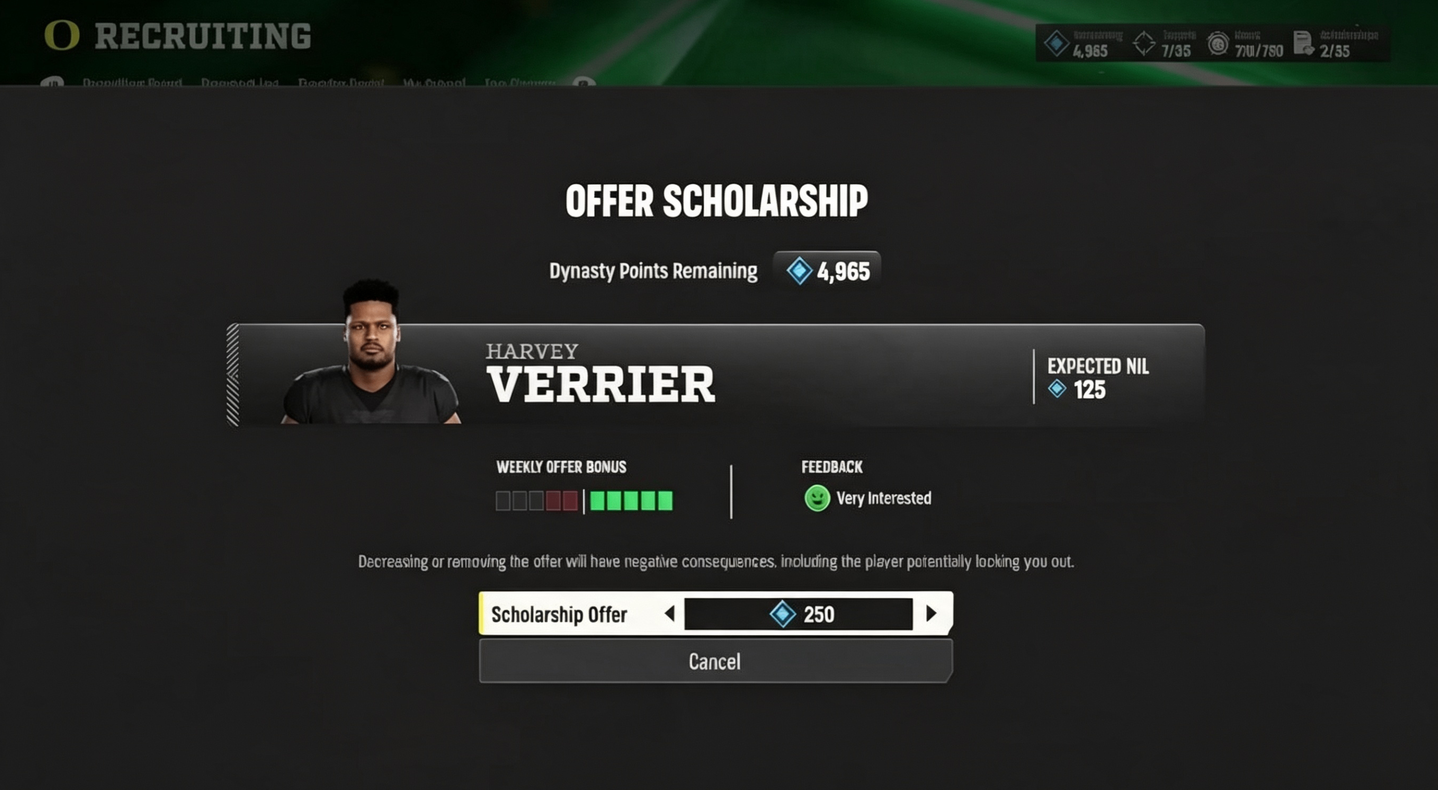
The NIL offered becomes their baseline for future seasons. As the player performs, their NIL demand climbs. Starting a recruit at 240 locks that amount in. If you later reduce the offer, even by five points, the NIL bonus disappears and a penalty applies. Always start at or slightly above baseline.
Roster retention is critical. Keeping players means spending NIL to resign them from the same transfer portal budget. If your quarterback wins awards, he will demand significantly more NIL to stay. Always leave budget room for retention.
Coach Archetype Selection
You choose from three coach backstories:
Recruiter is the strongest choice. Scouts faster and better, and provides quicker access to green gems. Since recruitment is harder this year with recruits able to recommit, this archetype gives the biggest early advantage.
Motivator works best for elite programs with championship-caliber rosters.
Tactician is suited for programs in the middle of the pecking order.
Recommendation: Start with Recruiter regardless of your school's prestige.
Coach Build Blueprints
Powerhouse Program (4-5 Star Schools): Start with Recruiter and invest in tier one across all scouting packages. Max out "Always Recruiting" for extra hours. Invest in Motivator for XP bonuses and Talent Developer to tier four for "Pipeline Factory." Remaining points go to Program Builder or CEO.
Small School Build (1-3 Star Schools): Start with Recruiter to access Strategist. "Lower the Bar" reduces dealbreaker requirements and NIL costs. "Mind Reader" gives a chance to learn dev traits while scouting. After Strategist, invest in Talent Developer to tier four, then Program Builder for "Relationship Builder" and "Strong Roots" to upgrade pipelines.
Support Staff Optimization
Support Staff is a new layer that can dramatically improve recruiting efficiency. You can hire up to five members during the preseason.
Recruiting Hours Increase gives extra hours. Works well for powerhouses but is a waste if you can't afford recruits.
NIL Expectation Reduction reduces NIL cost for recruits and current players. Platinum costs 1,500 points for 30% reduction. To break even, spend at least 5,000 points in NIL per year. Paired with Platinum Support Staff Discount (50% off), it costs only 750 points with a break-even of 2,500 points.
Small Schools Warning: At Bronze tier, you still need to spend roughly 1,500 points per year to break even. Most one- and two-star schools don't spend that much.
The Optimal Combo: With Support Staff Discount active, NIL Reduction Platinum costs 750 points, Offseason Progression costs 750 points, Support Staff costs 1,000 points, and Recruiting Hours Gold costs 375 points—total under 2,900 points for massive bonuses.
Three-Star Strategy for Rebuilds
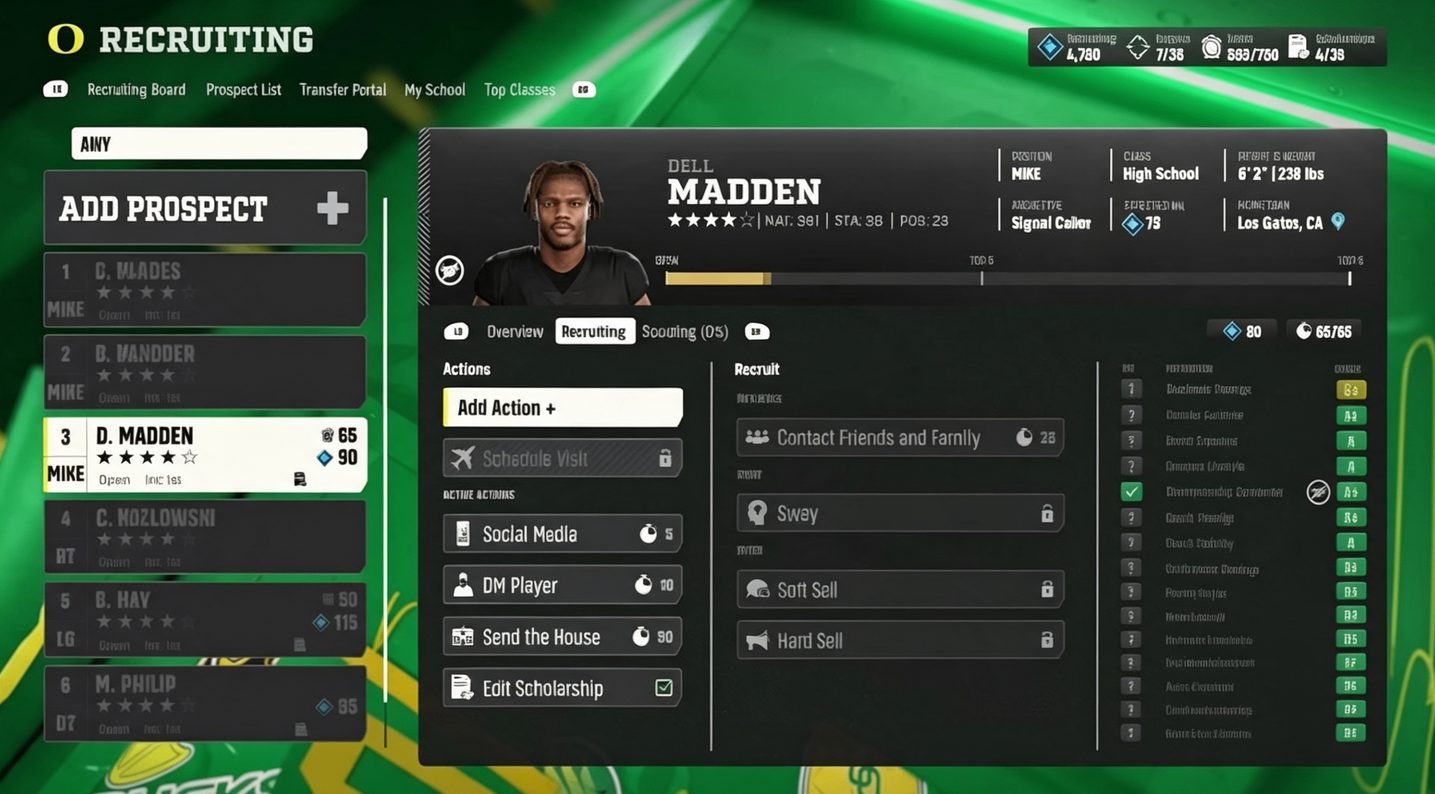
The old "four-star poaching" strategy no longer works. A four-star recruit might require 230 NIL points just to get in the door.
Three-stars are the lifeblood of rebuilds:
National rating does NOT correlate with player quality
The key is finding the right ones at the right price
Gems are gold. A gem player, even at three-star level, tends to have better dev traits
A top three-star might require 110 NIL; a lower-ranked one might require zero
Budget Guidelines:
1-star schools: $800-$2,000 total year
3-star schools: ~$5,000
5-star schools: ~$10,000
5-star recruits: $100+
4-star recruits: usually below $100
3-star recruits: some free, some $50+
Deal Breakers
Playing Time – Great for rebuilds. Within your control.
Proximity to Home – Does not fluctuate. Safe and reliable.
Coach Prestige – Only increases with program success.
Playing Style – The most ruthless. Avoid it. Players transfer if they don't get enough touches.
Pro Potential – Tied to draft numbers. Smaller schools struggle early.
Conference Prestige – Can drop if the rest of the conference struggles.
Scouting and Evaluating
CFB 27 removed scholarship offers during the preseason. Scout as many players as possible in week one.
Gems and Busts: A green gem appears for gems; the same green gem appears then flips to gray with an X for busts. While gems are a great start, mental and physical abilities ultimately determine value.
What to Look For:
Throw Power Is Rarer – High 90s arms are more rare
Recruits Are More Explosive – Best prospects have higher-end speeds
Generational Recruits Exist – Extremely rare, but program-changing
The Playing Time Grade Trick: When scouting points run out, the playing time grade helps evaluate prospects. A C-minus doesn't mean the player is bad, but it indicates a lower chance of being a gem. When comparing two similar prospects, go with the higher playing time grade.
NIL Offers and Recruiting Hours
Never start high. Starting at 240 locks that amount in. If you later reduce the offer, even by five points, the NIL bonus disappears. Start at baseline or slightly above.
More Hours = Less NIL: 50 hours vs NIL—NIL wins. 65 hours vs NIL—closer, but NIL still wins. 80 hours vs NIL—80 hours wins. If you build an Elite Recruiter with 65-80 hours, you can go all-in on hours and pull back some NIL. Recruiting hours are free and scale across multiple recruits.
The Transfer Portal
The transfer portal is one of the most powerful tools in CFB 27. Leave holes in high school recruiting intentionally—the portal can fill them later with older, more proven players. Three-star transfers can be roster anchors at little or no NIL cost for smaller schools. Address urgent roster needs instantly rather than waiting years for freshmen to develop.
Facility Management
Facility upgrades now matter more than ever. If the budget has over 3,000 Dynasty Points, spending 300 on a Players Lounge to gain 150 facility points is worthwhile—this can move facilities from B-minus to B-plus, opening up new recruits. Upgrade facilities only when you can afford it without crippling your NIL budget.
Common Mistakes
Hoarding Talent – In CFB 27, hoarding five-stars is a trap. Each five-star's NIL demand escalates annually.
Ignoring Pipelines – Schools with weak pipelines struggle to sustain success.
Not Saving for Retention – Players ask for more money after winning awards. If all your budget goes to recruits, you'll lose key players.
Wasting Support Staff – Extra hours are useless if you don't have NIL to sign recruits.
Conclusion
College Football 27 Dynasty recruiting is more strategic than ever. You can no longer simply hoard talent—you must build a sustainable program through smart budgeting, strategic scouting, and understanding your program's identity.
Key Takeaways:
Three-stars are the lifeblood of rebuilds
Start low on NIL offers to preserve flexibility
Save budget for roster retention
Scouting is more important than ever
Support staff can dramatically improve recruiting efficiency
Understand deal breakers—Playing Style is the most dangerous
Recruiting hours are free—build an Elite Recruiter to offset NIL costs
The old "four-star poaching" strategy may be dead, but the new system rewards smart planning more than ever. Whether you're starting as a one-star rebuild or taking over a five-star powerhouse, these strategies will help you build a championship program.