Weekend Drop -












Summary
Speed is more expensive to upgrade than ever before—the cost to upgrade quickness and power has jumped to around 20 points for most prospects, compared to 10-14 in previous years. You can't simply take a slow player and make them fast anymore; you need to recruit speed, not develop it, because even spending real resources like buy College Football 27 Coins to boost your program won't fix a roster full of slow athletes. This guide breaks down which archetypes produce the fastest players at every position, where to find them, and why speed is now the most valuable recruiting currency in College Football 27.
Why Speed Matters More Than Ever
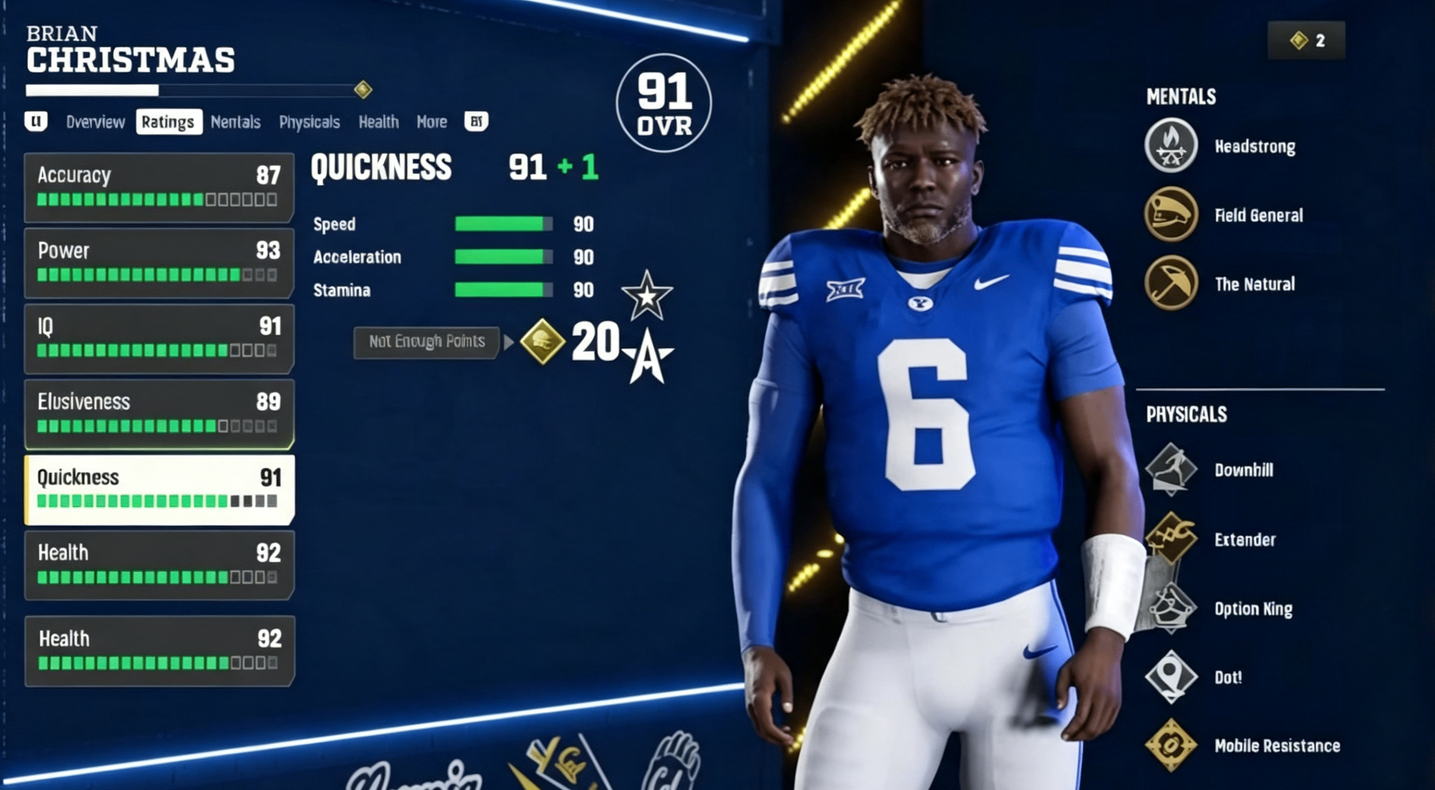
The cost to upgrade speed has increased significantly. A player with 76 speed will cost 20 points to upgrade just once. Meanwhile, upgrading route running costs 2 points, catching costs 2 points. You can upgrade a receiver's hands a dozen times for the same cost as upgrading their speed once.
The takeaway: Teach them the skills, but recruit the athleticism. Speed, power, and strength are too expensive to develop.
Quarterback: Dual Threat is King
The fastest quarterbacks are your dual threats, with the athlete dual threat being the absolute best option. You'll see guys coming in with 93+ speed out of high school, while the non-athlete versions typically sit around 80-85 speed.
What makes the athlete dual threat so valuable is the combination of speed and throw power. A player with 93 speed and 94 throw power has two elite attributes that are also the most expensive to upgrade. Focus on improving accuracy over a couple years—it's much cheaper—and you've got a national championship-caliber QB.
Don't bother with pocket passers. Even the best in the nation rarely break 80 speed. You will not be able to upgrade them to 90 speed this year. It's just not happening.
Acceleration note: Backfield creators tend to have elite acceleration but lower speed. Some players prefer 83 speed with 90 acceleration over 90 speed with 83 acceleration. Know your preference.
Running Back: East West Playmaker Dominates
The East West playmaker is your fastest running back archetype by a wide margin. True freshmen regularly come in with 95-96 speed. They also get the shifty ability, which makes them feel even faster in-game.
The downside is acceleration—some East West playmakers have 96 speed but only 85 acceleration, which can be a dealbreaker for some players.
Other fast options: North South receivers and Backfield Threats occasionally produce high speed, but the East West playmaker is the most consistent.
State trends: Florida running backs consistently come in faster than other states. If you see a Florida kid, pay attention.
Wide Receiver: Speedsters Are Back
The Speedster archetype is now producing elite speed we haven't seen before. Last year, the fastest speedsters came in around 92-95 speed. This year, we're seeing true freshmen with 99 speed.
The Speedster's value goes beyond pure pace. While their catching and route running might be underwhelming, those skills are cheap to upgrade. The 20-point cost to upgrade speed makes the Speedster archetype arguably the most valuable in the game.
Contested Specialists are the surprise second-fastest archetype. They can also come in with 98 speed, though this seems rarer. Physical Route Runners lag behind these two.
Fastest players by state: Florida and California produce the fastest receivers. If you're scouting a speedster from either state, prioritize them.
Tight End: Vertical Threat and Position Changes
Vertical Threat is your fastest tight end archetype, with true freshmen coming in around 86 speed. Physical Route Runner is a close second at around 85 speed for three-star prospects.
The best speed play at tight end is the position change method. Move a Contested Specialist receiver to tight end. These players often have 90 speed and the big body to play the position. You can also move a 6'6" generational WR to TE for elite speed at the position.
Offensive Line: Speed Matters Here Too
If you want athletic offensive linemen:
Agile is the fastest at guard and interior positions
Pass Protector is faster at tackle
Well-Rounded is third
Raw Strength comes in "slow as dirt" and should be avoided if you care about speed
Edge Rusher: Speed Rusher is the Move
The Speed Rusher archetype is your best friend at edge. True three-star freshmen can come in with 87 speed—elite for the position. While their finesse and power moves might be low, those are cheap to upgrade compared to speed.
Alternative tactic: Move Thumper and Lurker linebackers to edge rusher. They come in with elite speed and acceleration, and you can teach them pass rush moves.
Defensive Tackle: Speed Rusher Again
The Speed Rusher DTackle is your fastest option. True freshmen can come in with 85 speed, 86 acceleration—incredible for a 300-pound player.
The only challenge is the 89 acceleration requirement for Quick Jump. Most speed rushers won't have the skill cap to reach it, but when you find one that does as a freshman, he'll be a game-changer on third down.
Power Rushers are the next fastest at the position.
Linebacker: Lurker is the New Big Dog
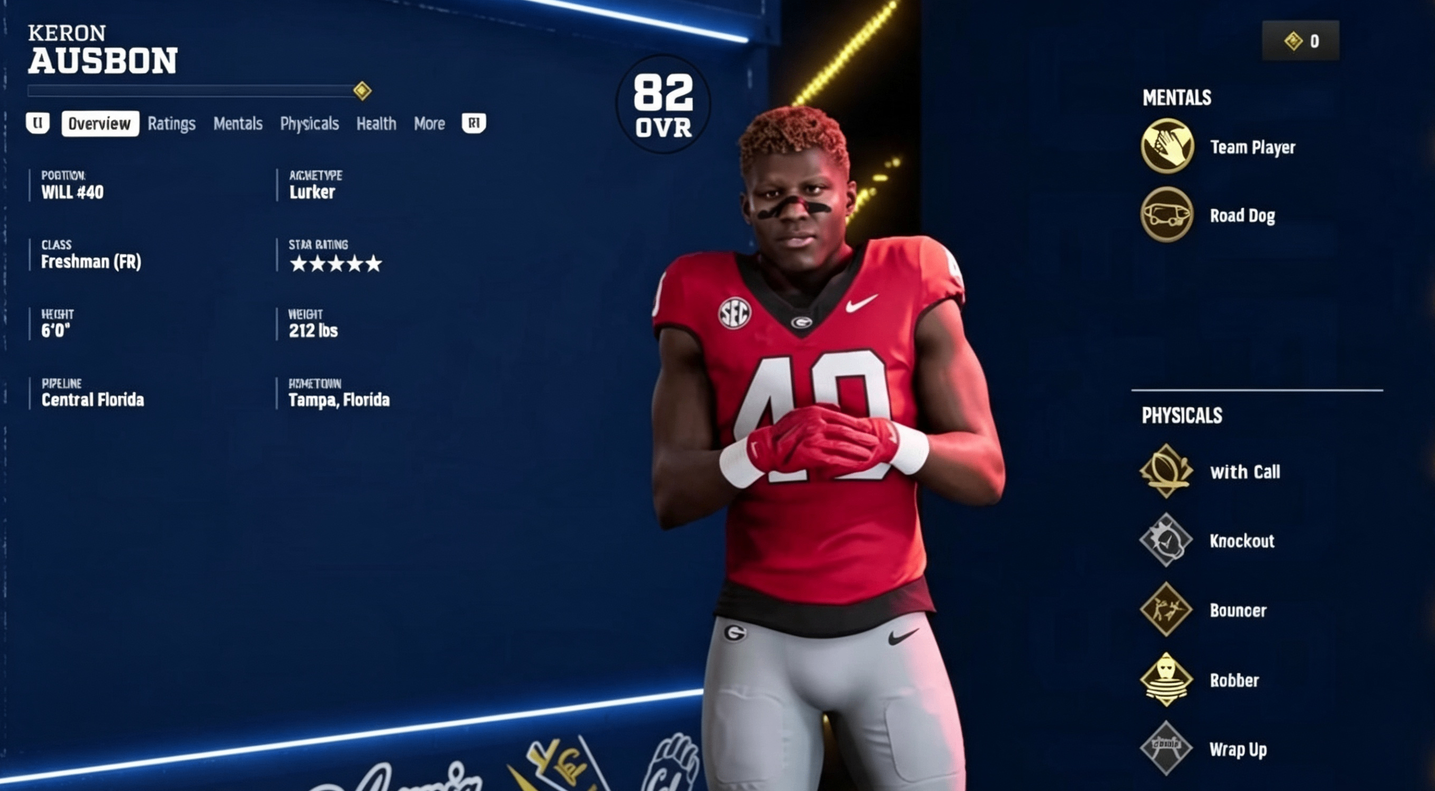
The Lurker archetype is your fastest linebacker, period. True three-star freshmen regularly come in with 90 speed—elite for a linebacker. You can find players at Sam, Mike, and Will linebacker all dominating speed lists.
Signal Caller is the next fastest, with true freshmen around 82-88 speed depending on state.
Thumper is slower on average, but if you find one from Florida, they can come in with 87 speed.
State trend continues: Florida, California, and Georgia produce the fastest linebackers.
Cornerback: The Fastest Position Group
Cornerbacks produce the fastest players in the entire game. You'll see true freshmen with 99 speed, and it's not hard to find 95+ speed corners in any recruiting class.
The fastest archetypes are:
Bump and Run (true freshmen regularly at 96 speed)
Field Corner (also at 96 speed)
Zone Corner (95 speed)
Boundary Corner lags behind. You'll be hard-pressed to find a true freshman boundary corner with more than 90 speed.
State trend: Florida produces the highest concentration of elite speed corners. Three Florida corners at 96 speed as true freshmen in one class is not a coincidence.
Safety: Cover Specialist and Hybrid
Cover Specialist is your fastest safety archetype, with true freshmen coming in around 94 speed. You'll occasionally see 96-97 speed.
Hybrid is a close second at 92 speed.
Box Specialist is your slowest and should be avoided if you want speed.
The best play: Move fast linebackers or fast corners to safety. A Lurker linebacker with 94 speed and 91 acceleration becomes an elite safety prospect. A Field Corner with 96 speed but coverage issues can transition to safety where you can teach them the position.
The Florida Factor
If you take one thing away from this guide, it's this: Florida produces faster players than any other state. Across running back, receiver, cornerback, linebacker, and safety, Florida kids consistently come in with higher speeds than their counterparts from other states. California also produces fast talent, but Florida is the gold standard.
Concluison
Speed in College Football 27 is different this year. It's more expensive, more rare, and more valuable than ever before. Recruit athletes, teach them the skills, and you'll build a roster that can outrun any opponent.