










Summary:
College Football 27 rewards players who master the small details. From instant hot routes and defensive alignment fixes to unstoppable route combinations, smarter blocking, and elite coaching adjustments, these advanced tips will dramatically improve your offense, defense, College Football 27 Coins, and overall gameplay.
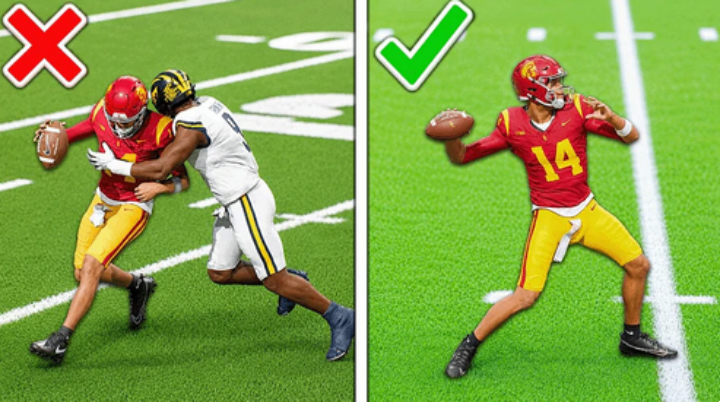
Step 1: Use Formation Shifting for Instant Hot Routes
One of the biggest hidden mechanics in College Football 27 is formation shifting.
Most players use formation shifts simply to disguise their offense before the snap. However, elite players use it for a much bigger advantage: instant hot routes.
Normally, you must wait for your offense to get fully set before making multiple hot route adjustments. By formation shifting into your actual play, every receiver becomes immediately available for adjustments.
Benefits include:
Faster offensive tempo
More pre-snap adjustments
Less time for defenses to react
Better disguise of your real play
This strategy allows experienced players to snap the football before the defense has fully aligned.
Step 2: Fix the Defensive Matchup Bug
One of the most frustrating bugs in College Football 27 involves defensive coverage flipping after offensive motion.
The culprit is usually your Quarterback Matchups coaching adjustment.
Avoid using:
By Speed
By Height
By Route Running
Instead, always leave this setting on:
Balanced
Balanced prevents your cornerbacks from swapping assignments unexpectedly when offenses motion receivers.
Simply changing this one setting can eliminate countless free touchdowns.
Step 3: Master the Halfback Slide Route
The Halfback Slide Route is one of the strongest receiving routes in the entire game.
It excels against:
Man Coverage
Cover 3
Cover 4
Most Zone Defenses
Because the running back crosses the formation, defenders often struggle to track him.
Even short completions frequently gain:
5–8 yards
Easy first downs
Consistent check-down options
Pair it with:
Comebacks
Streaks
Flood concepts
This creates multiple reads on the same side of the field.
Step 4: Convert Play Action into Better Slide Routes
Many playbooks include play-action versions of the slide route.
These are slower because the running back must fake the handoff first.
A better solution is using Chip and Release.
Simply hot route the running back to chip before releasing.
Benefits include:
Similar timing to normal slide routes
Extra pass protection
Better against blitz-heavy defenses
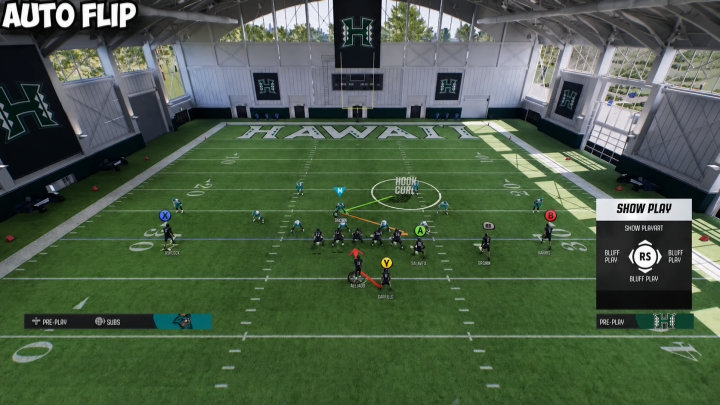
Step 5: Keep Auto Flip Enabled
Many players mistakenly disable Auto Flip on defense.
This creates alignment problems against balanced and strong formations.
With Auto Flip enabled:
Slot defenders align correctly
Run fits improve
Coverage responsibilities stay balanced
Strong-side runs become easier to defend
Only disable Auto Flip when intentionally designing weak-side blitzes.
For almost every situation, leave it ON.
Step 6: Take Advantage of Trick Plays
Reverse passes remain one of the easiest explosive plays in College Football 27.
Popular options include:
Reverse Pass
Jet Reverse Pass
Reverse Flea Flicker
When timed correctly, these plays often produce:
One-play touchdowns
Huge gains
Defensive breakdowns
Use them sparingly to catch opponents by surprise.
Step 7: Always Watch the Flame Icon
One of the most overlooked offensive tools is the Flame Icon.
Before every pass play:
Hold the protection view
Check where the flame appears
The flame indicates where a free blitzer is likely coming from.
Once identified, you can:
Slide protection
ID the Mike linebacker
Block your running back
Change your offensive line assignments
Learning this system dramatically reduces free sacks.
Step 8: Build Better Red Zone Passing Concepts
Scoring inside the 20-yard line requires different route combinations.
One excellent concept uses:
Tall tight end
Deep in route
Custom stem adjustment
High-ball pass
Possession catch
This combination creates excellent leverage near the back of the end zone.
Always remember:
High-ball throws reduce interceptions.
Bigger receivers win more contested catches.
Step 9: Save Your Coaching Adjustments
Unlike previous games, College Football 27 now allows permanent coaching adjustments.
Instead of changing them every game, configure them once inside the main menu.
Advantages include:
Faster game starts
Consistent defensive behavior
Better macro integration
No forgotten settings
This small quality-of-life improvement saves valuable time every match.
Step 10: Stop Big Kick Returns
Kick coverage wins games.
A simple kickoff strategy dramatically limits explosive returns.
Kick left, then manually guide your outside gunner toward the sideline.
This creates a defensive funnel.
Instead of allowing the returner outside leverage, you'll force them back into the middle where the rest of your coverage unit is waiting.
Consistent execution significantly reduces return touchdowns.
Step 11: Don't Waste Timeouts
Many players panic when the play clock expires.
Instead of burning a timeout:
Take the Delay of Game penalty.
Five yards are usually far less valuable than preserving a timeout for:
End-of-half drives
Two-minute offense
Last-second field goals
Managing timeouts correctly often determines close games.
Step 12: Choose Better Defensive Coverages Against the Run
Coverage affects run defense more than many players realize.
For example:
Cover 2
Safeties backpedal
Less run support
Bigger rushing lanes
Cover 4 Quarters
Safeties attack downhill
Earlier contact
Better gap control
Against run-heavy opponents, Cover 4 is usually the superior choice.
Step 13: Build Reliable Man-Beating Route Combos
No single route consistently beats man coverage.
Instead, combine multiple man-beaters.
Top options include:
Slants
Drags
Custom Stem In Routes
Comebacks
Wheel Routes
These routes create multiple winning probabilities on every snap.
If one receiver loses, another often wins.
Step 14: Punish Heavy Blitzes
Aggressive defenses like Mid Blitz are vulnerable to quick perimeter plays.
One of the easiest counters is:
Jet Touch Pass
This play stretches the defense horizontally before blitzers can arrive.
Benefits include:
Easy short gains
Explosive play potential
Forces opponents to abandon heavy pressure
It's one of the safest blitz beaters available.
Step 15: Learn Route Commit on Defense
Route Commit received major improvements this year.
Against obvious passing situations, committing:
Inside
Outside
helps defenders anticipate breaking routes.
When combined with leverage adjustments, route commitment can completely shut down route combinations that normally dominate man coverage.
Use it wisely, since guessing incorrectly leaves other routes vulnerable.
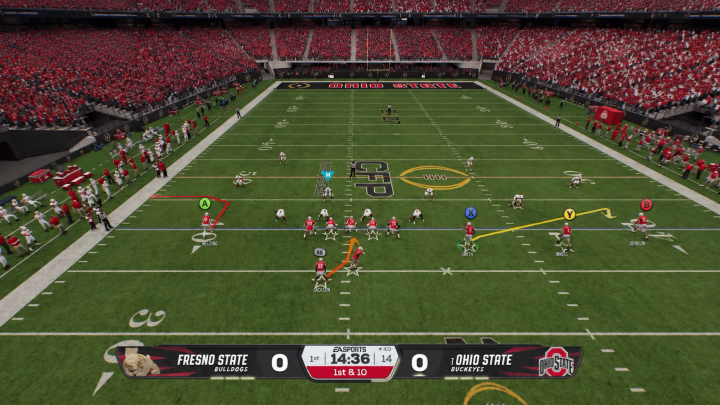
Step 16: Improve Your RPO Game
RPOs become much stronger with simple hot route adjustments.
Instead of leaving bubble screens untouched:
Convert them into:
Flat Routes
Benefits include:
Better catch animations
Faster upfield movement
Improved success versus man coverage
More first downs
Even experienced defenders often struggle to react.
Step 17: Understand Formation Personnel
Custom defensive adjustments depend on knowing exactly where players line up.
For example:
Slot Corner 1
Slot Corner 2
DT1
DT2
Nose Tackle
Strong Safety
Free Safety
Understanding these assignments allows far more precise blitzes, coverage changes, and custom macros.
Advanced players build entire defensive schemes around these personnel alignments.
Step 18: Step Up in the Pocket
Deep passing has changed significantly.
Instead of drifting backward after the snap:
Step forward.
Benefits include:
Longer throws
Better trajectory
Fewer underthrows
More accurate deep balls
Quarterbacks generate noticeably better velocity when throwing from a proper pocket.
Step 19: User the Safety Against Running Teams
Against run-heavy offenses, controlling a linebacker often creates problems.
Instead, control a high safety.
Advantages include:
Better pursuit angles
Cleaner run support
Extra defender at the point of attack
Reduced risk against play-action
Cover 3 and Cover 4 are ideal when usering a safety because each defender has less deep-field responsibility.
Step 20: Focus on Small Details to Dominate
The biggest difference between average players and elite competitors isn't flashy stick skills—it's consistency.
Mastering formation shifts, fixing defensive settings, recognizing blitz indicators, adjusting protection, optimizing route combinations, cheap College Football 27 Coins, and understanding defensive alignments will help you win far more games than simply learning one unstoppable play.
As the College Football 27 competitive meta continues to evolve, players who understand these advanced mechanics will consistently outplay opponents who rely solely on raw talent. By applying these 20 tips to your gameplay, you'll build a more efficient offense, a smarter defense, and the confidence to compete at the highest level.