









Summary
Many players in College Football 27 Road to Glory struggle to turn a defensive player into the centerpiece of a championship run. Building an elite EDGE requires more than chasing sacks—it also involves upgrading abilities at the right time, earning Coach Trust, managing wear and tear, making weekly progression decisions, and performing consistently in College Football Playoff games. This guide follows Pierce Hunter's junior season step by step, explaining how each decision contributed to USC's National Championship while preserving the original progression.
Part 1: Build Your Defensive Foundation Early
The first objective is to establish your EDGE as a complete defender instead of focusing exclusively on sacks.
After returning to USC for his junior season despite an uncertain relationship with Lincoln Riley, Pierce Hunter immediately invested in his Physical Abilities. The first major upgrade was Quick Jump, which was upgraded to Platinum before facing Oregon.
Quick Jump dramatically improves the first step off the line, making it easier to beat offensive tackles around the edge. Combined with Pocket Disruptor, it creates pressure even when a sack is not recorded.
One early example came against Oregon. Rather than rushing every snap, Hunter dropped into coverage, intercepted the pass, and returned it before the play was erased by an offside penalty. Although the touchdown did not count, the play demonstrated how improved athleticism allows an EDGE defender to contribute in multiple situations.
Continue attacking double teams throughout the game. Even when offenses commit extra blockers, consistent pressure eventually results in sacks and hurried throws.
Part 2: Upgrade Abilities as Your Performance Improves
Ability progression should closely follow your in-game production.
After continuing to pressure quarterbacks throughout the season, Quick Jump advanced from Platinum to the Heisman Tier, providing an even stronger burst at the snap.
This progression coincided with USC defeating Oregon 36-21, confirming that the team had become a legitimate national contender.
As the season continued on Heisman difficulty, Hunter also broke the Big Ten career sacks record, proving that consistently applying pressure is more valuable than chasing highlight plays every possession.
While sacks remain important, interceptions, forced turnovers, and solid coverage all contribute to faster ability progression.
Part 3: Earn Coach Trust Through Complete Defensive Play
Coach Trust unlocks additional control over the defense.
During the rivalry matchup against UCLA, Hunter continued contributing outside of pass rushing. Instead of recording multiple sacks, he finished with two interceptions and two defensive touchdowns, helping USC secure another victory over the Bruins.
Strong all-around performances eventually earned enough Coach Trust to call defensive adjustments and make substitutions.
This flexibility becomes especially valuable late in close games. When the offense needed another opportunity, consistent pressure forced hurried throws, giving Julian Lewis and the offense another chance to complete the comeback.
Weekly rewards also reflected this progression. Hunter earned National Defensive Player of the Week, received another Cap Breaker, and accepted the Mr. Fizz NIL Deal, which immediately added 400,000 followers.
Managing these weekly opportunities alongside attribute upgrades creates steady long-term progression throughout Road to Glory.
Part 4: Continue Improving Attributes Throughout the Season
Do not stop upgrading after reaching a high overall rating.
Although Hunter was listed as a 94 Overall, temporary boosts increased his effective rating to 99 Overall.
Before the College Football Playoff, priority was given to improving:
Finesse Move
Strength
Leadership
Weekly Agenda management also became increasingly important.
Leadership reached its maximum level, Health remained in good condition, Brand advanced to Global Phenom, while Career Wear and Tear required close attention before entering postseason play.
Some players also choose to save their College Football 27 Coins for Ultimate Team, but in Road to Glory, consistent weekly training, attribute upgrades, and managing your Weekly Agenda provide a much greater impact on long-term player development than simply focusing on overall rating.
Part 5: Perform Consistently During the College Football Playoff
The postseason requires adapting to stronger opponents.
The first playoff matchup came against Miami in the Orange Bowl, led by quarterback Kevin Sperry.
Rather than forcing risky pass rushes every play, Hunter mixed coverage with pressure.
The defensive performance included:
Multiple interceptions
Quarterback pressures
A forced fumble recovered by teammate No. 98
Repeated sacks created through Quick Jump and Pocket Disruptor
Meanwhile, Julian Lewis capitalized on the turnovers with three touchdown passes.
The result was a convincing 38-10 Orange Bowl victory, advancing USC deeper into the College Football Playoff.
This game highlights an important lesson: creating short fields through turnovers often contributes more to winning than simply accumulating sacks.

Part 6: Break Through Against Your Biggest Rival
Every Road to Glory career includes a defining obstacle.
For Hunter, that obstacle was Ohio State.
After previously losing multiple meetings against the Buckeyes, the semifinal became an opportunity to finally reverse that trend.
Continue attacking with finesse moves while using Quick Jump to beat offensive tackles around the corner. Even when sacks are unavailable, forcing hurried decisions often produces interceptions.
The defense repeatedly disrupted quarterback St. Claire, while Julian Lewis responded with explosive offensive plays, including a long touchdown run.
Although Ohio State mounted a comeback, USC maintained control and secured a 38-24 victory, finally defeating the Buckeyes and reaching the National Championship.
Immediately after the game, review your Weekly Agenda again.
Monitor:
Health
Career Wear and Tear
Leadership
Remaining Attribute Points
Before the championship, Hunter invested additional points into Finesse Move and Strength, finishing preparation at 94 Overall.
Part 7: Prepare Specifically for the National Championship
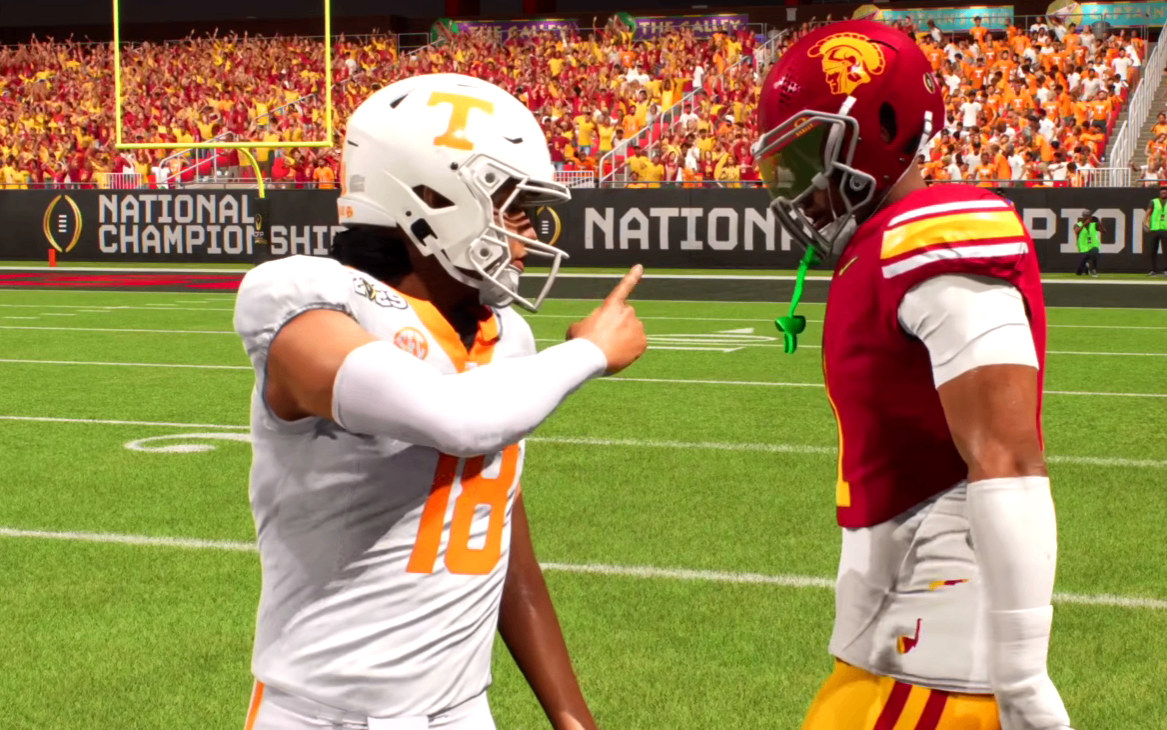
The championship carried extra significance because USC would face Tennessee, led by former teammate Jonas Williams.
Hunter and Williams previously formed the leaders of USC's defense and offense before Williams transferred to Tennessee.
Preparation began with the Gap Drill, using practice to simulate rushing against Williams.
Before kickoff, review your opponent carefully.
Jonas Williams entered the championship with:
37 passing touchdowns
11 interceptions
Strong rushing production carried over from his time at USC
Understanding these tendencies helps anticipate scrambles and passing situations during the game.
Part 8: Execute the Defensive Game Plan
The championship strategy emphasized forcing mistakes instead of gambling for individual statistics.
Early in the game, Hunter intercepted Williams, setting up another touchdown drive by Julian Lewis.
As Tennessee attempted to recover, Hunter continued producing impact plays:
Forced fumble
Multiple quarterback pressures
Two sacks
Another interception
Several tackles for loss
Even when Tennessee completed deep passes or scored touchdowns, the defense maintained pressure throughout the game.
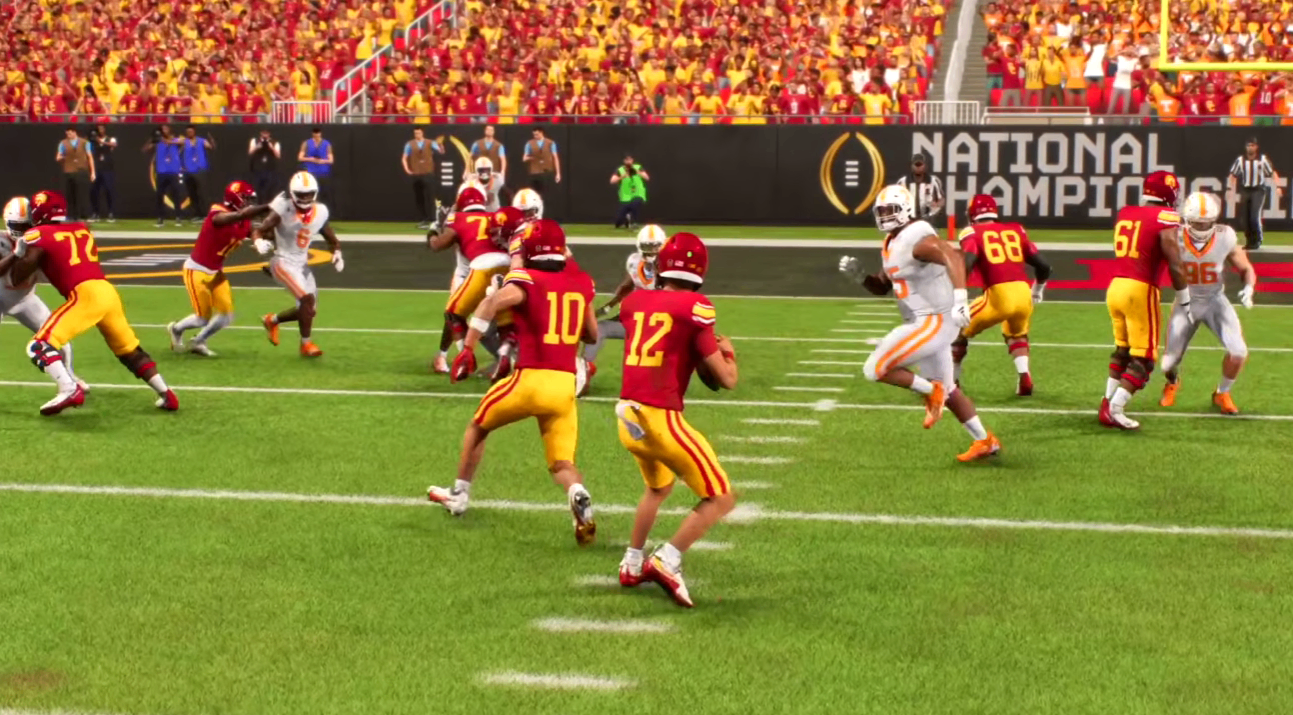
Meanwhile, Julian Lewis consistently answered with touchdown drives, preventing Tennessee from building momentum.
Late in the fourth quarter, another sack and continued pressure prevented Tennessee from completing its comeback.
USC entered victory formation and secured the National Championship.
Hunter finished the title game with:
Five tackles for loss
Two sacks
One interception
One forced fumble
The entire season concluded on Heisman difficulty, validating every upgrade and progression decision made throughout the year.
Key Points
Upgrade Quick Jump to Platinum and eventually Heisman Tier as early as possible.
Pair Quick Jump with Pocket Disruptor for consistent quarterback pressure.
Build Coach Trust through complete defensive play instead of focusing only on sacks.
Continue upgrading Finesse Move, Strength, and Leadership throughout the season.
Monitor Weekly Agenda, Health, Brand progression, and Career Wear and Tear before playoff games.
Use turnovers to create scoring opportunities for your offense during postseason play.
Prepare specifically for each playoff opponent by reviewing quarterback tendencies before kickoff.
Conclusion
Pierce Hunter's Road to Glory season demonstrates that an elite EDGE defender is built through consistent progression rather than individual highlight plays. Upgrading Physical Abilities at the right time, earning Coach Trust, balancing attribute development, managing weekly progression, and adapting to increasingly difficult playoff opponents allowed USC to defeat Miami, finally overcome Ohio State, and capture the National Championship against Tennessee. Following this progression provides a reliable roadmap for developing a dominant defensive player throughout College Football 27's Road to Glory mode.