Weekend Drop -













Summary
College Football 27 has a recruiting problem, but it's not the one most people are talking about. While many players are focused on the abundance of four-star receivers, the real issue lies in the imbalance between offensive and defensive player generation—a flaw that can cost you valuable CUT 27 Coins if you waste them on oversaturated positions like running back. Each recruiting class produces significantly more starting-caliber offensive players than defensive players—roughly 300 more per year. This guide breaks down the data and provides actionable strategies to build a dominant team despite these imbalances.
The Real Recruiting Problem: Offense vs. Defense
When analyzing recruiting classes, a clear pattern emerges. On average, there are about 740 to 750 defensive players rated three stars or higher each year, compared to over 1,000 offensive players. That is a massive discrepancy. While wide receivers appear to be oversupplied at first glance, adjusting for how many receivers offenses actually need reveals a different picture.
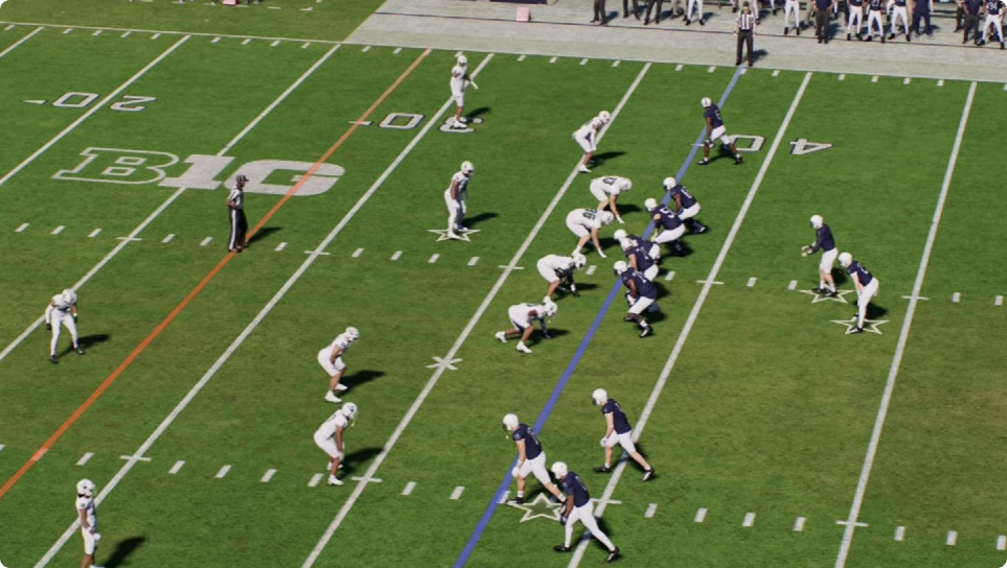
Most offenses run 11 personnel—one running back, one tight end, and three wide receivers—as their base formation. When accounting for scheme demands, the ratio of available players to starting spots tells a different story. Running backs present the most extreme oversupply, with 1.63 starting-caliber backs for every starting spot. By contrast, wide receivers have only 0.78, making them relatively scarce when demand is factored in.
Position-by-Position Analysis
The Running Back Oversupply
Running backs are the most oversaturated position in recruiting. There are over 230 three-, four-, and five-star running backs generated each year, while most teams only need one starting back. This surplus is so significant that many quality running backs go unsigned or end up in the transfer portal. In College Football 26, this pattern existed but lacked the data to prove it. Now the numbers are clear: unless a running back is an absolute one-of-a-kind player, recruiting them early is a waste of resources.
The Defensive Shortage
The defensive side of the ball tells a different story. When comparing the number of starters needed across all 138 teams to the number of recruits generated, defensive positions are significantly under-supplied. Cornerback is particularly problematic, with roughly 200 fewer recruits than needed each year. Safety positions are also under-supplied, creating roster-building challenges for teams running pass-heavy defensive schemes.
Solution 1: Target Athletes Relentlessly
The most effective strategy to combat these imbalances is to prioritize athlete recruits, especially those listed as running backs. Athletes tend to have fewer skill caps when converted to defensive positions compared to non-athletes. Testing at Nebraska confirms this: converting 30 running backs, particularly athletic ones, to defensive positions yields players who progress well and maintain development potential.
Converting Running Backs to Defense
A 99-speed running back converted to cornerback can start as an 84 overall as a redshirt freshman. While skill caps may limit some players, athletic running backs generally have more room to develop. Even three-star athletes can become mid-70s overall after one offseason, with plenty of growth remaining. This flexibility is invaluable for smaller schools with limited resources.
Defensive Conversion Targets
Consider converting athletic running backs to cornerback, safety, or linebacker positions. The surplus of running backs provides a deep pool of athletic talent that can be repurposed to fill defensive roster gaps. This strategy is particularly effective for teams struggling to find enough quality defensive players in recruiting classes.
Solution 2: Adapt Schemes to Available Talent
Rigidity in offensive and defensive schemes can be a weakness in College Football 27. The recruiting imbalances make it essential to remain flexible and adapt your playbook to the players you can actually sign.
Offensive Adjustments
Given the abundance of running backs, consider installing a two-back offense as your base formation. With the oversupply of running backs and fullbacks, you can build an exceptionally deep and talented backfield. Whether running old-school I-formation power football or utilizing multiple backs as receivers, this approach capitalizes on available talent where other teams neglect it.
Defensive Adjustments
The shortage of cornerbacks makes man-coverage-heavy schemes risky. If you cannot secure enough quality cornerbacks, consider transitioning to zone-heavy defenses that rely less on elite coverage skills. Converting safeties or athletic linebackers to slot corner roles can also provide solutions. Defensive flexibility, such as switching between 4-2-5 and 3-3-5 alignments, allows you to maximize the talent you have rather than forcing players into positions where they cannot succeed.
The Forgotten Four-Star Factor
While the four-star recruiting imbalance has been widely discussed, it is secondary to the offensive-defensive disparity. Even if EA patches the four-star generation, the core problem of too many offensive players and too few defensive players will likely persist. This is not necessarily a bug but a consequence of how player generation algorithms allocate positions without accounting for scheme demands.
Long-Term Roster Management
Positional Flexibility
Linebackers are particularly interesting as flexible assets. Depending on their athleticism, they can be converted to big, run-stopping safeties who still provide coverage ability. This flexibility is crucial for teams that cannot find enough pure safety prospects.
Transfer Portal Exploitation
The transfer portal remains an excellent resource for finding players at oversupplied positions. Running backs, in particular, are frequently available due to the sheer number of quality players at the position. In future seasons, monitor the portal for underutilized talent.
Summary
College Football 27's recruiting imbalances create both challenges and opportunities. The offensive-defensive disparity, combined with the extreme oversupply of running backs, demands a strategic approach—otherwise, you might find yourself needing to buy CUT 27 Coins just to patch roster holes through transfers and expensive scouting boosts. Target athletes relentlessly, especially running backs who can be converted to defense. Remain flexible in your offensive and defensive schemes, adapting to the talent you can acquire rather than forcing predetermined systems.
Use the transfer portal to address specific needs. And most importantly, understand the data to make informed recruiting decisions. By exploiting these imbalances, you can build a dominant roster even when the recruiting engine works against you.