Weekend Drop -












Summary
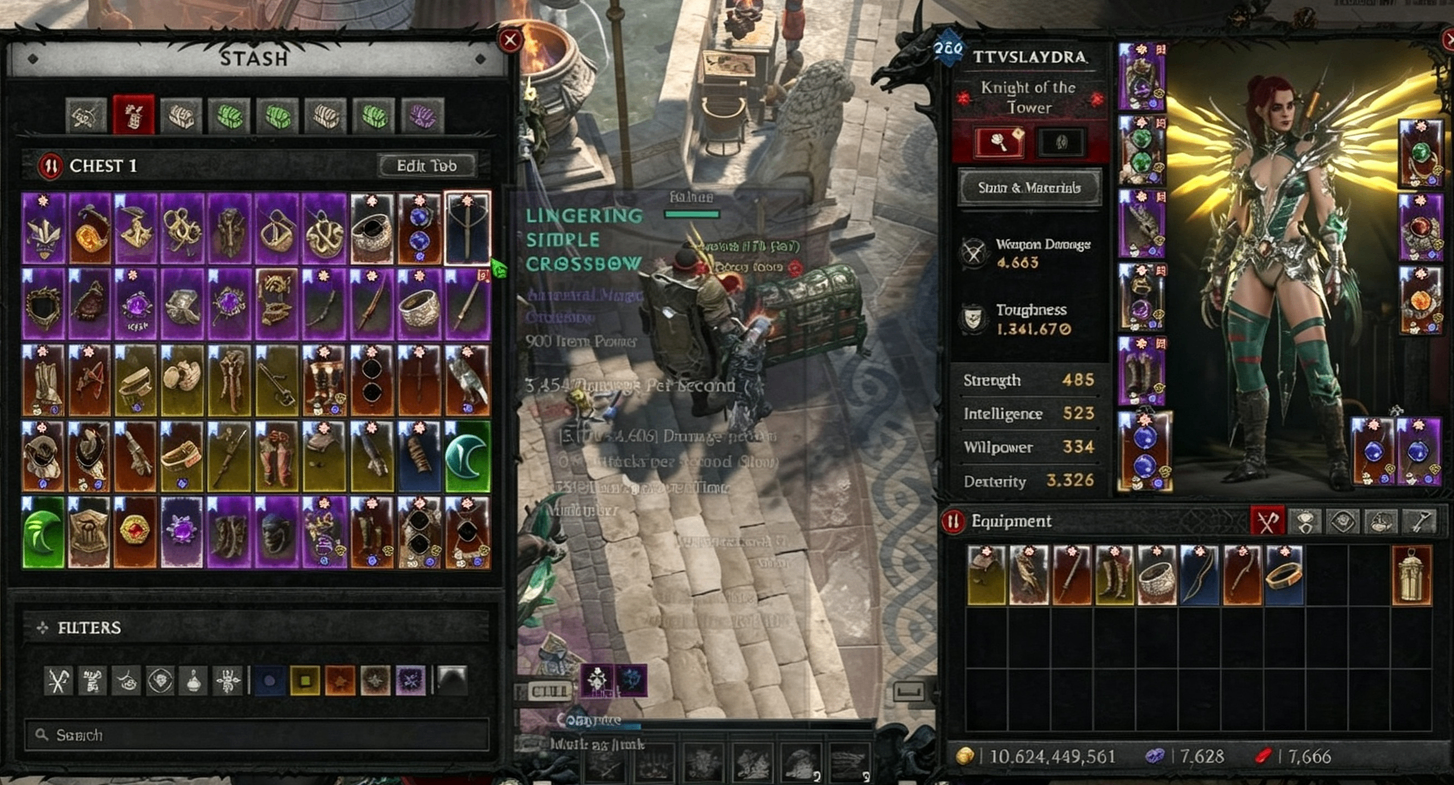
If you've been playing Diablo 4 for any length of time, you've probably experienced the eternal struggle: your stash is full, and you have no idea what to get rid of. You're not alone. Inventory management is one of the most common pain points in the game, and with each new season, the hoarding instinct only gets stronger. This guide will help you cut through the clutter. We'll break down exactly which items are worth keeping, which ones you should salvage without hesitation, and how to optimize your stash space so you can focus on farming—not organizing—whether you're looting them yourself or looking to buy Diablo 4 Items to fill in the gaps.
General Philosophy: Stop Hoarding
Before we dive into specifics, let's get one thing straight: you don't need to keep everything. Many players hold onto items "just in case" they might build around them later. Unless you're a content creator testing multiple builds or a dedicated trader, you likely only need one to two builds:
A farming build for speed-clearing content
A push build for high-tier Pit progression
If an item doesn't serve one of those purposes or hold significant trade value, let it go.
Charms: The Biggest Culprit
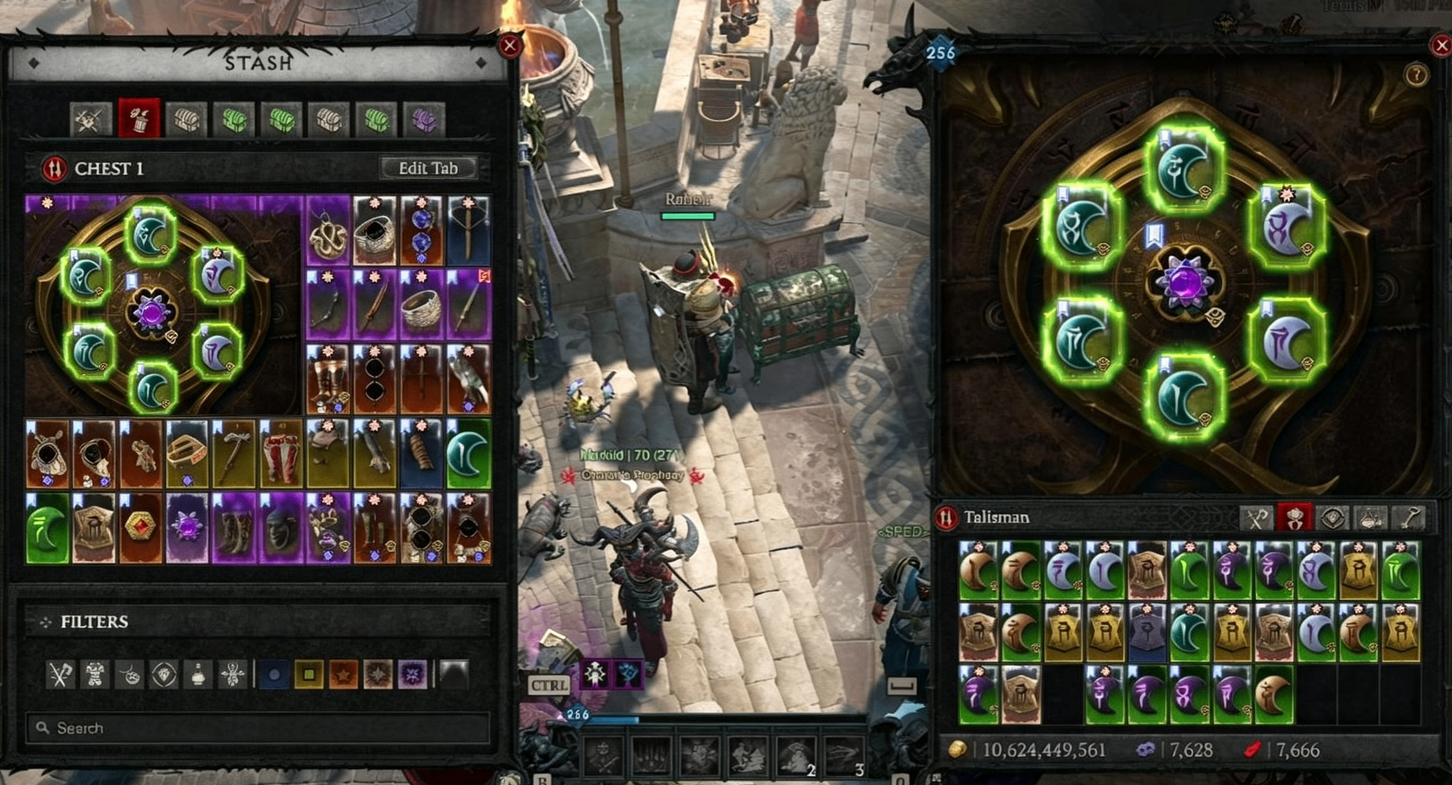
Charms are where most players hoard the most junk. Here's what actually matters:
Keep These Charms:
+4 to Skills (e.g., Cutthroat Skills, Marksman Skills, Fire Skills, Frost Skills)
+3 to Skills (acceptable for personal use, but lower trade value)
Maximum Resource (class-dependent—great for Barbarians, Rogues, or builds utilizing resource mechanics)
Crafting Material bonuses or Gold find (useful for crafting or buying from other players)
Salvage These Charms:
Most blue and rare charms (very few exceptions)
Charms without +Skills or Max Resource
Any charm you're not actively using or planning to trade
Pro Tip: Keep Three Useless Charms
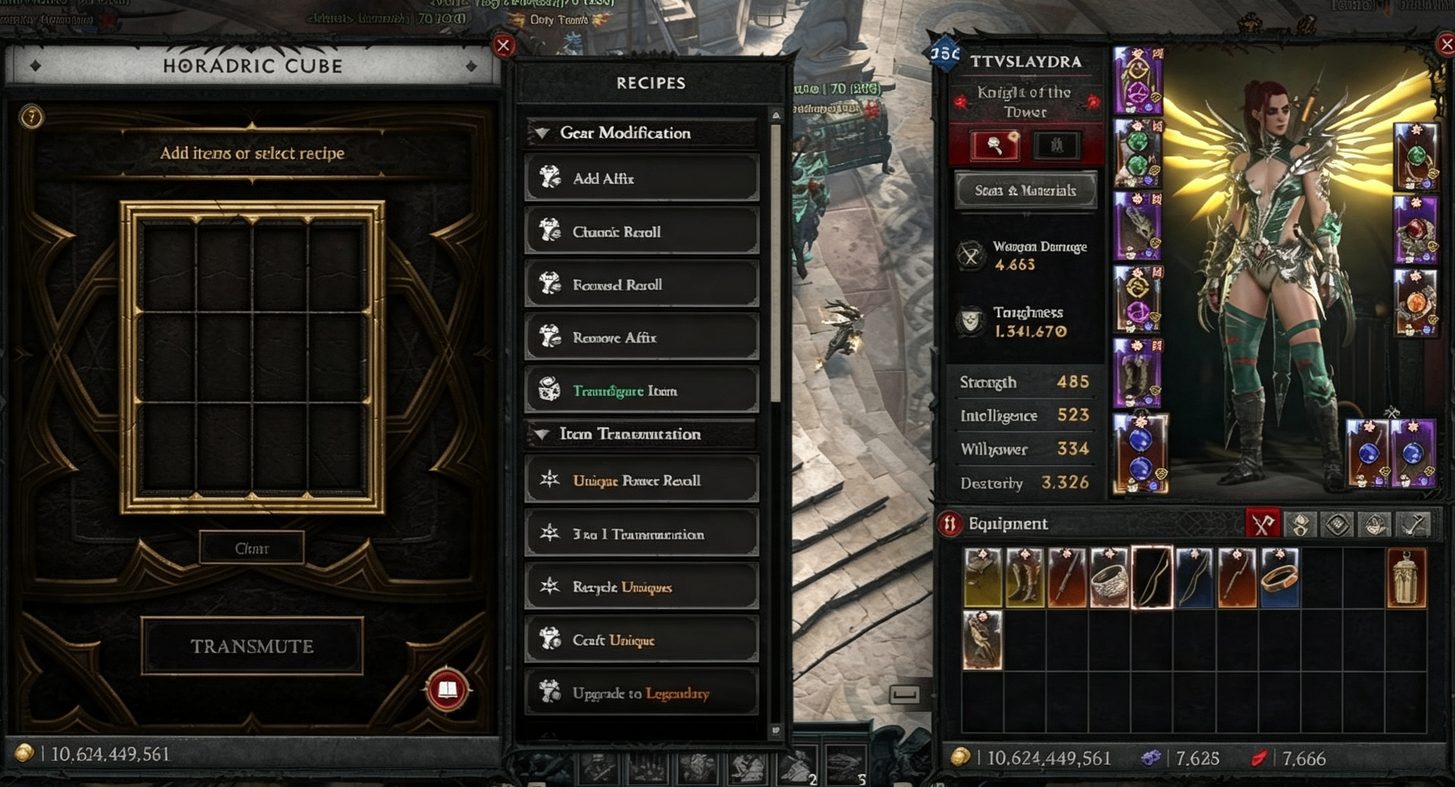
Why? The cube allows you to convert items into charms using three unique charms as materials. Even if they're junk, keeping three on hand ensures you can craft a charm when you need one.
Seals: The +6 Slot Exception
Seals with +6 charm slots are surprisingly valuable—even the non-mythic ones. Here's what to look for:
Valuable Seals:
+6 charm slots (regular ones are tradable; mythics are not)
Critical Strike Chance as a stat (most sought-after)
Gold find (also tradable)
Salvage These Seals:
Any seal without +6 slots
Seals with poor stat rolls that you don't plan to us
Greater Affixes (GAs): The Real Endgame Currency
At the highest levels of Diablo 4, Greater Affixes are everything. But not all GAs are created equal.
What Makes a "Good" Greater Affix?
Weapons:
Weapon Damage (top priority)
Critical Strike Damage Multiplier
Damage Over Time Multiplier
Armor/Jewelry:
Main Stat (Dexterity, Strength, Intelligence, Willpower)
Maximum Life
Critical Strike Chance
Critical Strike Damage
What Makes a "Bad" Greater Affix?
These stats are generally useless and should be salvaged immediately:
Life on Kill (doesn't work on bosses)
Life per Second (too slow to matter)
Energy on Kill (useless for most builds)
Healing Received (niche at best)
Cold/Fire/Poison/Shadow Resistance (situational, rarely best-in-slot)
The 900 Item Power Rule
If you're doing Tormented 12 content or higher, do not keep items below 900 Item Power. Lower item power caps your stat rolls, making them obsolete for endgame.
Legendaries vs. Rares vs. Uniques
Rares (Yellow Items) with Greater Affixes
At the highest level of trade, a yellow item with multiple GAs can be more valuable than a legendary. Why?
Rares are easier to craft on because you can add or remove affixes in the cube
Legendaries lock you out of certain crafting options
A perfectly rolled rare with 2–3 GAs is highly sought after
Keep: Rares with 2+ good GAs (e.g., Weapon Damage + Main Stat)
Uniques
Uniques are trickier because you can only reroll one affix. This means if a unique has two unusable stats, it's probably trash—unless you plan to trade it.
Keep Uniques If:
They have at least one good GA relevant to your build
You're actively using them
You plan to trade them (some uniques hold significant value)
Salvage Uniques If:
They have zero GAs
The GAs are on useless stats (e.g., Cold Resistance + Life on Kill)
You're not using them and don't plan to trade
Mythics: Not All Are Created Equal
This is one of the biggest traps. Players hoard mythics thinking they're automatically the best. They're not.
Example: A Necromancer unique with Sever deals 10–15% x damage. The mythic version only increases it to 5% x damage—a downgrade.
When to Keep a Mythic:
It's best-in-slot for your build
It has the correct GAs
When to Salvage a Mythic:
It's not for your build
It has poor GAs
A regular unique with better GAs outperforms it
Bottom Line: If you're not going to use a mythic, salvage it. Mythics are not tradable, so hoarding them is pointless.
Aspects: Save the Perfect Rolls
Saving items with perfectly rolled aspects can be worthwhile—especially if they're on gear with good GAs. Some aspects are tradable, and others can be used for future builds.
Keep:
Aspects rolled at 90%+ of max value
Damage multiplier aspects (e.g., Maximum Ferocity Stacks)
Aspects on items with good GAs
Salvage:
Low-rolled aspects (you can always farm better)
Aspects on items with useless stats
Runes: Keep Everything
With the new rune system, keep all your runes. There are crafting and conversion options that make them valuable, and you never know when you'll need a specific combination.
Quick Salvage Checklist
Item Type | Keep | Salvage |
Charms | +4 Skills, Max Resource, Gold/Crafting bonuses | Most blues and rares |
Seals | +6 slots with Crit Chance or Gold | Everything else |
Weapons (GA) | Weapon Damage, Crit Damage, DOT | Life on Kill, Energy on Kill |
Armor (GA) | Main Stat, Max Life, Crit Chance | Resistance, Healing Received |
Uniques | 1+ good GA, build-relevant | 0 GAs, useless GAs |
Mythics | Build-relevant with good GAs | Not for your build or poor GAs |
Aspects | Perfect rolls (90%+ max value) | Low rolls |
Rares (Yellow) | 2+ good GAs | Single bad GA or 0 GAs |
Runes | Keep everything | N/A |
Final Tips for a Cleaner Stash
Salvage regularly—don't wait until your stash is overflowing
Use the cube to reroll unique powers—don't trash an item just because it rolled low
Don't keep items for builds you'll "probably" make—unless they're elite (2+ good GAs)
Help friends or trade—if you won't use it, someone else might
Check your stash weekly—set a reminder to clear out the junk
Conclusion
Inventory management in Diablo 4 doesn't have to be a nightmare. By following this guide, you can drastically reduce clutter, keep only what matters, and spend less time organizing and more time actually playing the game. And if you're ever short on specific gear or just want to skip the grind, check out trusted platforms offering Diablo 4 Items for sale—MMOEXP is a solid choice to consider, with reliable service and competitive pricing to help you gear up faster so you can focus on pushing endgame content.
Remember:
+4 Skills charms are keepers
+6 slot seals with Crit Chance are gold
900+ Item Power with good GAs is the endgame standard
Mythics aren't always better—check the numbers
Salvage freely—materials are useful, junk isn't
Now go clean out that stash and get back to farming. Your future self will thank you.