

Summary
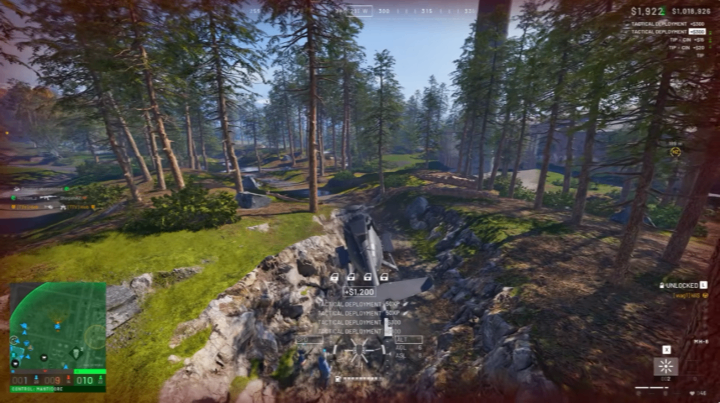
This ultimate WARDOGS helicopter guide covers everything pilots need to dominate the skies, from aiming and flight controls to safe landings, combat maneuvers, helicopter matchups, anti-air threats, FOB attacks, flight routes, WARDOGS Dollar, and ways to improve battlefield efficiency.
WARDOGS Helicopter Guide: Build the Right Foundation
Helicopters in WARDOGS can be incredibly powerful, but mastering them requires much more than simply staying airborne and firing weapons. Whether you are a new pilot learning the basics or an experienced player looking to improve your kill count, understanding aiming, movement, positioning, and target priority can dramatically improve your performance.
The first step is choosing controls that match your playstyle. Different high-level pilots use different setups, including mouse-based rifle aim, keyboard controls, dual flight sticks, or throttle-and-pedal combinations. There is no single perfect configuration. However, for mouse-and-keyboard players, enabling mouse control, using a higher air-vehicle sensitivity multiplier, and keeping pitch, yaw, and roll multipliers relatively low can provide a strong balance between precision and control.
New pilots should also consider using rifle aim because it offers excellent precision and a high skill ceiling. Regardless of the setup, consistency matters more than copying another player's settings.
Master Helicopter Aiming in WARDOGS
Aiming is arguably the biggest difference between an average helicopter pilot and an elite one. Helicopter aiming is difficult because the aircraft itself is constantly moving and accelerating while you attempt to keep the crosshair on a target.
One important concept is the weather-vane effect. As your helicopter travels faster, airflow makes the aircraft naturally want to align with the direction of movement. As a result, your rudder becomes less effective at controlling the nose at higher speeds.
This means velocity management is essential. During strafing runs, experienced pilots may begin relatively slowly and accelerate throughout the attack. Rather than memorizing exact speeds, focus on developing a sense for how your helicopter responds at different velocities.
When aiming at ground targets, think of the process like an aim trainer. You are constantly correcting for acceleration while keeping your crosshair centered. This is particularly important for mouse-and-keyboard players. Instead of relying exclusively on wrist movements, use your entire arm for larger corrections and reserve your wrist for small adjustments.
Aim-training can also help. Practicing broad mouse movements and becoming comfortable across the entire mousepad can improve control not only in WARDOGS but also in other vehicle-heavy shooters.
Know Where to Aim
Weapon-specific crosshair placement also matters.
For minigun-equipped helicopters, aim toward the upper-right portion of the crosshair according to the guide's recommended technique. With rockets on helicopters such as the Havoc and AH6R, aiming around the center of the crosshair is more effective.
Most importantly, prioritize first-shot accuracy. Missing the opening shots gives infantry and enemy vehicles time to react, move, or return fire. A clean opening burst can make the difference between a quick elimination and a prolonged fight.
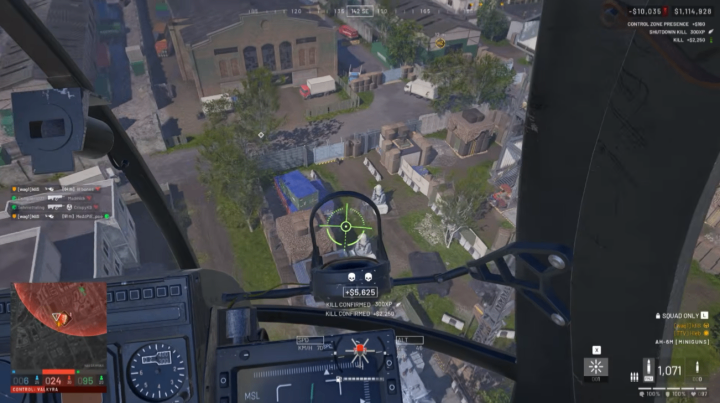
Learn Safe Helicopter Landing Techniques
Good helicopter gameplay is not only about attacking. Transport pilots also need to know how to approach landing zones without turning themselves into an easy target.
One of the biggest mistakes is the so-called “death elevator” approach, where pilots rush toward a landing zone and rapidly lose energy vertically. This can create an easy shooting gallery for enemies.
Instead, plan your flight path and landing zone before approaching.
The low-speed bleed is one of the simplest techniques to learn. Find a relatively straight path, reduce collective input, and use pitch to maintain your altitude while gradually reducing speed. Once the helicopter slows sufficiently, you can gently touch down or slide onto the skids.
Another useful technique is the J-hook landing. Approach the landing zone from a planned direction, then roll toward the landing zone while using yaw to point the helicopter toward the ground. This rapidly dissipates speed and allows you to make a controlled landing.
These techniques may not look as flashy as advanced freestyle maneuvers, but they are reliable, repeatable, and much safer for transporting teammates.
Master Combat Maneuvering
Combat maneuvering takes the fundamentals of transport flying and applies them under pressure. The key principles are simple: stay low, manage velocity, and keep moving.
The first essential combat technique is the circle strafe. Rather than flying directly past a target and continuing away from the fight, slightly overshoot the target, roll toward it, and use yaw, pitch, and roll to keep the helicopter's nose pointed at the target.
The result is a continuous circular movement that keeps your weapons on target while making your helicopter more difficult to hit. It also prevents the common mistake of becoming overly committed to a strafing run and crashing or exposing yourself to infantry fire.
Another critical maneuver is the quick 180-degree turn. When a strafe fails or an enemy helicopter gets behind you, quickly pitch upward while combining yaw and roll in the same direction. This rapidly changes your heading while bleeding energy.
Learning this maneuver is especially valuable during helicopter-versus-helicopter fights, where getting your guns onto the opponent first can decide the engagement.
Understand WARDOGS Helicopter Matchups
Knowing what your helicopter can and cannot fight is essential for survival.
Against enemy helicopters, miniguns generally require you to focus on the pilot, particularly when fighting smaller aircraft. Rockets provide a more direct method of damaging helicopters, but the number of hits required depends heavily on the target.
The Havoc is particularly dangerous when you are slow or approaching it head-on. However, a constantly moving Little Bird can be much harder for it to eliminate reliably. If you find yourself in a poor matchup, disengaging is often smarter than forcing the fight.
Against tanks and armored vehicles, rockets are the preferred option. Maintain an advantageous altitude while attacking, because getting too close to a tank's turret can quickly turn the engagement against you.
How to Deal With AA and FOB Threats
Anti-air defenses are among the biggest dangers to helicopter pilots. The best strategy is often to destroy AA positions before they are fully established.
A partially constructed anti-air emplacement is much easier to eliminate. Once it is operational, approach carefully and prioritize the player operating the weapon before dealing with the emplacement itself.
Missile warning sounds are also extremely important. A warning beep indicates that a lock is being acquired, while a stronger lock tone indicates that the threat has become more serious.
One of the most useful defensive techniques is below-radar flying. Staying extremely low to the ground can prevent a missile lock from being maintained. However, if the lock continues despite flying low, assume the missile may already be in the air and prepare to use flares.
Free-look can also help you identify where threats are coming from. Instead of staring exclusively at your target, periodically check your surroundings and locate potential SAM or portable AA positions.
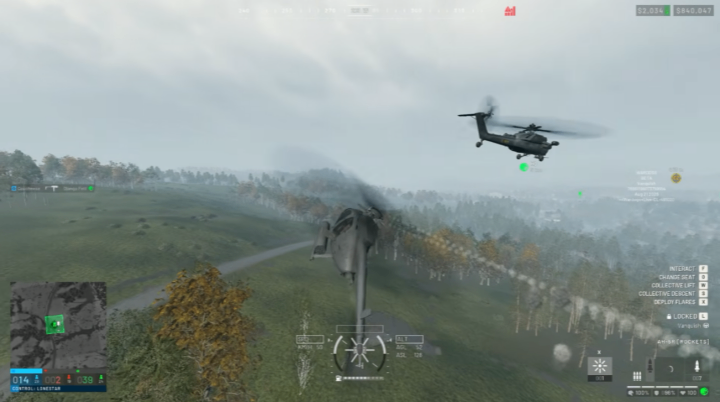
Follow a Consistent Helicopter Flight Pattern
Strong pilots do not simply fly around looking for random targets. They develop a repeatable route.
After spawning, check common enemy FOB locations first. Look for anti-air defenses and eliminate them before they become a major problem. Once the main FOB areas have been checked, examine the battlefield and determine where the enemy is concentrated.
The scoreboard and zone activity can help reveal whether opponents are concentrated around objectives or remaining closer to their FOBs.
This creates a simple cycle:
1. Leave spawn safely.
2. Check common enemy FOB locations.
3. Destroy unfinished or vulnerable AA positions.
4. Attack exposed infantry and vehicles.
5. Monitor the battlefield.
6. Return to dangerous FOB areas regularly.
7. Adjust your target priority according to enemy activity.
Consistency is particularly important because anti-air threats can quickly rebuild if you ignore them.
Improve Profit and Team Support
Helicopter effectiveness is not only measured by kills. Transport pilots can also contribute heavily by keeping squads together and getting teammates where they need to go.
Encourage passengers to remain with their squad instead of immediately parachuting into dangerous areas. A coordinated squad can heal, revive, and support one another far more effectively than scattered players.
Communication is another major advantage. If an enemy FOB is proving difficult to attack alone, coordinate with friendly artillery or mortar players. Providing accurate enemy positions can allow your teammates to apply pressure while you focus on helicopter support.
Final WARDOGS Helicopter Tips
Becoming an elite WARDOGS helicopter pilot takes practice, but the fundamentals are surprisingly consistent. Aim carefully, control your speed, stay low, plan your flight paths, understand your matchups, and never ignore anti-air threats.
Start by mastering basic movement and safe landings. Then work on circle strafing, quick 180s, velocity control, cheap WARDOGS Dollar, and precise weapon placement. Once these skills become instinctive, you can begin experimenting with more advanced flight techniques.
Most importantly, don't judge your progress only by kills. A great helicopter pilot controls space, protects teammates, removes threats, and creates opportunities for the entire team. Put these techniques together, keep practicing, and the skies of WARDOGS can quickly become your territory.