










Summary
The AION 2 Spiritmaster combines ranged magic damage, summoned spirits, and powerful debuffs to deliver consistent PvE damage. However, maximizing its potential requires more than selecting strong skills. Players must understand Elemental Fusion, reach key skill breakpoints, build the right Stigma setup, and optimize equipment around their rotation. Managing resources such as Aion 2 Kina can also support character progression. This guide explains how to develop your Spiritmaster step by step, from core skills to boss DPS, solo farming, and PvP.

1. Understand the Spiritmaster's Core Damage Mechanic
Before investing in skills or equipment, players need to understand what makes the Spiritmaster effective. Its damage revolves around summoned spirit abilities and Elemental Fusion, which converts elemental stack generation into a powerful burst attack.
Whenever a summoned spirit activates its spirit skill, the Spiritmaster gains one elemental stack. At four stacks, Four Elements activates and allows you to use Elemental Fusion.
There is an important limitation: normal elemental stacks cannot accumulate while Four Elements remains active. Holding Elemental Fusion unnecessarily therefore delays the next cycle.
The four spirits also serve different purposes:
Fire Spirit: Your primary offensive summon and a major skill investment priority.
Water Spirit: Supports MP recovery and helps generate elemental stacks.
Earth Spirit: Provides defensive utility and generates Enmity, making it useful during leveling and solo encounters.
Wind Spirit: Offers AoE damage and HP recovery, but is a lower priority for standard endgame boss DPS.
For most PvE builds, Fire Spirit should receive priority, with Water and Earth supporting your rotation and survivability. Once you understand how spirits contribute to damage, the next step is to invest in the skills that make this cycle more effective.
2. Best Spiritmaster Skills and Skill-Level Breakpoints
The goal of skill progression is to strengthen your main damage abilities before spending too many resources on secondary skills. This is particularly important because certain effective skill levels unlock additional Specialty options.
In the Global build covered by the source guide, active-skill Specialty slots unlock at effective skill levels 8, 12, and 20. Bonuses from Daevanion, rings, and Arcana can help you reach these breakpoints.
| Skill | Recommended Target | Priority |
|---|---|---|
| Elemental Fusion | 20+ effective | Core burst damage |
| Combustion | 20+ effective | Repeatable damage |
| Summon: Fire Spirit | 20+ effective | Main offensive summon |
| Cold Shock | 16 | Damage and MP recovery |
| Summon: Water Spirit | 16 | Resource sustain |
| Jointstrike: Curse | 16 | Additional damage |
| Dimensional Control | 16 | Damage and AoE utility |
| Summon: Earth Spirit | 14 | Defensive utility |
Start with Elemental Fusion, Combustion, and Fire Spirit because they form the foundation of your damage cycle. Cold Shock and Water Spirit follow closely because sustained DPS depends on maintaining your rotation without running out of MP.
After your main active skills are developed, prioritize Mental Focus and Spirit Strike. These passives improve offensive performance for both the caster and summoned spirits. Element Unification and Spirit Revitalization are useful follow-up investments.
Reaching the appropriate skill breakpoints establishes your damage foundation. Your next decision is how to support those skills through Stigmas.
3. Best Stigma Builds for Bosses, Solo Farming, and PvP
The Spiritmaster has four Stigma slots, unlocked at character levels 22, 27, 32, and 37. Because these slots provide important combat effects, your setup should reflect the content you play rather than using one configuration everywhere.
| Playstyle | Recommended Stigma Setup |
|---|---|
| Boss DPS | Summon: Ancient Spirit, Enhance: Spirit's Benediction, Flame Blessing, Jointstrike: Corrode |
| Solo Farming | Summon: Ancient Spirit, Enhance: Spirit's Benediction, Jointstrike: Corrode, Siphon |
| Stagger Checks | Summon: Ancient Spirit, Enhance: Spirit's Benediction, Jointstrike: Corrode, Jointstrike: Destructive Attack |
| Arena PvP | Summon: Ancient Spirit, Enhance: Spirit's Benediction, Command: Proxy, Seize Magic |
For boss encounters, Summon: Ancient Spirit supports spirit-related performance and creates more opportunities for Elemental Fusion. Enhance: Spirit's Benediction and Flame Blessing improve offensive output, while Jointstrike: Corrode provides valuable debuff pressure.
Solo farming places greater emphasis on survival. Siphon is a useful alternative when enemies are difficult to handle, but Flame Blessing can replace it once your damage and survivability are sufficient.
For Stagger-focused encounters, Destructive Attack is worth considering when your group needs additional Stagger. In PvP, Command: Proxy and Seize Magic provide utility that is more relevant to player combat than a purely PvE-focused damage setup.
How to Upgrade Your Stigmas:
Choosing the right Stigmas is only half the job. Their upgrade levels also affect how much value you gain from each slot.
Raise all four equipped Stigmas to level 10. Unlock their important Specialty effects before concentrating resources on one ability.
Upgrade Summon: Ancient Spirit to level 15, then level 20. This is the first major deep-investment target.
Develop Enhance: Spirit's Benediction to level 20. Improve its offensive and defensive contributions.
Upgrade Flame Blessing to level 20. Strengthen its offensive stat bonuses and additional damage effect.
Raise Jointstrike: Corrode to level 20. Its effect duration increases by 10 seconds, extending the base 20-second duration to 30 seconds.
With the core skills and Stigmas established, you can now combine them into an effective boss rotation.
4. Best Boss Rotation for Consistent DPS
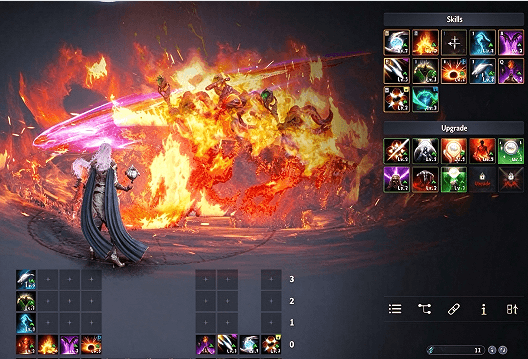
The Spiritmaster's boss rotation is built around three priorities: maintaining offensive buffs, applying Corrode, and generating Elemental Fusion without unnecessary delays.
Follow this general sequence:
Activate Flame Blessing and Enhance: Spirit's Benediction.
Summon Ancient Spirit to support your offensive window.
Apply Jointstrike: Corrode before continuing your damage cycle.
Use Cold Shock as a repeatable damage skill and MP recovery tool.
Allow spirit skills to generate four elemental stacks.
Cast Elemental Fusion when Four Elements activates and the target is available.
Use Combustion, Jointstrike: Curse, and Dimensional Control between Fusion windows.
Refresh buffs and Corrode when necessary.
Corrode deserves special attention because its longer duration at level 20 helps maintain more consistent debuff coverage. Cooldown Reduction can further improve its availability.
However, do not follow the sequence blindly. If a boss is about to become invulnerable, repositioning and saving a major cooldown may be more valuable than squeezing in another attack. Consistent damage over the entire encounter matters more than a perfect rotation during a short window.
Once this rotation becomes reliable, the next priority is making it easier to execute without sacrificing control.
5. Spiritmaster Macros: What to Automate and What to Keep Manual
Macros can simplify repeatable skill sequences, particularly in dungeons and solo content. The source guide recommends enabling Skill Queue under Settings → Combat → Controls → Skill Queue before testing your setup.
| Situation | Suggested Macro Sequence | Manual Actions |
|---|---|---|
| Boss DPS | Spirit's Benediction → Elemental Fusion → Corrode | Summons, buff timing, movement |
| Solo Farming | Water Spirit → Elemental Fusion → Corrode | Siphon, target selection, defense |
| Stagger Checks | Spirit's Benediction → Elemental Fusion → Corrode | Destructive Attack timing |
| PvP | Avoid long fixed sequences | Fear, Proxy, Seize Magic, Defiance |
A starting delay of 10 milliseconds per step is suggested in the source guide, but actual performance depends on skill behavior and client settings. Test your sequence rather than assuming every input will register correctly.
Keep Cold Shock accessible for repeatable use because it contributes to both damage and MP recovery. Important defensive actions should remain manual, especially in PvP or encounters with dangerous mechanics.
Macros improve execution, but they cannot compensate for poor skill progression or unsuitable equipment. Once your rotation is stable, gear optimization becomes the next major source of improvement.
6. Best Spiritmaster Gear and Stat Priorities
Spiritmaster equipment should support reliable hits, strong offensive windows, and consistent skill availability. Accuracy is especially important: missing core attacks reduces damage and wastes opportunities to maintain pressure.
| Priority | Boss PvE | Solo Farming | PvP |
|---|---|---|---|
| First | Accuracy | Sufficient Accuracy | PvP Accuracy and Status Effect Chance |
| Second | Cooldown Reduction and Combat Speed | Combat Speed and MP stability | HP and PvP Damage Tolerance |
| Third | Damage Boost and Critical Damage Boost | Attack and Damage Boost | Status Effect Resist and PvP Damage Boost |
| Fourth | Perfect Chance, Attack, Double Chance | Perfect Chance and Double Chance | Additional offensive stats |
The source guide lists approximately 1,500 Accuracy and around 20% Cooldown Reduction as early Global build benchmarks. Higher Cooldown Reduction can help improve Corrode uptime, but these values should not be treated as universal requirements for every encounter or later progression stage.
Which Equipment Lines Should You Prioritize?
Soul Binding and accessory bonuses can strengthen the same skills you have already invested in.
Orb and Guard: Look for Combat Speed, Damage Boost, Might, Precision, and Weapon Damage Boost.
Armor: Prioritize useful offensive bonuses such as Attack, Double Chance, Critical Damage Boost, Perfect Chance, Mental Focus, and Spirit Strike.
Gloves and Boots: Combat Speed and movement speed can improve combat flow and positioning.
Rings: Look for Might, Precision, and skill levels for Elemental Fusion, Combustion, and Summon: Fire Spirit.
Rings deserve particular attention because additional skill levels can help your core abilities reach important Specialty breakpoints.
For Manastones, Damage Boost is a useful offensive priority, followed by Critical Damage Boost and Attack, provided you maintain sufficient Accuracy. Remember that Manastones are lost during gear transfers, so avoid placing expensive stones into equipment you expect to replace soon.
7. Adapting the Build for PvP
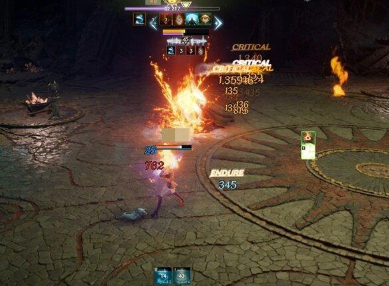
Once your PvE build is established, PvP requires a shift in priorities. Players can react, interrupt your rotation, and force you to reposition, making control and survival just as important as raw damage.
Against melee opponents, preserve distance and save fear or Proxy until the enemy commits. Against healers, use Corrode when its healing reduction can disrupt their recovery. In group combat, stay behind the frontline and coordinate control effects with your team's selected target.
Keep Defiance, fear, Seize Magic, Proxy, and movement under manual control. PvP gear should also place greater emphasis on relevant PvP Accuracy, Status Effect Chance, HP, PvP Damage Tolerance, and Status Effect Resist.
The strongest PvP setup is not necessarily the one with the highest training-dummy damage. It is the one that lets you maintain pressure while surviving enemy control and responding to changing situations.
Final Thoughts
Building an effective AION 2 Spiritmaster is a progression process. First, master Four Elements and Elemental Fusion. Next, invest in core skill breakpoints and the Mental Focus and Spirit Strike passives. Then develop the right Stigma setup, learn your boss rotation, and optimize equipment around Accuracy, Cooldown Reduction, and damage. Players looking to streamline their in-game progression can also explore Aion 2 Kina for sale. Finally, adjust your defensive tools and stats for solo farming or PvP. Following this order makes each upgrade more meaningful and creates a build that is easier to execute in real encounters.