







Summary:
CFB 27 Dynasty is changing how coaches build programs, recruit prospects, and develop players. This guide breaks down Talent Developer vs. Strategist, including recruiting, progression, XP gains, College Football 27 Coins, and which ability fits different schools and Dynasty formats.
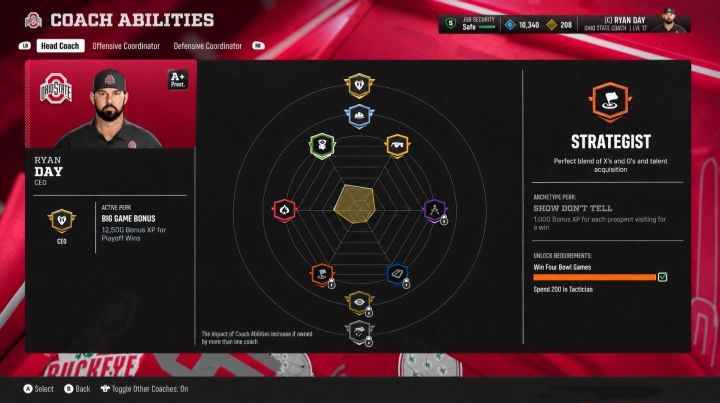
Why Coach Abilities Matter in CFB 27 Dynasty
In CFB 27 Dynasty, choosing the right coach ability can have a major impact on how quickly your program develops. Recent updates have changed several Dynasty mechanics, making recruiting efficiency, player development, and roster retention more important than ever.
Two of the most interesting options are Talent Developer and Strategist. Both can create long-term advantages, but they approach Dynasty progression in very different ways. Talent Developer focuses heavily on player development and draft potential, while Strategist provides powerful recruiting tools, scouting advantages, and roster retention benefits.
The right choice depends heavily on your school's current level, pipelines, league format, and how long you plan to run your Dynasty.
Talent Developer: Player Progression and Draft Potential
Talent Developer is built around turning young players into productive starters and eventual NFL Draft picks. Its biggest advantage is player progression.
The Talent Developer path provides bonuses that improve the development of underclassmen and can increase the value of players who remain in your program for several seasons. This becomes particularly powerful when combined with abilities such as Visionary and Pro Pipeline.
One of its key progression benefits provides a boost to underclassman development. This can be extremely valuable when your recruiting classes contain several Impact or lower-rated Star development players who need additional time to become reliable contributors.
Talent Developer also benefits programs that regularly produce NFL Draft picks. If your roster consistently sends players to the draft, the associated XP gains can help accelerate your coach progression and unlock additional abilities.
Talent Developer Recruiting Advantages
Talent Developer is not primarily a recruiting specialization, but it still provides useful recruiting benefits.
The Home Sweet Home ability can strengthen pipeline-related recruiting influence, particularly when recruiting quarterbacks. For programs with strong pipelines, this can become a meaningful advantage over multiple seasons.
The biggest limitation is that pipeline strength matters. A smaller program with weak pipelines may not receive the same value from these bonuses as an established powerhouse with strong recruiting territory.
That makes Talent Developer especially interesting for programs that already have a strong recruiting foundation and want to turn talented prospects into high-level players after they arrive on campus.
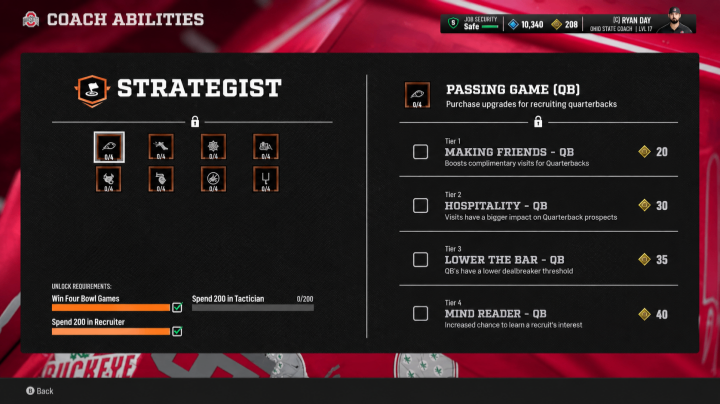
Strategist: Recruiting, Scouting, and Player Retention
Strategist takes a completely different approach. Instead of focusing primarily on developing every player on the roster, it helps you identify better prospects, improve recruiting situations, and keep players in your program.
One of its most important features is the ability to reduce certain recruiting thresholds and dealbreaker requirements. This can be especially useful for smaller schools that frequently compete against larger programs.
For example, a promising quarterback may develop quickly and eventually become attractive to other schools. If your program struggles to meet certain expectations, retaining that player can become difficult. Strategist provides tools that can help lower those barriers.
This makes the specialization particularly relevant for one-star, two-star, and developing three-star programs.
Strategist's Scouting Advantage
One of the most interesting Strategist abilities changes how you approach scouting.
Instead of spending large amounts of scouting points fully evaluating every prospect, you can use smaller scouting investments to identify development traits. The goal becomes finding prospects with Star or Elite development traits.
This creates a potential "diamond in the rough" strategy.
A smaller program may not have enough resources to fully scout dozens of players. Instead, the coaching staff can quickly check development traits and focus recruiting resources on the highest-potential prospects.
That approach can produce unusual recruiting classes filled with players who were overlooked by larger programs.
Recruiting Visits Become More Important
Strategist also makes recruiting visits more valuable. Certain abilities improve the influence generated by visits, particularly when multiple recruits can benefit from the same home-game situation.
The downside is consistency.
These benefits depend on your schedule, home games, recruit interest, and whether prospects are ready to schedule visits during the right week. A perfect setup can produce significant influence, but an inconvenient schedule can reduce the value considerably.
This makes Strategist more situational than a simple weekly recruiting bonus.
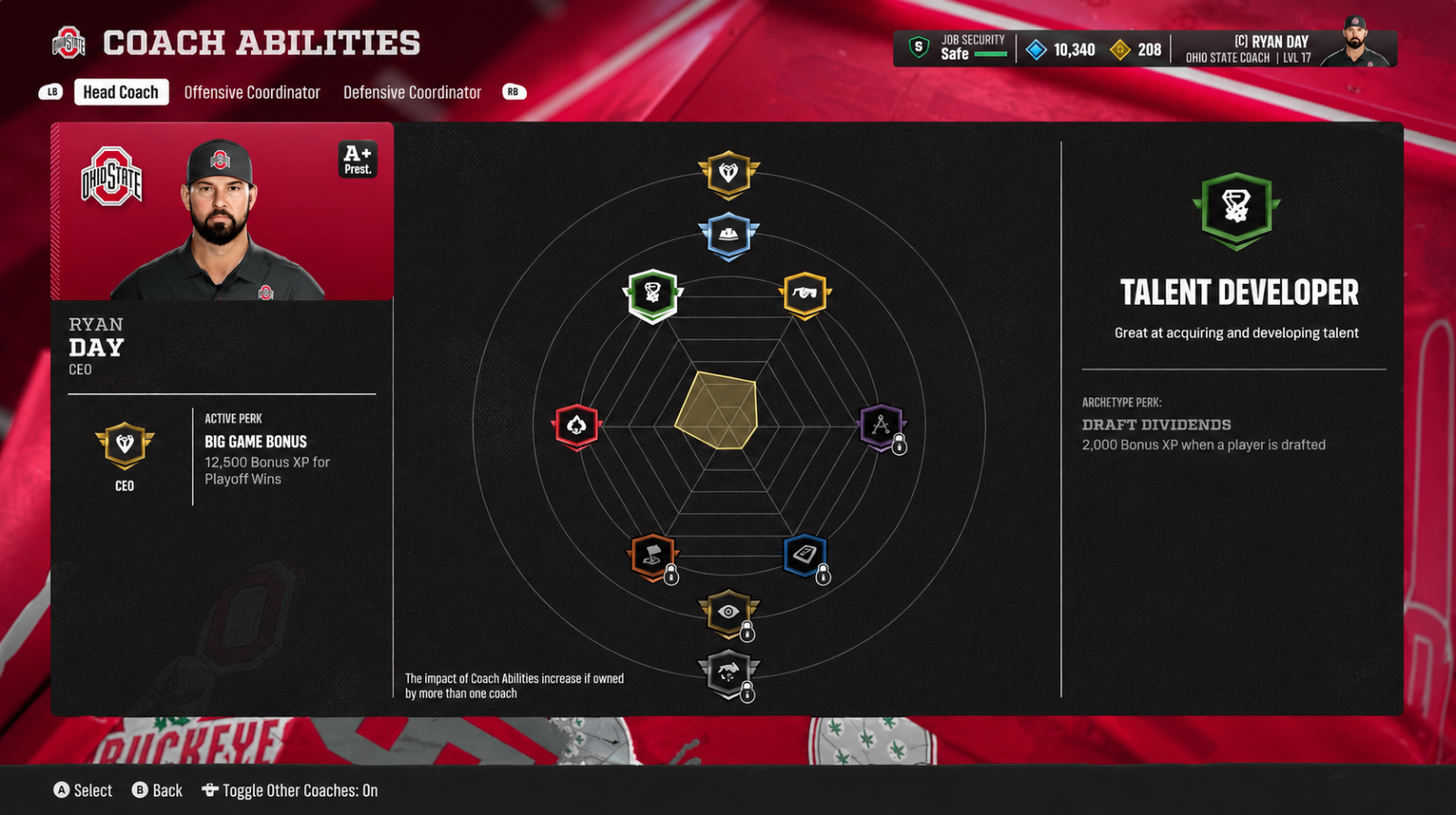
Talent Developer vs. Strategist in Online Dynasty
Your Dynasty format should also influence your decision.
In a competitive online Dynasty where every user is actively trying to win, Talent Developer can provide a more predictable long-term benefit. Draft picks and player development are easier to maintain than perfectly timed recruiting visits.
Strategist can still be extremely useful, but maximizing its recruiting bonuses requires more control over scheduling and recruiting situations.
For offline Dynasties, however, Strategist can become much more powerful because you have greater control over your recruiting plan, visits, and roster management.
Which Ability Fits Your School?
The most important factor is your starting program.
Smaller schools: Strategist provides useful tools for recruiting against stro
nger programs, finding high-development prospects, lowering roster retention barriers, and building a competitive roster with limited resources.
Established programs: Talent Developer can provide significant value because strong pipelines, better recruiting classes, and consistent draft production allow you to maximize player progression.
Long-term Dynasties: Both options become increasingly useful because a long Dynasty gives you enough time to unlock additional coach abilities and build your program into a powerhouse.
Your school's starting point should therefore be considered before choosing an ability package.
Final Thoughts
Talent Developer and Strategist represent two different ways to build a CFB 27 Dynasty program. Talent Developer emphasizes player progression, draft production, and long-term roster development, while Strategist focuses on recruiting efficiency, scouting, visits, and player retention.
If you are starting with a smaller program and need to compete against schools with better resources, Strategist offers tools designed around overcoming those disadvantages. If you already have strong pipelines and consistently recruit talented players, Talent Developer can help maximize their development over multiple seasons.
Ultimately, the best Dynasty strategy is the one that matches your school's strengths, weaknesses, recruiting resources, cheap College Football 27 Coins, and Dynasty length. Understanding how these abilities work before committing coach points can help you build a much more efficient program in CFB 27.