Weekend Drop -













Summary
Recruiting at a small school in College Football 27 can feel impossible. Most players assume you need a massive NIL budget to land quality recruits, but that is not the case—and with the right strategy, you won't need to spend CUT 27 Coins on expensive scouting boosts just to find hidden gems. This guide outlines a proven system that built a top 40 recruiting class at a one-star school while spending less than 1,000 NIL points. The strategy focuses on finding undervalued players, using hours efficiently, and leveraging the transfer portal to accelerate your program's growth.
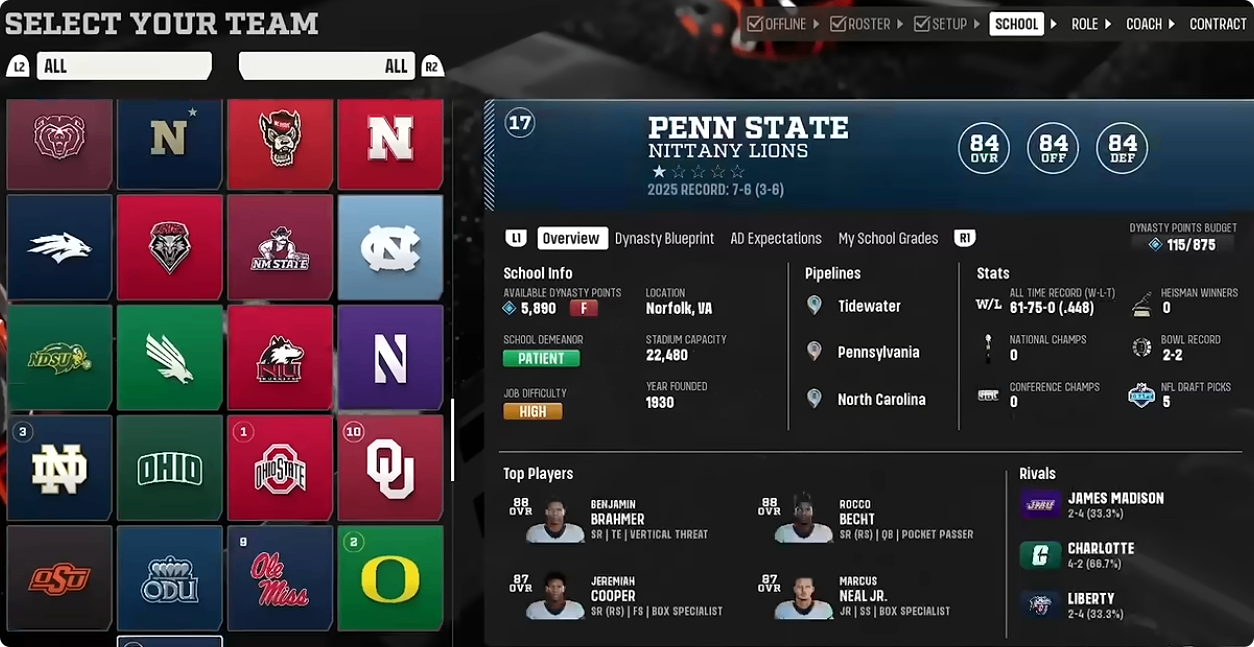
Preseason: Scout for Three-Star Gems
Before the season starts, all your dynasty points should go toward recruiting and retention. Skip facility upgrades, equipment slots, and support staff entirely. Talent is your only priority.
Where to Scout
With limited scouting hours at a small school, focus exclusively on offensive line and defensive positions. Skip quarterbacks, running backs, and wide receivers completely. These positions are easy to find later in the season and through the transfer portal.
What to Look For
Fully scout players to reveal their development trait. Gem tags indicate a player has a good chance of being a star or elite developer. However, gems are rare—only about 10-15% of fully scouted players will have this tag. At a one-star school, expect to find only one or two gems in an entire preseason. Consider yourself lucky if you find three or four. Build your recruiting plan around what you actually find.
Week Zero: Offer Your Gems
Once offers open in week zero, take any three-star gem you found and offer him a scholarship. Do not just match his expected NIL—double it. This is what gets him committing quickly instead of dragging out for weeks.
For your gem, send the house (max out at 50 hours). If you have multiple gems, spread your hours across them—10 to 25 hours each—and let the NIL do the heavy lifting.
Weeks 1-14: Target No-Offer Four-Stars (Quiet Commits)
This is where the system gets interesting. Target four-star recruits with zero scholarship offers, focusing on defensive players, offensive line, and athletes. Athletes are valuable at small schools because they can play multiple positions and help fill roster holes.
The Quiet Commit Strategy
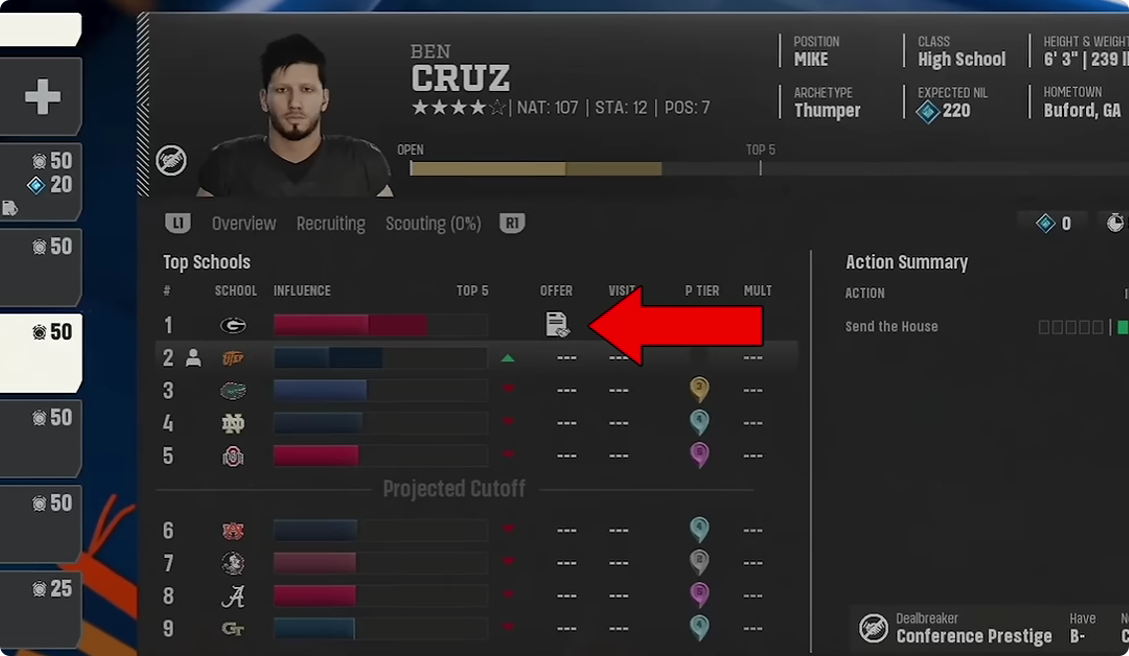
Here is the key insight: do not offer these players a scholarship. Instead, send the house (50 hours) on every single one. If you gain enough influence with them, they will sign with you without a scholarship offer. They commit based solely on hours. Best of all, they will be free to you during their freshman season, with expected NIL sitting at zero.
Weekly Cycle
From week one through the end of the season, repeat the same cycle:
1. Max your hours and send the house on no-offer four-stars.
2. Monitor the board. If another school enters the race and makes an offer, pull your hours and move to the next no-offer four-star.
3. Once a recruit lands in his top five, check your school's grades. If they clear the threshold, put the hard sell on him plus 10 extra hours. If not, keep sending the house.
4. If you run out of no-offer four-stars, drop down to three-stars using the same rules.
Important Warning
If you never give a recruit a scholarship, he must fill his influence bar and hard commit before the transfer portal ends. If not, he may appear signed but will not actually be on your roster next season. You will see him during position change week, but he will be gone by the next season.
To avoid this, monitor influence bars closely. Pipeline advantages and recruiting-related coaching upgrades help speed up influence gain.
Transfer Portal: Where the Real Work Happens
The bulk of your recruiting class will come from the transfer portal. At a small school, the fastest way to build your program is by winning games. Wins improve team grades, team prestige, dynasty points, and these factors compound over time. To win games, you need players who can contribute immediately—and the portal is where you find them.
Portal Strategy
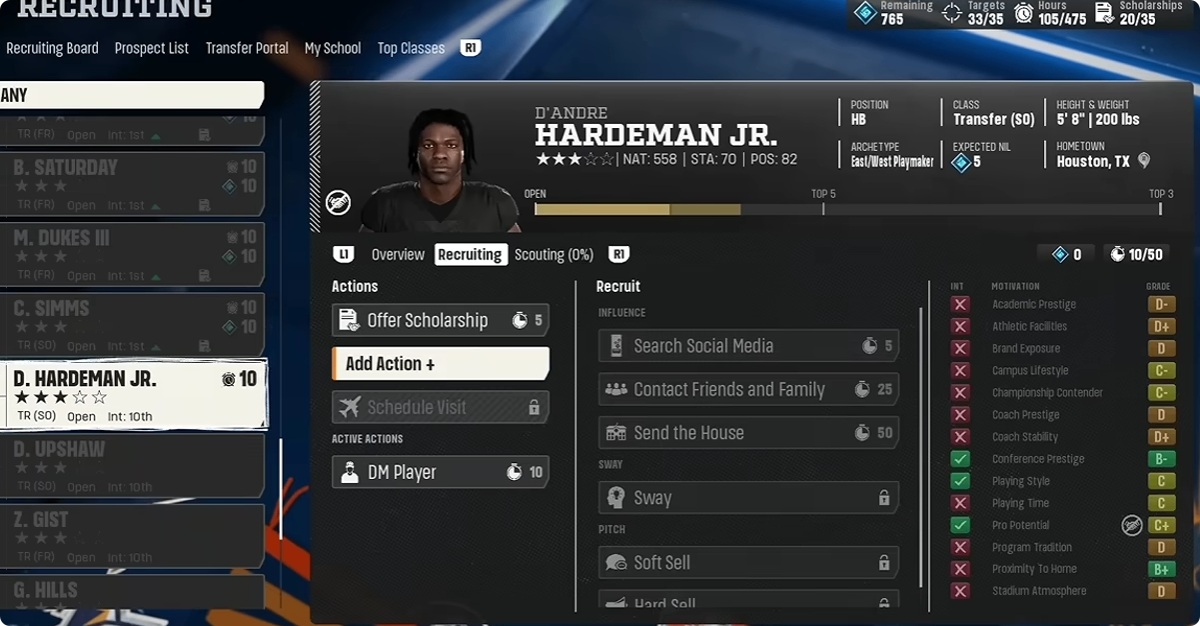
Once the portal opens, hunt for three-star transfers with no offers and low expected NIL. Many sit at zero NIL, while some are at five or ten. These are cheap enough to offer scholarships and double their NIL to secure them if competition enters.
Occasionally, you will find someone worth paying full price for if you have the budget. For example, an 84 overall offensive tackle with 90+ strength is worth a premium if he fills a critical need.
Hours Management
Since the transfer portal window is short, spread your hours thin across many targets instead of stacking them on just a few. Let the scholarship offer and NIL do most of the work. Continue to keep hours on high school recruits who have not committed yet to fill their influence bars.
Monitor boards and influence bars weekly. If you fall far behind on a transfer target, remove him and find someone else. This is also where you should get your quarterbacks, running backs, and wide receivers—there are plenty available in the portal.
Results: A Top 40 Class on a Budget
Following this system at UTEP (a one-star school), the results were clear:
37th-ranked recruiting class in the country
Four four-star recruits
23 three-star recruits
Total NIL spent: under 1,000 points
The roster overall rating jumped 11 points in a single season—from 64 to 75. That is enough to make a program competitive. With continued building in years two and three, the program will be in good shape.
Scaling the System
Adjust expectations based on your school's starting prestige:
Zero-star school: Expect 10-15 three-star and four-star recruits. That is enough to start building.
Two- or three-star school: You will land even more four-star quiet commits with this exact strategy.
Summary
Small school recruiting in College Football 27 does not require a massive NIL budget, so you never need to buy CUT 27 Coins to patch roster holes that smarter recruiting could solve. The key is finding undervalued gems through scouting, targeting no-offer four-stars with hours-only recruitment, and using the transfer portal to add immediate-impact players. With this system, even a one-star school can build a top 40 class and compete faster than traditional grinding methods allow.