Weekend Drop -














Summary:
College Football 27 brings major improvements to the college football experience with new gameplay mechanics, smarter defensive controls, dynamic weather, and deeper Dynasty systems. From timing-based catching to NIL recruiting and AD expectations, College Football 27 Coins, these updates completely change how players approach the field and build a championship program.

Step 1: Master the New Skill Trainer Before Entering the Field
One of the biggest improvements in College Football 27 is the introduction of a much-needed Skill Trainer system. In previous games, many players had to rely on outside tutorials or even other football games to learn advanced mechanics. This year, the game finally provides an in-depth training experience that teaches players almost everything they need to know.
The Skill Trainer covers basic offensive moves such as jukes, spins, and ball carrier controls, while also introducing advanced techniques like pump fakes, defensive line stunts, and coverage adjustments.
For new players, this is an essential starting point. Instead of immediately jumping into online matches or Dynasty mode and struggling with unfamiliar controls, players can practice each mechanic in a controlled environment.
The trainer also focuses on new College Football 27 features, including timing-based catching and the updated defensive adjustment system. Spending time here can make a huge difference, especially because many controls have been changed compared to previous versions.
Step 2: Learn Timing-Based Catching to Improve Your Passing Game
The biggest offensive gameplay change in College Football 27 is the addition of timing-based catching. While players can still choose between possession catches, rack catches, and aggressive catches, the new system gives users more control over the outcome.
When holding the catch button, a meter appears with three sections:
Red Zone: Very low chance of completing the catch
Yellow Zone: Average success rate depending on player attributes
Green Zone: High probability of securing the catch
The goal is to release the button at the correct moment. A perfect green release gives your receiver the best chance to complete the play, although defenders can still make incredible stops.
However, focusing only on the meter is not the best strategy. The most reliable method is watching the football itself. Players should release the button right as the ball reaches the receiver's hands.
This method feels more natural and helps develop better timing. It also improves defensive skills because the same awareness applies when attempting interceptions.
Another important tip is that releasing slightly early is usually better than being late. A late reaction often results in missed opportunities, while an early release still gives your receiver a chance to make a play.
Step 3: Use the New QB Sneak Meter for Short-Yardage Situations
Quarterback sneaks have always been a classic football strategy, but previous games often made them unreliable. College Football 27 changes that with another timing-based mechanic.
Now, successful QB sneaks depend on hitting the meter at the correct point. Landing in the center improves your chance of pushing through the defensive line.
However, success is not guaranteed. Defensive formations still matter.
Before calling a QB sneak, players need to consider:
Defensive line alignment
Whether the defense is pinching inside
Quarterback strength rating
Remaining yardage
Game situation pressure
A strong defensive front can still stop even a perfectly timed sneak. Smart players should read the defense before committing and be ready to audible into another play if the matchup looks unfavorable.
The Skill Trainer is again the best place to practice this mechanic before using it in important games.
Step 4: Adapt to the Redesigned Defensive Adjustment System
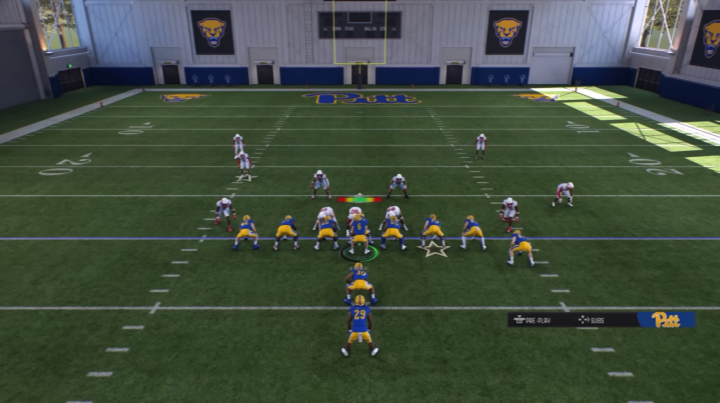
Defense receives one of the largest control overhauls in College Football 27. Veteran players who are used to the old system will need time to adjust because many defensive commands have been moved.
Previously, defensive adjustments required multiple button combinations. The new system focuses on faster and more efficient controls.
Major changes include:
Defensive substitutions moved to the right D-pad
Global coverage adjustments assigned to the left trigger
Defensive line and linebacker adjustments moved to the right stick
The benefit is speed. Players can now quickly make adjustments during a game without navigating complicated menus.
For example, if an opponent repeatedly targets one receiver, defenders can immediately assign extra coverage without wasting valuable seconds.
However, longtime players may feel uncomfortable at first. The new system requires practice, and jumping straight into competitive games without learning the controls can create mistakes.
Step 5: Create Custom Defensive Adjustments for Every Situation
College Football 27 also introduces deeper customization options for defensive strategies.
Players can now create custom defensive adjustments that control:
Linebacker positioning
Defensive line alignment
Cornerback coverage style
Formation-specific defensive behavior
You can save up to 20 custom adjustments for offense and defense, although only five can be brought into each game.
This means preparation becomes a major part of success. Instead of constantly adjusting during games, players can build strategies ahead of time for common situations.
For players who prefer simplicity, College Football 27 also provides preset adjustments. Pressing L1 allows users to quickly access recommended defensive setups without manually changing every option.
Step 6: Understand Dynamic Weather and Its Impact on Gameplay
Weather is more important than ever in College Football 27. Previous games introduced rain and snow effects, but this year's dynamic weather system creates constantly changing conditions.
A game can begin with heavy rain and later transition into clear skies. This means players must prepare for both current and future conditions.
Weather can influence:
Passing accuracy
Ball security
Receiver performance
Play calling decisions
Before each game, pay attention to the forecast. Coaches who ignore weather conditions may find themselves struggling when conditions suddenly change.
A team built around passing plays may need to adjust its strategy during storms, while running-focused teams could gain an advantage.
Step 7: Manage AD Expectations in Dynasty Mode
Dynasty Mode receives major improvements in College Football 27, including the new Athletic Director Expectations system.
Every school now has specific goals based on its identity and ambitions.
Some programs expect:
National championships
Conference titles
Bowl appearances
Rival victories
These expectations determine how much patience your school has with your coaching performance.
A powerhouse program may fire a coach after failing to compete for championships, while smaller schools may give more time to build a successful foundation.
Choosing the right program is now more important than ever. Your recruiting strategy, coaching decisions, and long-term goals must match your school's expectations.
Step 8: Use Dynasty Points Wisely to Build Your Program
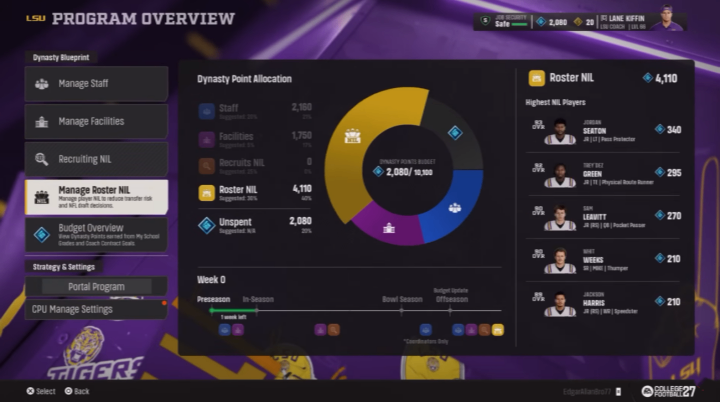
Another major Dynasty addition is the Dynasty Points system.
These points are earned based on program success, including:
Conference prestige
Stadium atmosphere
Team performance
They are used for important upgrades such as:
Hiring coaching staff
Improving facilities
Offering NIL deals
Keeping players satisfied
The challenge is resource management. Dynasty Points are limited, and players must decide whether to invest in recruiting, facilities, or staff development.
You can allow the CPU to manage these resources based on your Dynasty Blueprint, but understanding the system yourself will give you a major advantage.
Step 9: Master NIL Recruiting to Build a Championship Team
Recruiting is one of the most important parts of Dynasty Mode, and College Football 27 expands the process with NIL deals.
Scholarship offers now require Dynasty Points, and every recruit has different expectations.
Offering more resources increases player interest, while offering too little can hurt your chances.
However, promises come with responsibility. If you fail to deliver what you promised, players may become unhappy.
Successful recruiting requires balance:
Save enough points for elite prospects
Avoid overspending early
Build relationships with important recruits
Protect your current roster
A strong recruiting strategy will determine whether your program becomes a championship contender or falls behind.
Conclusion: College Football 27 Changes Everything on the Gridiron
College Football 27 is not simply an updated roster version of last year's game. The new catching mechanics, defensive controls, weather system, and Dynasty improvements completely change the way players approach football.
Whether you are trying to dominate online matches or build a legendary Dynasty program, cheap College Football 27 Coins, understanding these systems is essential.
Master the Skill Trainer, learn timing-based mechanics, adapt your defensive strategies, and manage your program wisely. With the right preparation, you can turn your team into the next college football powerhouse and create a championship legacy in College Football 27.