Weekend Drop -













Summary
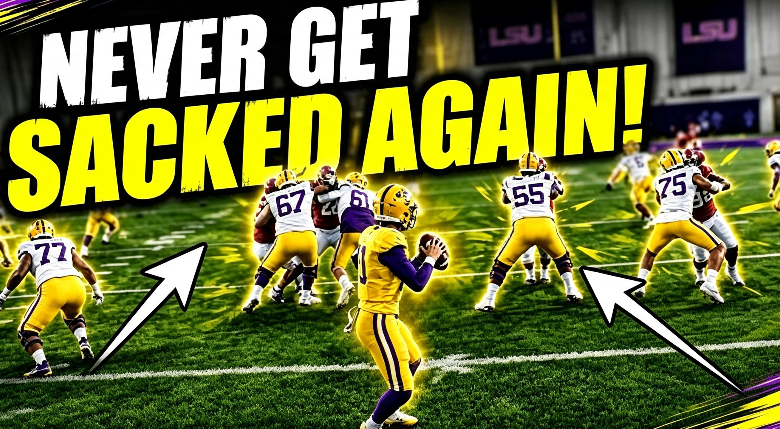
Blitzes in College Football 27 can be absolutely devastating—especially if you don't know how to adjust your protection schemes. Whether you're facing a Texas four-man stunt, an edge overload, or a mugged A-gap look, the game gives you all the tools you need to keep your quarterback upright. The key is knowing when and how to use each protection system—and if you're planning to buy NCAA 27 Coins to upgrade your roster, mastering these adjustments ensures your investment pays off on the field. This guide breaks down every major pass protection feature in the game, including when to use empty, base, half slides, and full slides, plus advanced techniques like untargeting defenders and pre-snap blocking diagnostics. Best of all, these systems work with any playbook, so you can stick with your favorites and still dominate.
Part 1: Understanding the Different Protection Types
1. Empty Protection
Best Used Against: 4-down line formations with stunts (especially Texas 4-man stunts)
Why It Works: Empty protection is incredibly effective at picking up stunts because it forces the offensive line to account for all gaps rather than sliding in one direction. The Texas 4-man stunt—one of the most common and effective blitzes in the game—can generate immediate pressure if you're on the wrong setting, but empty protection consistently handles it.
When to Use:
Opponent is in a 4-3 or 4-down front
You see frequent stunting from defensive linemen
You want to keep your eyes downfield without worrying about protection breakdowns
Example: Against a standard 4-man front running stunts, empty protection gives you enough time to make your reads without panic.
2. Base Protection
Best Used Against: 3-down line sets with edge pressure (e.g., the Cub formation)
Why It Works: Base protection is much better against edge rushers coming from outside. It doesn't handle interior stunts as well as empty, but against formations designed to bring pressure off the edge, base is the safer choice.
When to Use:
Opponent is in a 3-3-5 or 3-down front
They're consistently sending edge blitzes from outside linebackers
You're not seeing much interior stunting
Key Difference: Base is weak against 4-man stunts, so don't use it against aggressive interior pressure. Save it for edge-heavy defenses.
3. Half Slides vs. Full Slides
Best Used Against: Overload blitzes coming from one specific side
Why Half Slides Are Better: If you use a full slide, you'll likely give up a free rusher on the opposite side of the slide. Half slides let you shift protection toward the overload without abandoning the other side entirely.
When to Use Half Slides:
Opponent is in a Dime or Nickel formation with a slot corner blitzing off one side
You see a consistent numbers advantage on one side of the line
Your offensive line keeps missing a particular blitzer
Example: If they're sending an overload from the left, use half slide left. This ensures the slot corner gets picked up while the right side remains protected.
Part 2: The Untargeted Defender Feature
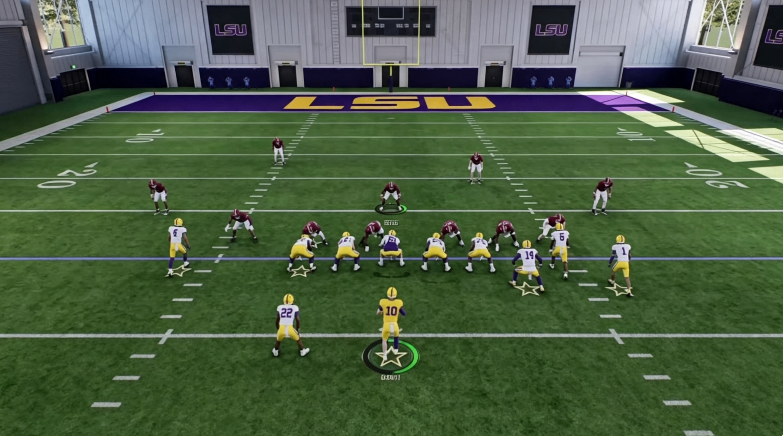
One of the most powerful—and misunderstood—tools in College Football 27 is the untargeted defender feature. Most people think you can only untarget one defender per play. That is not true. You can untarget as many defenders as you want, and doing so is often the difference between a sack and a touchdown.
How to Activate It
Flick the right analog stick up to bring up the untargeted defender cursor. Then scroll over any defender you don't want your offensive line to block.
When to Use It
Scenario 1: Distraction Players Over the Center
Sometimes defenders will stand over the center just to distract your offensive line. They're not actually blitzing—they're just trying to confuse the protection scheme. If you untarget them, your line stops worrying about them and focuses on the real threats.
Scenario 2: Multiple Linebackers Mugging the Box
When two linebackers are crowding the line of scrimmage, you need to untarget both of them—not just one. If you only untarget one, the other might still draw a blocker away from a real blitzer.
Scenario 3: The User Defender
You can automatically untarget the user defender by hitting Triangle (or Y on Xbox) after flicking the right stick up. The game literally shows a "User" label next to the triangle icon, making it easy to identify who's being controlled.
Pro Tip: Untargeting Doesn't Mean They Won't Be Blocked
Even after you untarget a defender, your offensive line may still pick them up if they end up blitzing. The feature simply tells your line not to proactively block them, which prevents them from being distracted by fake pressure.
Part 3: The Game-Changer — Pre-Snap Blocking Diagnostics
This is the single most underutilized feature in College Football 27, and it will completely transform how you handle blitzes.
How It Works
Before you snap the ball, hold L2 (or LT) . This brings up your blocking assignments, showing:
Who your offensive line is targeting
Which defenders are "hot" (marked with a flame icon)
Why This Is a Game-Changer
You can literally see—before the ball is snapped—whether a blitz is going to get picked up.
Here's the process:
Snap the ball? No. Hold L2/LT first.
Look for flame icons. Any defender with a flame is likely blitzing.
Check if they're blocked. If a flame defender doesn't have an arrow pointing to them, they're coming free.
Make adjustments. Change your protection scheme, untarget distracting players, or slide protection until every flame defender is accounted for.
Real-World Example
Let's say you're facing a 4-3 Even 6-1 defense. This formation is known for heavy edge pressure. You hold L2/LT and see:
A flame over the left outside linebacker
No blocker assigned to him
One of your linemen is instead targeting a linebacker standing over the center (who isn't blitzing)
Fix: Untarget the distraction player. Now the lineman shifts to the actual blitzer. The flame disappears. You snap the ball and have plenty of time.
This works for every blitz in the game. No guesswork. No panic. Just clear, visual feedback.
Part 4: Advanced Tips & Strategies
1. Combine Protection Types with Untargeting
Don't just rely on one system. For example:
Use empty protection against 4-man stunts
Untarget any defenders standing in the box who aren't blitzing
Use half slides if the pressure is coming from one side
The combination of these tools makes your protection virtually unstoppable.
2. Watch for Formation Cues
Certain formations telegraph specific blitzes:
Formation | Likely Pressure |
4-3 Even 6-1 | Edge pressure, stunts |
Dime/Nickel | Slot corner overloads |
3-3-5 Cub | Edge blitzes |
Any formation with 2+ linebackers over center | A-gap pressure or distraction |
Use this information pre-snap to choose your protection scheme before you even hold L2/LT.
3. Make Adjustments Until It's Safe
The pre-snap diagnostic tool (L2/LT) isn't just for observation—it's for iteration. If you see a flame defender is still unblocked after your first adjustment, make another one. Keep adjusting until every flame is accounted for.
Don't snap until you see clear blocking assignments on all dangerous defenders.
4. Don't Be Lazy with Untargeting
If you're facing a defense with multiple linebackers in the box, take the extra second to untarget all of them—not just the obvious one. Lazy protection leads to free rushers.
Part 5: Summary Checklist
Before every pass play, run through this checklist:
Identify the defensive formation
Choose your protection type (empty, base, half slide, etc.)
Hold L2/LT to view blocking assignments
Look for flame icons (hot defenders)
Check if all flames are blocked
Untarget any distracting defenders (including the user)
If needed, change protection and re-check
Snap the ball only when all threats are accounted for
Final Thoughts
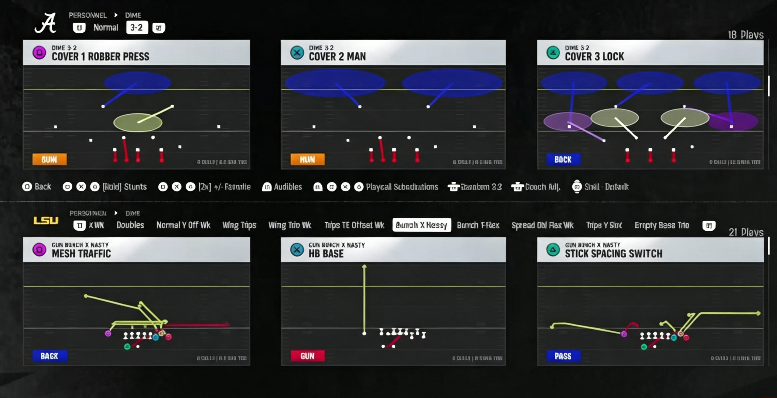
Pass protection in College Football 27 isn't random—it's a chess match. The defense shows you a look, and you have the tools to counter it perfectly. The players who master empty vs. base, half slides, untargeting multiple defenders, and pre-snap diagnostics are the ones who stay off the turf and make big plays downfield. If you're looking to build a championship-caliber team while sharpening your protection skills, you can find NCAA 27 Coins for saleat trusted sites like MMOEXP, which many players recommend for fast and reliable service to help you acquire the players you need without the grind.
Don't be a victim of the blitz. Take control of your protection, and watch your completion percentage soar.