Weekend Drop -














Summary
Position changes are one of the most powerful—and often overlooked—tools in Dynasty mode. When used correctly, they can transform a mediocre roster into a championship contender, unlock hidden skill caps, and ensure your players develop into the archetypes you actually want. This guide breaks down everything you need to know about position changes, from the ethical basics to the advanced techniques that can give you a competitive edge. Mastering this system saves you from spending cheap College Football 27 Coins on transfers or recruiting replacements, letting you fill roster holes for free and redirect your coins toward other team needs like training upgrades or scouting.
Why Position Changes Matter
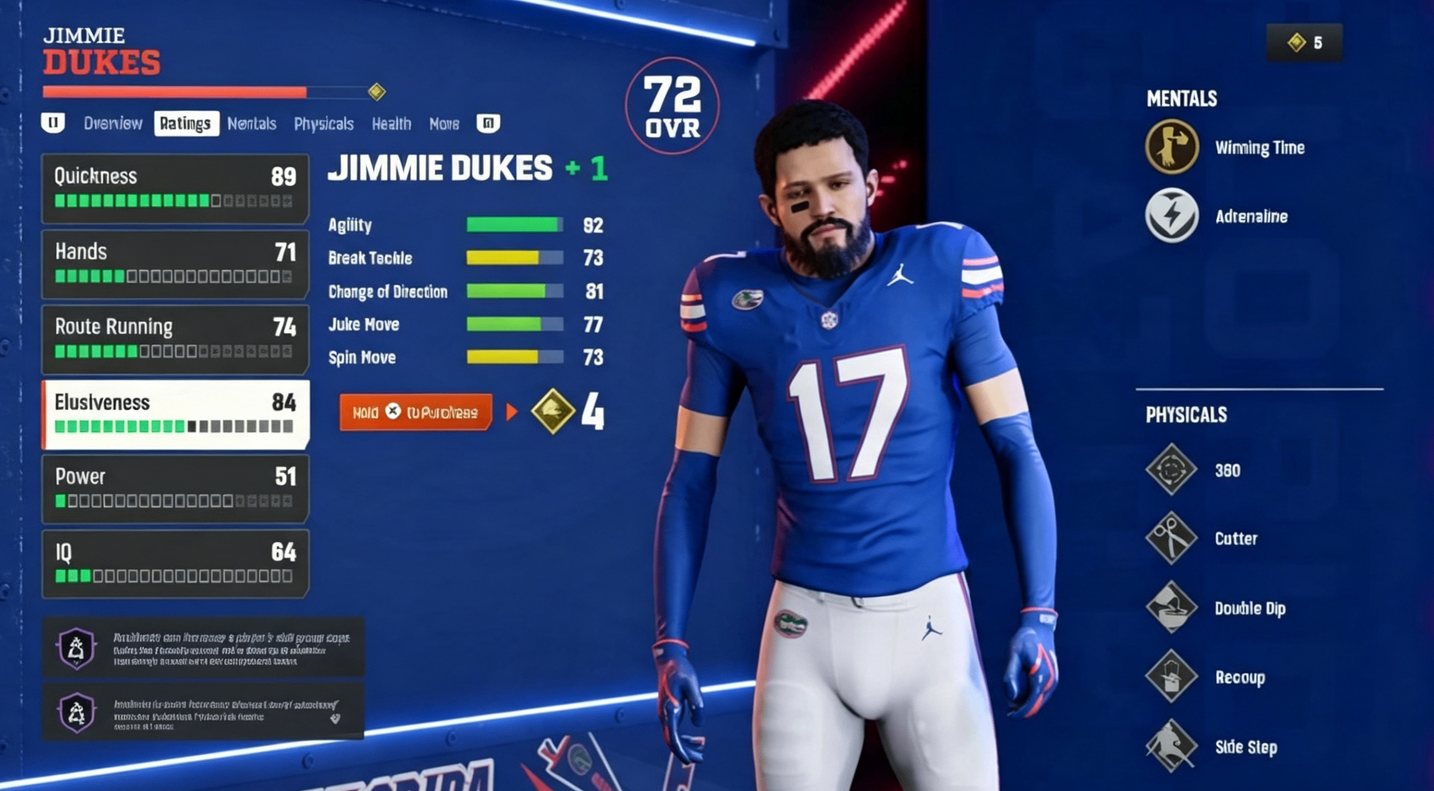
The archetype system in College Football 27 is not dynamic. Players can get "stuck" in the wrong archetype based on their attribute distribution, and their overall rating will suffer as a result. For example, a dual-threat quarterback who should clearly be a pure runner (high speed, agility, ball-carrying stats) will have a lower overall and won't be able to unlock the powerful physical abilities that come with the correct archetype.
Key insight: Changing a player's position to the right archetype can increase their overall by several points, improve their draft stock, and unlock abilities that make them significantly more effective on the field.
Understanding Skill Caps
Every player has skill caps—limits on how high specific attributes can be upgraded. You can view these in the bottom-right corner of the player card. Here's what you need to know:
Moving Within a Position Group
When you move a player to a different position within the same group (e.g., corner to safety, left tackle to right guard, outside linebacker to middle linebacker), their skill caps remain unchanged. The game recognizes this as a natural positional shift and preserves their development potential.
Moving Between Position Groups
When you move a player to a completely different position group (e.g., cornerback to quarterback), their skill caps will reset and randomize. This can be devastating if done carelessly—you could turn a five-star talent into a developmental dud. However, it can also be a lifesaver for players who have hit their caps early.
The Skill Cap Reset Technique
This is the most powerful—and potentially cheesy—application of position changes. Here's how it works:
Identify a player who has maxed out their skill caps (they can no longer upgrade any attributes).
Move them to a position on the opposite side of the ball (e.g., defensive back to quarterback, linebacker to running back).
Move them back to their original position group.
After this process, their skill caps will be completely reset, allowing them to continue progressing. This is especially valuable for:
Three-star or two-star players who hit their ceiling too early
Athletes with elite physical traits but poor archetype fit
Players you want to keep developing into their junior or senior seasons
Warning: This technique does not always yield better skill caps. You might get worse ones. If you ruin a player's caps, you can repeat the process each year to try for a better outcome, but there's no guarantee they'll recover to their original potential.
Archetype Hunting Through Position Changes
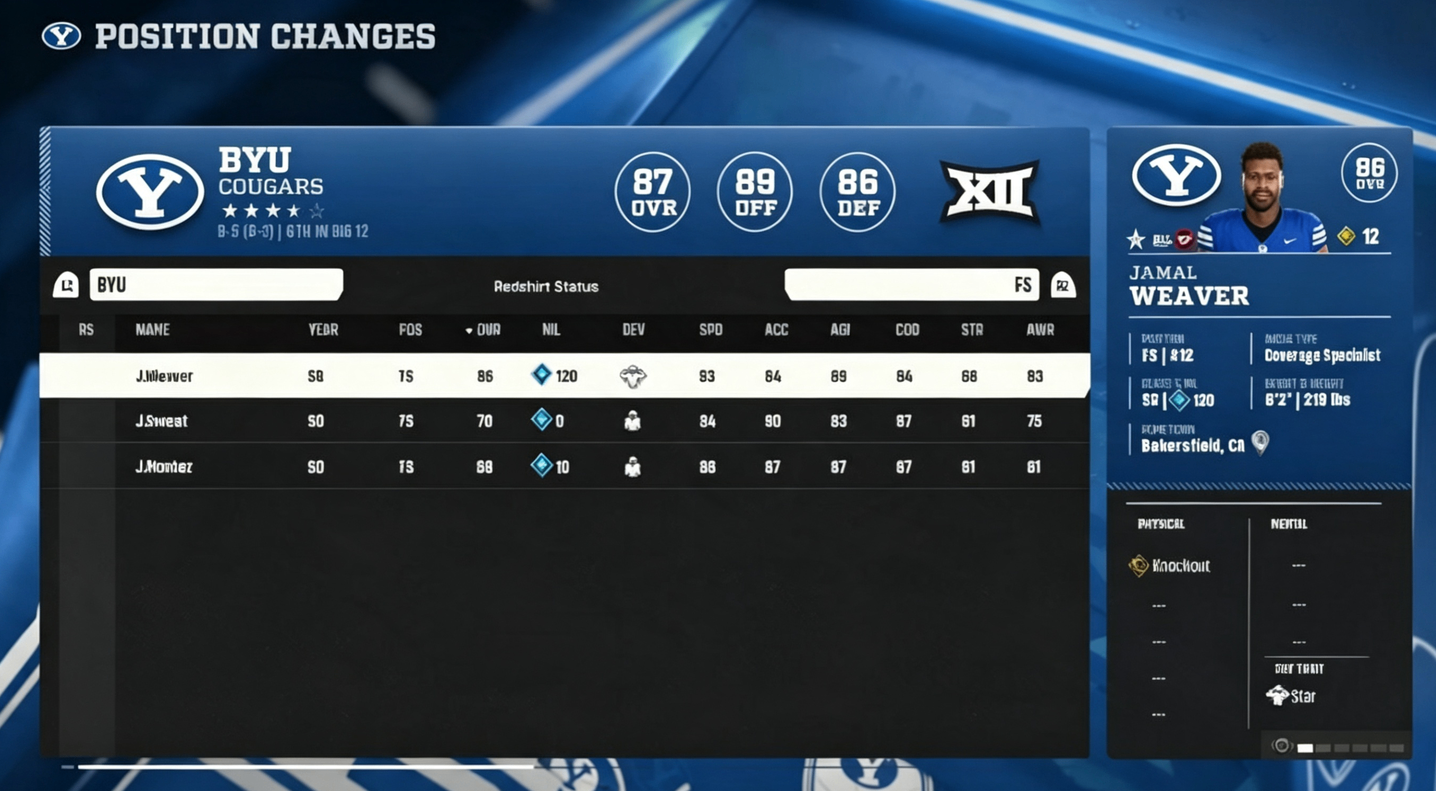
Some of the best archetypes in the game can only be accessed through position changes. Here are some of the most valuable conversions:
Receiver to Tight End
A gritty possession receiver with modest receiving stats can transform into a vertical threat tight end with a significant overall boost. This is one of the most reliable position changes in the game and can turn a depth piece into a starting weapon.
Cornerback to Safety or Linebacker
Convert zone corners to hybrid safeties for an immediate overall boost. For bigger corners with low speed but high coverage stats, consider moving them to linebacker—they can become elite coverage specialists at a position that rarely produces them.
Quarterback to Running Back or Receiver
Quarterbacks with elite speed and agility but mediocre throwing stats often become elite running backs or receivers. A quarterback with 90+ speed and good change-of-direction can jump to a 90+ overall at running back overnight. This is also the only way to create certain player types—like a Derrick Henry-style power back or a Cam Newton-style dual-threat QB—that the game's recruiting system doesn't naturally generate.
Ability Considerations
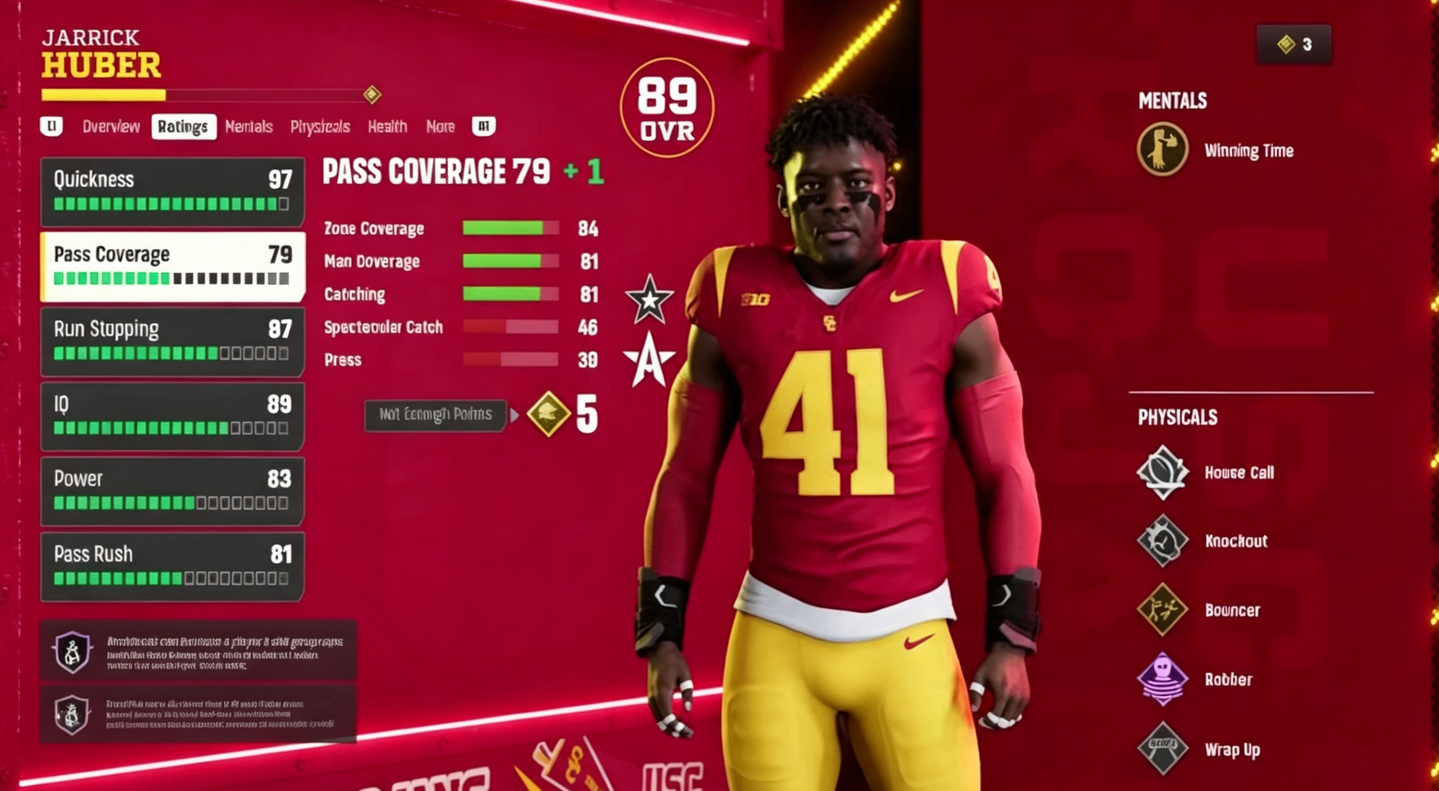
When changing a player's position or archetype, they will lose all existing abilities and gain new ones based on their new archetype. This is both a risk and an opportunity:
When to Avoid Position Changes
If the player already has elite abilities you can't easily replace (e.g., a linebacker with Bouncer, House Call, or Robber)
If the overall gain is minimal (1-2 points) and doesn't justify losing three abilities
If the player is already performing well in their current role
When to Embrace Position Changes
If the new archetype offers better abilities for your scheme (e.g., converting a dual-threat QB to pocket passer for better play-action and accuracy abilities)
If the player's current abilities are low-tier or irrelevant to your playstyle
If you need a specific ability set to fill a roster hole (e.g., a cover specialist safety with House Call for interception-heavy schemes)
Archetype-Specific Strategies
Quarterbacks
Dual threat to pure runner: Best for QBs with elite speed and carrying but low throwing stats
Dual threat or backfield creator to pocket passer: Better abilities for traditional passing schemes
Any QB to RB/WR: Great for athletes who don't fit your offensive system
Linebackers
Lurking middle LB to outside LB: Outside lurkers can upgrade more attributes (zone, man, catching, spectacular catch, press) than middle lurkers
Signal caller to thumper: Easy conversion for power-oriented defenses
Defensive Backs
Zone corner to boundary or slot: Can reset skill caps and sometimes improve overall
Hybrid safety to cover specialist: Access to better interception abilities
When to Change Positions
Early Career (Freshman/Sophomore)
Risky—can ruin skill caps before they've developed
Only do this if the player is clearly in the wrong archetype and you want to unlock better abilities from the start
Mid Career (Junior/Senior)
Ideal for skill cap resets—players have likely maxed out their potential
Perfect for turning a player who has plateaued into a continued contributor
Pre-Draft
Position changes can boost overall and improve draft stock
A 92-overall QB will get drafted; an 84-overall one might not
Final Tips
Always check skill caps before and after a position change. The game now shows them clearly in the bottom-right corner—use this feature.
Have a plan. Don't move players randomly. Know what archetype you want and confirm the attributes support that archetype.
Consider the opportunity cost. If a player is going to lose three elite abilities for a 2-point overall increase, it might not be worth it.
Don't be afraid to play players out of position. Sometimes keeping a player at their natural position but using them in a different role (e.g., playing a corner at safety) is better than officially changing their position and losing abilities. This approach preserves valuable physical traits while filling roster gaps, so you won't need to look for College Football 27 Coins for sale to buy replacements. If you do want to accelerate your team building, MMOEXP offers reliable options to complement your smart roster management.