Weekend Drop -

















Summary:
Winning consistently in College Football 27 isn't about knowing hundreds of plays—it's about mastering a handful of high-impact techniques. This guide covers the most effective offensive and defensive strategies, from elite run defense and high-ball passing to RPO counters, defensive playbooks College Football 27 Coins, and avoiding low-percentage plays.
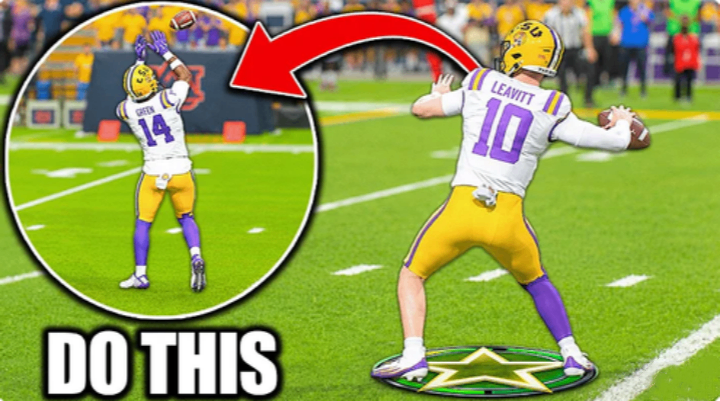
Step 1: Master Weak-Side User Run Defense
Stopping the run is arguably the biggest key to winning in College Football 27.
This year's running game is stronger than ever, meaning poor run defense will cost you games no matter how explosive your offense is.
A highly effective strategy is controlling the weak-side safety instead of a linebacker.
Here's why it works:
Stay around 10 yards deep before the snap.
Flow over the top instead of attacking downhill immediately.
Shoot the running lane once the play develops.
If necessary, absorb a blocker to free another defender.
Many players dive directly into traffic, creating what experienced players call the "mush." Instead, staying outside allows you to force runners back inside where your teammates are waiting.
Even allowing a five-yard gain is often a victory because your positioning prevents explosive touchdown runs.
Step 2: Build Your Defense Around Cover 4
Cover 4 is one of the safest defensive calls in College Football 27.
Its biggest advantage is allowing the weak-side safety to become an extra run defender without completely sacrificing pass coverage.
Benefits include:
Excellent protection against deep passes
Strong support versus outside runs
Easy user control
Balanced defensive spacing
As you learn your opponent's tendencies, you'll begin anticipating where each run is headed, allowing your user-controlled safety to take even better pursuit angles.
Step 3: Attack the Middle of the Field
Many defenses struggle to consistently defend the middle seam.
Routes that excel include:
Post routes
Seam streaks
Deep in-breaking routes
The reason these routes are so effective is simple.
If defenders stay deep to protect the seam, they'll often leave underneath routes wide open.
If linebackers attack underneath throws, the seam becomes available.
You're constantly forcing your opponent to choose between two bad options.
Learning to identify these windows is one of the biggest differences between average quarterbacks and elite players.
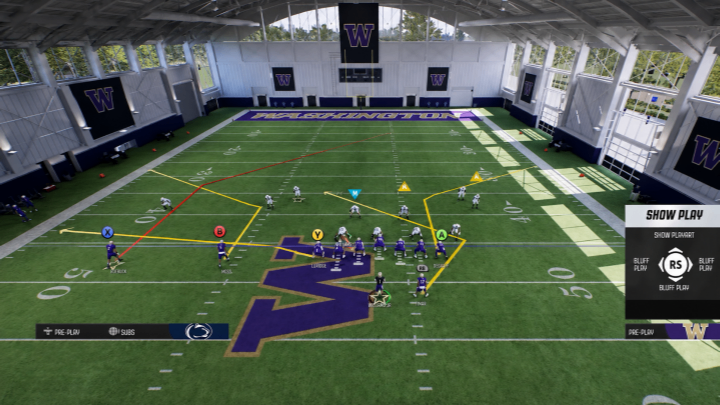
Step 4: Use High Ball Passes in Tight Windows
One of the strongest passing mechanics in College Football 27 is the High Ball.
Instead of throwing directly into defenders' chest level, High Balls place the football above coverage where only your receiver has a chance to catch it.
To perform one:
Hold LB (Xbox) or L1 (PlayStation)
Throw a bullet pass
Use possession catch when expecting contact
High Balls work especially well when:
Throwing seam routes
Targeting tight ends
Beating linebackers
Throwing over underneath defenders
There are risks.
High Balls are less accurate than normal throws, and receivers often leave their feet, making drops possible after big hits.
Still, when used correctly, they transform interceptions into completions.
Step 5: Learn Defensive Coverage Shading
Coverage shading is one of the most underused mechanics in the game.
Many players leave their coverage on default every snap.
Instead, learn when to adjust.
Shade Underneath
Best for:
Third-and-short
Red zone defense
Quick slants
Flat routes
Texas routes
Defenders become much more aggressive jumping underneath throws.
Shade Over Top
Best for:
Preventing deep bombs
Defending vertical routes
Protecting late-game leads
Remember that Zone Drops override shading, so if you've manually adjusted zone depths, those settings take priority.
Most of the game should be played with default coverage, but situational shading creates turnovers.
Step 6: Use the 4-2-5 Man Pressure Defensive Playbook
If you're looking for one defensive playbook that covers nearly every situation, the 4-2-5 Man Pressure playbook is among the strongest choices.
It includes multiple elite formations:
4-3 Even 6-1
4-2-5 3 High
Nickel Over
Nickel Wide
Nickel Double Mug
Dime Normal
Dime 3-2
This variety allows you to defend:
Heavy running formations
Spread offenses
Passing situations
Hurry-up attacks
Instead of constantly changing playbooks, mastering one flexible defensive system leads to more consistent results.
Step 7: Shut Down RPOs Properly
Run Pass Options remain one of the strongest offensive concepts in College Football 27.
Fortunately, they're also predictable once you understand the mechanics.
An effective counter is:
Call a zone defense.
Manually assign a defender to the RPO receiver.
Ensure the assigned defender is not the read-key defender.
One important rule:
The read-key defender cannot properly defend the RPO pass option.
If you accidentally assign that player, he'll often ignore the receiver entirely.
Instead, manually assign another nearby defender.
This simple adjustment dramatically reduces easy RPO completions.
Step 8: Improve RPO Blocking Assignments
Many players blame poor blocking on bad game mechanics.
Often, the real issue is incorrect blocking priorities.
Before the snap:
View blocking assignments.
Open the untarget menu.
Remove unnecessary deep defenders from the blocking priority.
Redirect blockers toward dangerous slot defenders.
This simple adjustment ensures defenders who actually threaten the play get blocked first.
Better blocking means:
Bigger gains
Fewer negative plays
More explosive RPOs
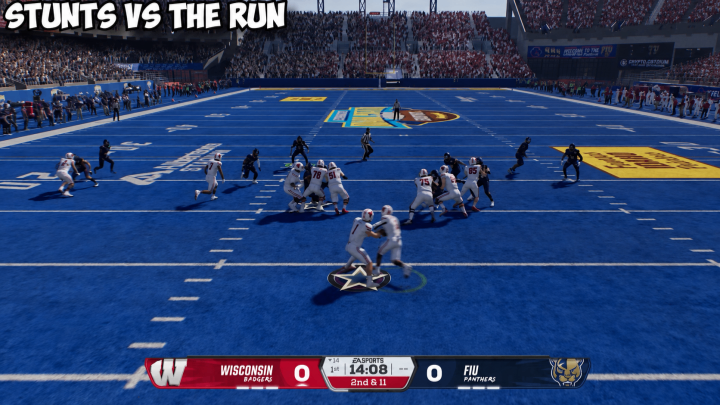
Step 9: Use Defensive Stunts Against the Run
Most players think stunts are only for pass rushing.
In College Football 27, they're also outstanding against the run.
Texas Four-Man Stunt
Ideal for:
Inside Zone
Dive
Power
Interior rushing attacks
The looping defenders clog interior rushing lanes before the running back reaches the line.
El Paso Four-Man Stunt
Best against:
Outside Zone
Stretch
Sweep
Speed Option
These looping defenders widen their rush path, helping contain outside runs before they reach the edge.
Learning when to switch between these two stunts can completely transform your run defense.
Step 10: Eliminate Low-Percentage Plays
Perhaps the most overlooked advice is simply removing bad plays from your game plan.
Every offensive play has an opportunity cost.
Calling weak plays means you're not calling stronger ones.
Examples of low-percentage concepts often include:
Toss plays without pulling blockers
Slow-developing counters
Tight end screens with long play action
Gadget reverses
Fake flip trick plays
While these plays occasionally work, they fail far too often against quality opponents.
Instead, build your offense around plays that consistently generate positive yards.
Elite players don't necessarily know more plays—they know which plays not to call.
Bonus Tip: Use Wear and Tear to Your Advantage
The Wear and Tear system has a massive impact on long games.
Using Cut Stick Tackles (flick the right stick downward) increases fatigue and physical damage much faster than standard tackles.
Repeated cut tackles can reduce a player's:
Speed
Acceleration
Throw Power
Throw Accuracy
Ball Carrier effectiveness
Targeting star running backs and mobile quarterbacks throughout the game can make them significantly less dangerous in the second half.
Final Thoughts
Success in College Football 27 isn't about memorizing hundreds of formations or relying on gimmick plays. The best players consistently win because they execute the fundamentals better than everyone else. Mastering weak-side run defense, throwing accurate High Balls, adjusting coverage shading, stopping RPOs, using defensive stunts effectively, using cheap College Football 27 Coins, and eliminating low-percentage plays will make your gameplay far more consistent. Focus on these proven techniques, practice them regularly, and you'll not only win more online matchups but also dominate Dynasty Mode and every competitive challenge College Football 27 has to offer.