






summary
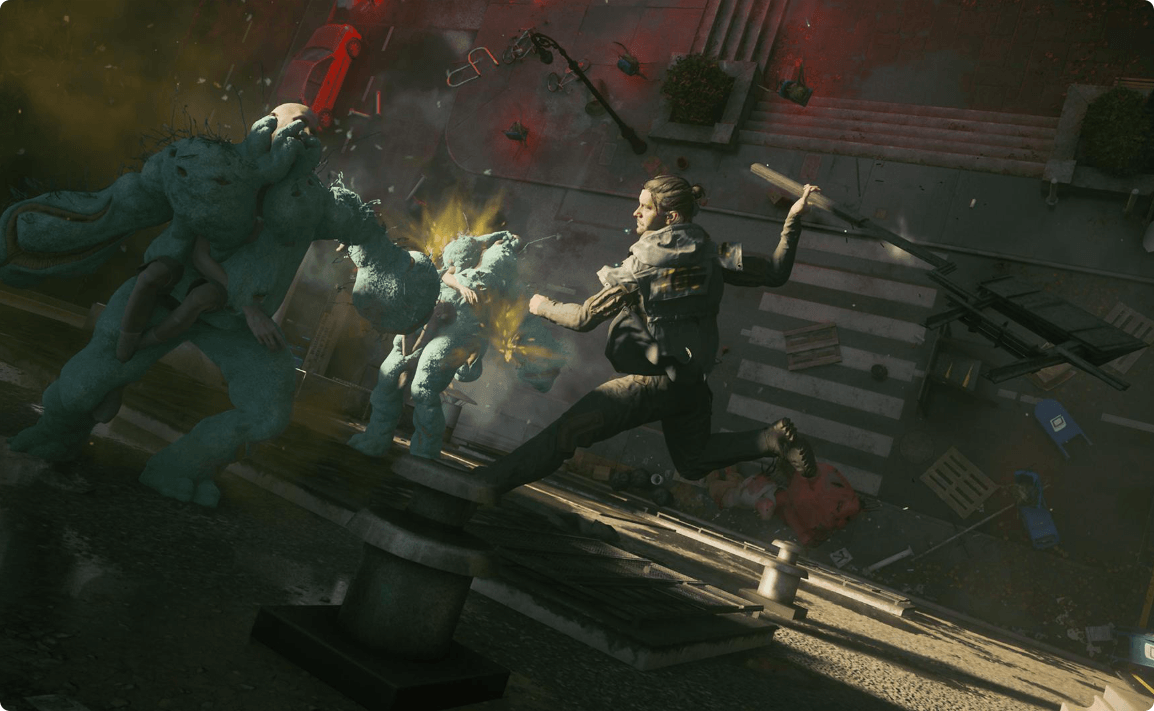
Control Resonant’s Aberrant weapon system offers multiple primary forms, secondary forms, and combo finishers, each supporting different combat styles. Strike, Glaive, and Cleave focus on different attack patterns, while Crush, Drill, and Extend provide specialized heavy attacks. By combining these options and using respec opportunities wisely, players can build around single-target damage, crowd control, Falter, or status effects. Players who want to get into the game with an established character can also buy Control Resonant Account options and explore different weapon builds more quickly.

Primary Forms: Strike, Glaive, and Cleave
Your primary form determines your basic light attacks. The three options offer distinctly different approaches.
Strike is the fastest primary form and focuses on single-target damage and critical hits. It works well when you prefer quickly eliminating one enemy before moving to the next. Its main weakness is limited crowd control.
Glaive takes the opposite approach. Its wide swings can hit several enemies simultaneously, making it effective when surrounded. However, it sacrifices attack speed and critical-hit potential for better area coverage.
Cleave sits between the two. It offers more raw damage than Strike while being faster than Glaive. It also deals increased damage when attacking enemies from behind. Its dodge attack can lift enemies, giving it another useful combat function.
Each primary form has its own skill tree, so examine the early upgrades before committing to one.
Secondary Forms: Crush, Drill, and Extend
Soon after beginning the wider adventure, you gain access to a secondary form for heavier attacks.
Crush is a powerful hammer designed around Falter, the game's stun mechanic. It can break armor and build Falter quickly, making it useful for setting up executions. However, it is less effective against Mold enemies.
Drill attacks in a straight line and can continue dealing damage when held after connecting with an enemy. Its sharp damage type gives it an advantage against Hiss shields, making it particularly useful against protected targets.
Extend uses a sectional staff with wide attacks. Its charged strike can deal additional damage when timed correctly, while its damage profile has neither the specific strengths nor weaknesses of Crush and Drill.
Secondary forms also receive additional upgrades, including improved attacks and eventually a special switch attack that can replace a normal combo finisher.

Combo Finishers Add Another Layer
After increasing Aberrant Strength through weapon upgrades, players can unlock powerful combo finishers. These abilities trigger after completing a light-attack combo and continuing the attack sequence.
Concussive Beat Down focuses on damage and Falter. It is particularly effective when every hit connects and works well for players who want to overwhelm enemies directly.
Uppercut Surge launches enemies into the Lifted state. Further upgrades improve Falter and Power recovery, making it useful for builds that rely heavily on combat abilities.
White Edge delivers extremely high single-hit damage across a wide area. It becomes particularly effective when paired with Glaive because hitting multiple enemies beforehand can improve its critical and Falter effects.
Spin Edge performs multiple attacks instead of one massive strike. Landing the entire sequence can produce substantial damage and Falter while also providing additional Power-related benefits.
For status-focused builds, Split Pivot is especially interesting. It can gain high critical-hit potential and apply effects such as Weakened and Burning. This makes it easy to combine with other abilities that take advantage of status effects.
Split Orbit provides a more sustained area attack around Dylan. Its upgrades improve its duration, speed, damage, and Falter, making it useful for players who want ongoing passive pressure.
How to Build Your Weapon Setup
The best combination depends on the type of combat you enjoy rather than one universally superior weapon.
For fast single-target combat, Strike, Drill, and Concussive Beat Down create a focused setup that emphasizes speed, precision, and sustained pressure.
For crowd control, Glaive combined with Extend and White Edge or Spin Edge provides strong area coverage and helps Dylan control surrounding enemies.
For status-based combat, Cleave or another suitable primary form can be paired with Drill and Split Pivot to build around effects such as Weakened and Burning.
You can also deliberately mix different strengths instead of specializing in one combat style. For example, a wide-area primary attack can compensate for a secondary weapon that struggles against groups.
Respec Before You Commit
Weapon choices are not completely permanent. Players can use Reset Items to respec weapon trees, although these resources are limited and are also required for other character upgrades. For players looking to explore different builds without starting from scratch, a Cheap Control Resonant Account can provide another way to access an established character and experiment with different weapon setups.
After using a Reset Item, you can test your new setup in the arena before leaving the Gap. This provides a useful opportunity to experiment without immediately committing to the new build.
Ultimately, Control Resonant's weapon system rewards experimentation. Consider whether you prefer single-target damage, crowd control, Falter, status effects, or ability-focused combat, then choose primary, secondary, and finisher options that reinforce that approach.