Weekend Drop -












Summary:
Diablo 4 Season 14 players can free valuable stash space by learning which gear, Charms, Greater Affixes, Mythics, and crafting materials are actually worth keeping. This inventory guide explains what to save, salvage, sell, or trade.
Diablo 4 Inventory Management: Stop Hoarding Everything
Inventory space has always been a major concern for Diablo 4 players, especially during a long season. It is easy to fill multiple stash tabs with gear for future builds, duplicate Unique items, random Charms, Diablo 4 Items, and equipment that looks valuable but has little practical use.
The key to better inventory management is simple: keep items that can improve your current build, support a realistic future build, or hold meaningful trade value. Salvage or sell everything else.
This becomes especially important in endgame content, where players quickly accumulate large amounts of high-level equipment.
What Diablo 4 Charms Should You Keep?
Charms can become one of the biggest sources of inventory clutter. Most Charms are not worth keeping unless they have desirable stats or strong trading potential.
For players interested in trading, Charms with +6 slots can be particularly valuable. A Charm with a desirable affix such as Critical Strike Chance can command significant amounts of gold because players may want a specific combination for their build.
Skill bonuses are another important factor. Charms with +4 ranks to relevant skill categories can have strong value, especially when they match popular builds. Examples include bonuses to Cutthroat, Marksman, Fire, or Frost skills.
Maximum Resource can also be valuable for certain classes and builds. However, if a Charm does not have strong skill bonuses, useful resource effects, or desirable trade stats, there is usually little reason to keep it.
Keep Three Extra Charms for Future Upgrades
One unusual inventory tip is to keep at least three otherwise useless Unique Charms.
These can be useful because certain upgrade and conversion systems require multiple Unique items to create or transform another item. Keeping three spare Charms gives players flexibility when experimenting with future builds.
This small stash of backup items can prevent you from having to farm the same materials again later.
Greater Affixes Matter More Than Rarity
One of the biggest mistakes Diablo 4 players make is assuming that Legendary or Mythic automatically means valuable.
In reality, good Greater Affixes can be more important than item rarity.
A rare or yellow item with multiple excellent Greater Affixes may have more practical or trading value than a Legendary item with poor affixes. Non-Legendary gear can also offer greater crafting flexibility because players have more options for modifying it.
For late-game players, an item should ideally have at least one useful Greater Affix before it earns a permanent place in the stash.
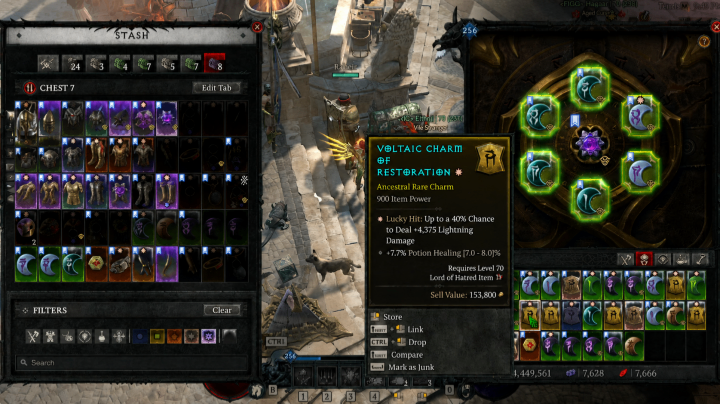
Which Greater Affixes Are Worth Keeping?
The answer depends heavily on the build, but several categories are generally attractive.
For weapons, Weapon Damage, Critical Strike Damage, Damage Over Time, and other relevant offensive multipliers can be strong choices.
Main Stat and Maximum Life are useful but extremely common. If your stash is nearly full, these affixes alone are usually not enough to justify keeping an item.
Some Greater Affixes are much less desirable. Life on Kill, Life Regeneration, Healing Received, and Energy on Kill generally have limited value for high-end builds.
A 900 Item Power item is not automatically good. If its only Greater Affix is a stat that your build cannot use, it can still be considered stash trash.
Item Power: When Should You Salvage Gear?
Item Power should also determine how aggressively you clean your inventory.
If you are already farming high-end Tormented content, lower-level equipment is unlikely to have any serious long-term value. Gear below the relevant endgame Item Power threshold can usually be salvaged immediately.
During leveling, however, this rule is less important. Players naturally replace equipment frequently, so there is little reason to obsess over inventory efficiency until they reach the endgame.
Once you are established in high-level content, start filtering much more aggressively.
Do Not Keep Mythics Just Because They Are Mythic
Mythic items are among the biggest reasons players become hoarders.
Seeing a Mythic drop can create the instinct to store it forever, even if you have no plan to use it. However, Mythics are not automatically better for every build, and some cannot be traded.
A well-rolled regular Unique or Legendary item can sometimes outperform a Mythic if it has better Greater Affixes or a more useful power.
For example, a Mythic upgrade that provides only a small increase to a specific multiplier may be less valuable than a regular Unique with a much stronger roll and perfect affixes.
The important question is not “Is this Mythic?” but “Can this item actually improve one of my builds?”
When You Should Keep or Salvage Unique Items
Unique items require a little more caution because their affixes and powers cannot be modified as freely as Legendary gear.
If a Unique has multiple stats that your build cannot use, it may have little practical value even if it has a powerful Greater Affix.
However, do not immediately trash a Unique just because its Unique Power has a low roll. Diablo 4 provides systems that can allow players to reroll or improve certain Unique Power values using appropriate crafting resources.
Therefore, evaluate the entire item before salvaging it.
A low Unique Power does not necessarily mean the item is worthless.
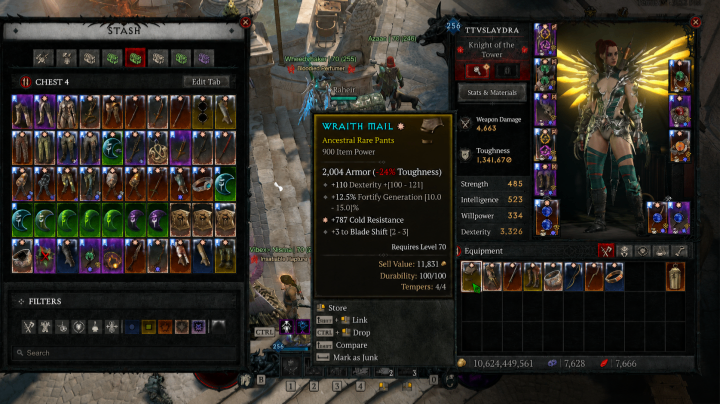
Rare and Blue Charms: Mostly Salvage Them
For most players, ordinary Rare and Blue Charms are not worth filling the stash with.
There can be niche exceptions, particularly when a Charm has a desirable combination of Greater Affixes and useful build-specific bonuses. However, the majority should simply be salvaged for crafting materials or sold for gold.
Six-slot Charms are the major exception because they can retain significant trade value.
If you do not trade and have no intention of using the Charm, there is usually no reason to let it occupy valuable stash space.
Save Perfect Aspects When They Have Real Value
Aspects can be worth keeping when they have exceptionally strong rolls, particularly if they are relevant to popular or powerful builds.
Perfect offensive multipliers and important build-defining Aspects are much more valuable than mediocre ones.
However, do not fill your stash with dozens of average Aspects. Keep the best versions and salvage the rest.
This is particularly useful for players who regularly help friends or experiment with multiple builds.
Salvaging Is More Important Than You Think
Salvaging is not simply a way to get rid of junk. It also helps maintain your crafting economy.
Unique items, especially high-level Ancestral gear, can provide valuable salvage materials. Players who constantly hoard equipment may eventually discover that they have plenty of gear but lack the materials needed for serious crafting.
Regularly cleaning your stash and salvaging unwanted equipment can help prevent this problem.
Final Diablo 4 Inventory Rules
The best inventory management strategy is to be ruthless.
Keep: useful Greater Affixes, high-value Charms, strong build-specific gear, perfect Aspects, valuable trade items, and equipment you realistically plan to use.
Salvage: low Item Power gear, unwanted Rare and Blue Charms, useless Greater Affixes, duplicate equipment, cheap Diablo IV Items, and items that cannot support any realistic build.
Most importantly, do not assume that rarity equals value. A well-rolled Legendary or Rare item can sometimes be more useful than a Mythic, while a 900 Item Power item can still be completely worthless if its stats do not fit your build.
If your Diablo 4 stash is overflowing, start by asking one question for every item: “Will I actually use this, trade it, or need it for a realistic future build?” If the answer is no, salvage it and make room for something that matters.