Bonus Items OFF All WoW Gold


















Bottom line first: GTA 6 isn't "RDR2 with cars," but it does borrow RDR2's most successful systems and substantially reworks them. The three changes that most affect your actual gameplay are: the Criminal Profile replacing the Honor system, Focus fusing Dead Eye with Eagle Eye, and the police wanted system becoming an information game. All three tie directly into how you earn and risk GTA 6 Money—a professional profile and clean escapes keep your take intact, while sloppy violence and botched getaways cost you. This guide explains how these systems work and how to use them in practice.
1. Criminal Profile: Don't Treat It as a Good/Evil Meter
The Criminal Profile is not a reskin of RDR2's Honor system. RDR2 judged whether you were "a good person"; GTA 6 judges whether you're a professional criminal. That means there's no moral binary of "good ending" vs. "bad ending"—only different criminal styles and the different opportunities and risks that come with them.
Four main states:
Professional: restrained, efficient, no unnecessary kills. Avoiding casualties during robberies and not killing targets who are no longer a threat maintains or raises this state.
Aggressive, Violent, Psycho: escalating with unnecessary violence and destruction.
The fifth, hidden state: Profile Shattered. If you go extremely overboard—indiscriminate heavy firepower, mass killing—the profile icon first cracks, then permanently shatters, and cannot be restored for the rest of that playthrough. This isn't a punishment—once shattered, the game simply stops judging you, which suits players who just want to wreak havoc. You can also turn off Criminal Profile notifications in settings without triggering the shatter.
Practical points:
Jason and Lucia have independent Criminal Profiles. This means you can keep one character professional and run the other as a psycho to unlock different types of job opportunities—some clients prefer a psycho, others need a professional.
A low profile doesn't mean "playing wrong." It brings higher police risk but may also open different doors.
If you care about narrative feedback and world reactions, stay professional; if you don't, shattering is actually the most hassle-free option.
2. Focus: One Button, Four Functions
Focus is GTA 6's most practical combat and exploration tool. It fuses RDR2's Dead Eye and Eagle Eye, but does far more than either.
Four functions active simultaneously:
Time slowdown: longer aiming and reaction windows.
Eagle Eye scanning: automatically highlights lootable valuables, saving you from manually searching drawers.
X-ray vision: see enemy outlines through walls—this is critical, because GTA 6 removes enemy markers from the minimap.
Weak points and lethal/non-lethal distinction: highlights yellow non-lethal body zones on enemies, plus vehicle weak points (for disabling cars in chases).
Key difference from Dead Eye: Focus does not auto-fire for you—it only provides information and aim assistance. You still have to do the shooting yourself.
Practical use:
Activate Focus to sweep a room before a robbery—confirm valuables and check for hidden enemies.
In gunfights, use wall-penetrating vision to predict enemy positions, compensating for the lack of minimap markers.
To maintain a professional profile, aim for yellow zones for non-lethal takedowns instead of headshots.

3. Police Wanted System: This Isn't About Losing Pursuers, It's About Destroying Evidence
GTA 6's wanted system has fundamentally changed. Police and enemies no longer appear on the minimap. You can't just watch the stars disappear while staring at the minimap. Instead, there's a "Heat" evidence system.
Information police can hold includes:
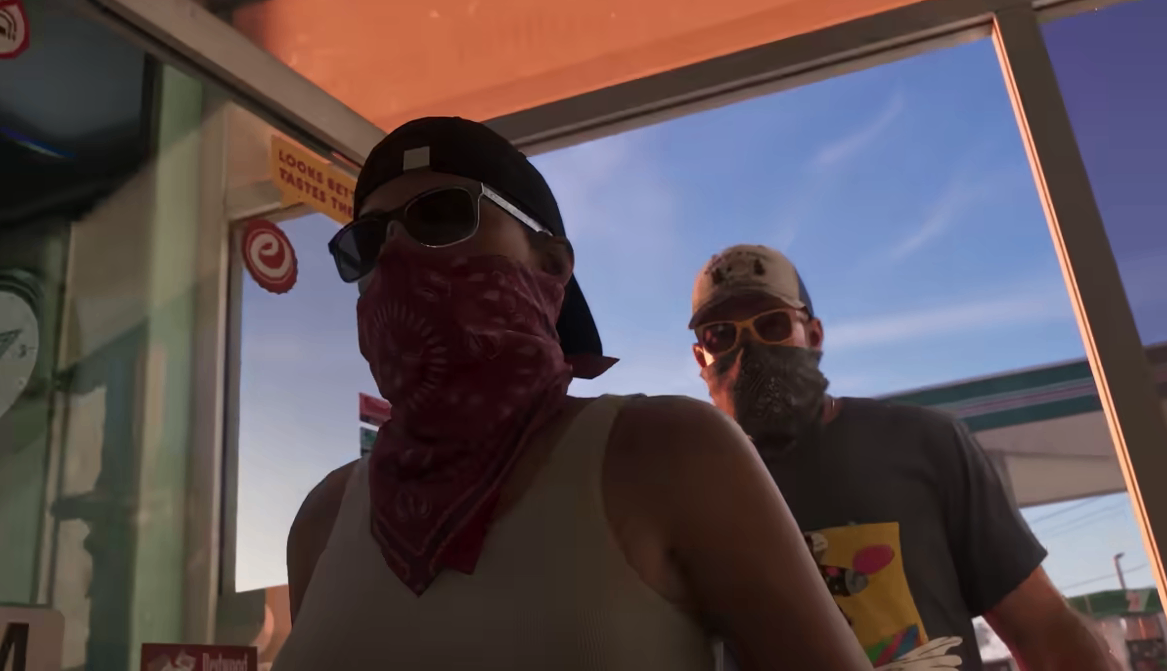
Your facial features (when committing crimes without a mask)
Your clothing
Your weapons
Your vehicle (police cars and some vehicles have trackers)
CCTV footage (cameras are everywhere)
Icons below the wanted stars tell you exactly what police have on you—a person silhouette for appearance, a hanger for clothing, a camera for CCTV footage.
The correct escape logic isn't "run far enough"—it's "delete what they know":
Change clothes: go to a clothing store or grab spare clothes from your trunk. Note: changing hairstyle does not invalidate clothing info.
Destroy surveillance: find and destroy CCTV recordings.
Change vehicles: abandon the recorded vehicle for one without a tracker.
Split up: having Jason and Lucia flee separately can reduce police tracking efficiency and even remove a wanted star outright.
What the wanted stars now mean:
Solid white star = police have direct visual on you
Flashing white star = you've broken line of sight
Hollow star = someone reported a crime, but police don't know who you are yet
Hollow stars are the most valuable information: if you wore a mask and left no identifiable features, police initially don't know who the suspect is. In that case, leaving the scene quietly is safer than a high-speed chase.