Weekend Drop -














Summary
Master defense in College Football 27 with these 15 essential strategies. Learn the best defensive formations, user control techniques, run defense, coverage disguises, pressure packages, College Football 27 Coins, and advanced adjustments to consistently shut down elite offenses.
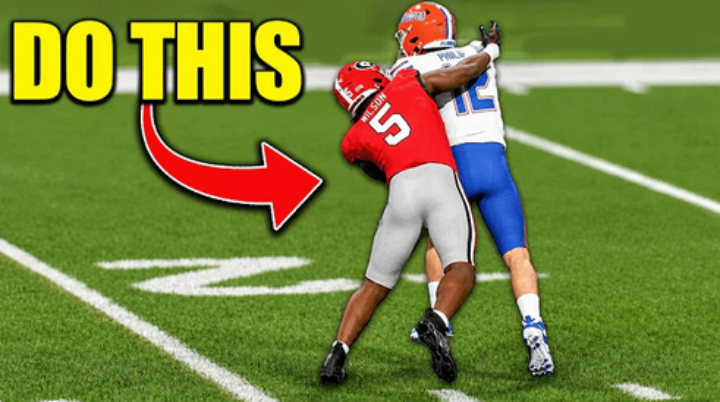
Step 1: Build Your Defense Around One Reliable Formation
Many players believe you must always match offensive personnel with your defensive personnel. While that mirrors real football, it isn't always necessary in College Football 27.
Instead of constantly switching formations, focus on mastering one versatile defensive package.
Some of the strongest foundations include:
3-4 Defense
Nickel
Nickel 3-3 Mint
3-3 Over
4-2-5
3-3-5 High Over
The ideal formation should provide:
Strong run defense
Multiple coverage options
Effective blitz packages
Symmetrical alignments
Easy pre-snap adjustments
Avoid formations with awkward alignments that make flipping the defense or making adjustments unnecessarily complicated.
Step 2: Learn to User a Linebacker
Your user-controlled defender is the single biggest factor separating average players from elite defenders.
The best starting point is controlling a linebacker.
Rather than chasing every receiver immediately:
Cover your assigned zone first.
Read the quarterback.
Anticipate developing routes.
Leave your zone only after confirming another receiver is becoming open.
This creates opportunities for:
User interceptions
Pass breakups
Baiting throws
Better reaction time
Good user control is based on discipline—not constant movement.
Step 3: Stop Strafing Every Play
Many defenders overuse the strafe mechanic.
Holding strafe throughout the play limits your movement and prevents you from covering larger areas.
Instead:
Strafe briefly while maintaining your zone.
Release strafe once routes develop.
Sprint when necessary to cover deeper routes.
Efficient movement allows you to defend multiple passing windows rather than remaining stuck in one location.
Step 4: Improve Run Defense with Proper User Positioning
Against the run, positioning matters more than aggression.
Avoid lining your linebacker directly behind the defensive line before the snap.
Doing so often results in:
Getting blocked instantly
Losing leverage
Missing the running lane
Instead:
Align several yards off the line.
Read the blocking scheme.
Flow toward the ball carrier.
Fill open gaps.
A patient linebacker often makes more tackles than one who attacks immediately.
Step 5: Understand Run Fits
Run fits are one of College Football 27's most important defensive mechanics.
Every coverage assigns defenders different responsibilities against the run.
Some Cover 4 variations place safeties into run support.
Others leave them deep.
Use the Run Fit display to identify:
Which defender attacks each gap
Which safety supports the run
Weak spots before the snap
Understanding run fits dramatically improves your consistency against inside zone and power runs.
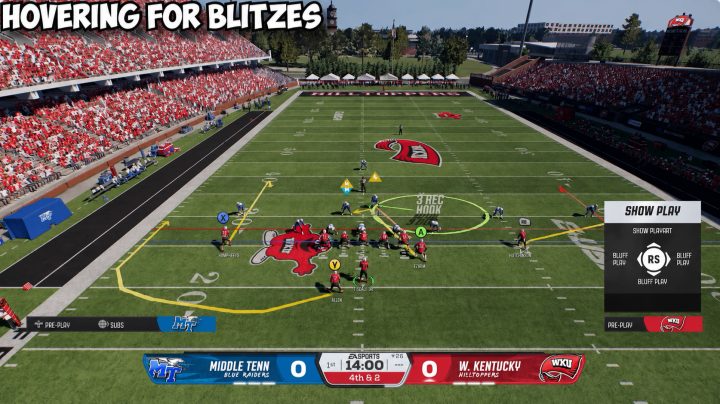
Step 6: Generate Better Pressure with Gap Mugging
One of the most effective pass-rush techniques involves threatening the offensive line with your user linebacker.
Before the snap:
Walk your linebacker into an interior gap.
Hold your position briefly.
Back out at the snap.
This forces the offensive line to account for your potential blitz, often creating free rushers on the edge.
The technique requires practice but can significantly improve pressure without calling additional blitzes.
Step 7: Use Individual Man Assignments
College Football 27 allows defenders to be manually assigned to specific offensive players.
Instead of calling full man coverage, manually assign defenders to dangerous weapons.
Examples include:
Covering elite slot receivers
Taking away bubble screens
Locking down crossing routes
Eliminating running back checkdowns
This creates hybrid defenses that combine zone principles with selective man coverage.
Step 8: Disguise Your Coverage with Coverage Shells
Coverage shells are one of the strongest defensive additions.
Before the snap, multiple coverages can appear identical.
For example:
Cover Zero
Cover 2
Cover 4
Match Coverage
All can present nearly identical pre-snap looks.
Disguising your coverage forces quarterbacks to hesitate, leading to:
Poor reads
Late throws
Turnovers
More sacks
The less predictable your defense becomes, the harder it is to attack.
Step 9: Enable Controlled Player Art
A small settings adjustment provides a huge advantage.
Turning on Controlled Player Art allows you to see your defender's exact assignment without displaying the entire defensive play art.
Benefits include:
Faster adjustments
Better positioning
Easier learning of new schemes
Improved awareness during practice
This feature is especially useful when mastering unfamiliar defensive formations.
Step 10: Customize Safety Depth
Safety alignment significantly affects both pass and run defense.
Default depth may leave safeties too deep to stop explosive runs.
Lowering safety depth helps them:
Fill running lanes faster
Defend crossing routes earlier
Provide quicker run support
Many competitive players prefer safety depths between:
5 yards
9 yards
Experiment to determine what best fits your defensive philosophy.
Step 11: Guess Pass in Obvious Passing Situations
On long-yardage downs, use the Guess Pass mechanic.
Ideal situations include:
Third-and-long
Fourth-and-long
Obvious passing formations
Guess Pass helps defenders:
Ignore play-action fakes
Rush the quarterback more aggressively
Shed blockers faster
However, avoid using it if a run remains a realistic possibility, as defenders react more slowly against rushing plays.
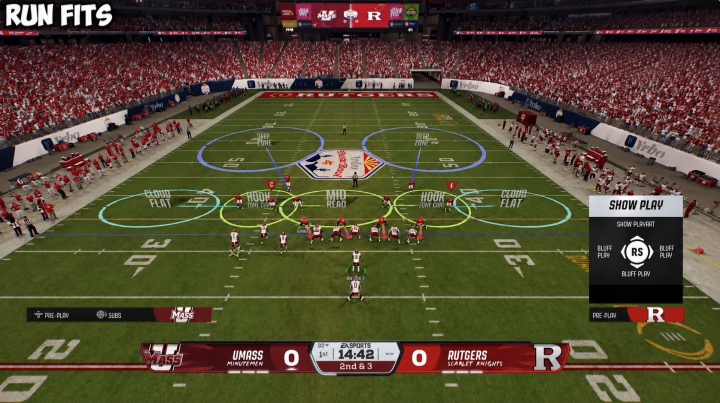
Step 12: Contain Mobile Quarterbacks
Scrambling quarterbacks remain dangerous in College Football 27.
The QB Contain adjustment forces edge defenders to maintain outside leverage, preventing easy rollouts.
Contain works best when:
Edge defenders have good speed
Interior defenders collapse the pocket
A QB Spy complements the contain
Against athletic quarterbacks, containment often prevents broken-play touchdowns.
Step 13: Use Defensive Line Stunts
Defensive line stunts remain effective, especially against the run.
The Texas Four-Man stunt creates interior pressure by looping defensive ends inside.
This technique excels against:
Inside Zone
Power runs
Interior rushing concepts
Meanwhile, the El Paso stunt provides better pursuit against outside runs.
Knowing when to switch between stunts keeps offenses guessing.
Step 14: Use Zone Drops to Stop Corner Routes
Corner routes remain one of the strongest offensive concepts.
Zone Drops allow defenders to adjust how deep specific zones play.
For example:
Flats at 5 yards
Curl Flats at 20–25 yards
This creates layered coverage that can:
Eliminate corner routes
Slow crossing routes
Protect deep sidelines
Zone Drops give defenses far more flexibility than relying solely on default coverage behavior.
Step 15: Master Quick Adjustments
Elite defensive players rarely call stock defenses.
Instead, they modify nearly every play before the snap.
Quick adjustments include:
Shifting defensive lines
Spreading linebackers
Pressing corners
Backing off coverage
Individual blitz assignments
Coverage shells
Zone shading
QB contain
Defensive stunts
Individual player responsibilities
Learning these adjustments may feel overwhelming initially, but consistent practice quickly builds muscle memory.
Eventually, every adjustment becomes automatic, allowing you to react instantly to your opponent's tendencies.
Final Thoughts
Defense in College Football 27 is far deeper than simply picking the right play. Success comes from mastering user control, understanding run fits, disguising coverages, applying pressure intelligently, cheap College Football 27 Coins, and making effective pre-snap adjustments.
Rather than constantly switching schemes after giving up a touchdown, stick with one defensive system and learn every detail of it. As your familiarity grows, your reaction speed, confidence, and ability to shut down explosive offenses will improve dramatically.
Whether you're competing in Ranked, Dynasty, Road to Glory, or College Ultimate Team, these 15 defensive techniques provide a strong foundation for building one of the toughest defenses in College Football 27. Consistent practice, disciplined user control, and smart adjustments will turn your defense into a championship-caliber unit capable of forcing game-changing stops when they matter most.