






summary
The Withered Knight Greatsword build is one of the most aggressive setups in Mistfall Hunter. It focuses on overwhelming enemies with rapid attacks, Wither Mark detonations, Parry counters, and massive burst damage rather than defensive play. With the right talents and gear, this build can pressure both players and bosses while turning low HP into an offensive advantage. For players looking to optimize their progression and gear, Mistfall Hunter Gyldenblod can also be a useful resource.

Why Use the Withered Knight Greatsword Build?
The core philosophy is simple: attack before your opponent has time to react.
Instead of trying to disengage and recover after taking damage, this build uses constant pressure to force enemies into defensive situations. Greatsword attacks provide enormous damage, while Breakthrough Charge, Parry, and Hook give you tools to stay close and punish mistakes.
The build is particularly effective against players who panic after losing a large amount of HP. Once an enemy begins trying to heal or escape, the Withered Knight can continue applying pressure and finish the fight quickly.
However, this is not a beginner-friendly setup. It requires aggressive decision-making, fast reactions, and confidence in close-range combat.
Best Withered Knight Abilities
The recommended ability setup is:
· Hook
· Parry
· Breakthrough Charge
Breakthrough Charge
Breakthrough Charge is your primary engagement tool. Use it to close the distance immediately and activate your offensive sequence.
With the appropriate talent, the second hit can also trigger a detonation, giving the build another way to activate its damage mechanics.
Parry
Parry is essential for surviving dangerous melee encounters.
After successfully parrying an attack, immediately attempt a Riposte followed by a heavy Greatsword attack. The timing is extremely important because the follow-up heavy attack is not guaranteed.
Against fast opponents, reacting quickly can turn their offensive combo into your biggest damage opportunity.
Hook
Hook should be treated as a precision tool, not a random ranged attack.
Avoid throwing it at enemies who are freely moving from side to side. Instead, wait until an opponent finishes a dodge and becomes temporarily committed to an animation.
A successful Hook can create the opening needed for your strongest attacks.
Best Talents for the Greatsword Build
The talent setup revolves around maximizing Wither Mark detonations and improving your offensive momentum.
Greatsword Talents
Take all three Greatsword-related talents to maximize the weapon's damage potential.
Bad Karma
Bad Karma is one of the most important talents in the entire build.
It allows Wither Mark to stack with each detonation, dramatically increasing sustained damage. According to the build testing described, Bad Karma can produce extremely high total damage over its duration.
The key is triggering the effect consistently rather than relying on a single burst.
Momentum
Momentum works particularly well with Breakthrough Charge because it allows you to apply Wither after the charge.
This creates a natural connection between your opening attack and your Wither Mark damage cycle.
Parry Talents
Take both Parry-related perks for improved Super Armor and cooldown performance.
These upgrades make Parry much more reliable when fighting aggressive melee opponents.
Breakthrough Charge Talents
Both Breakthrough Charge perks are recommended because they improve Super Armor and add additional detonation potential.
Together, these talents form the foundation of the build's aggressive playstyle.
Best Gear and Affixes
The gear setup should focus heavily on offensive scaling.
Blue Gear
Valor provides additional attack power.
Strife increases physical damage against nearby enemies. Even in a one-versus-one situation, its effect can provide meaningful damage amplification.
Wrath is particularly important because it increases your offensive potential when your HP drops below 50%.
This creates an unusual interaction: being low on health does not automatically mean you should retreat.
Purple Gear
Add Fervor to strengthen the detonation-focused damage pattern.
Because the build repeatedly relies on detonations, Fervor can become especially effective when its bonuses stack during your attack sequence.
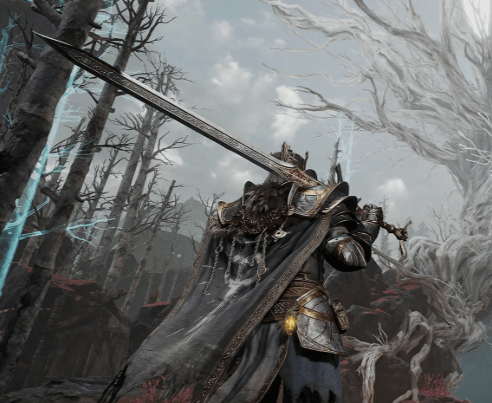
The Most Important Rule: Play Aggressively
The biggest difference between this build and a traditional defensive setup is mentality.
Do not automatically retreat every time your HP falls.
If the enemy is also heavily damaged, continuing your attack may be safer than attempting to disengage. With Wrath active, lower HP can actually increase your offensive pressure.
That does not mean you should blindly fight until death.
If the opponent successfully resets the engagement and you have a safe opportunity to recover, retreat and heal. The aggressive philosophy is designed for situations where both players are already committed to the fight.
Greatsword PvP Combat Rotation
A simple combat pattern is:
Breakthrough Charge → Dodge Light Attacks → Force Defensive Resources → Parry → Riposte → Heavy Attack → Wither/Detonation Pressure
Avoid relying heavily on normal heavy attacks during neutral exchanges because they are slower, consume significant stamina, and can be interrupted.
Instead, use dodge light attacks to pressure opponents and force them to spend movement resources.
Once they become predictable, your heavy attacks become much more dangerous.
Mage and Ranged Matchups
Against ranged characters, closing the distance quickly is critical.
After a successful Parry, an immediate heavy attack can help you maintain pressure and prevent the opponent from creating another large gap.
Do not give ranged players enough time to reset the fight.
Your objective is to keep them uncomfortable and force them to make defensive decisions.
Assassin Matchup
Assassins require patience.
Do not immediately attempt to Parry every attack in a long combo. Instead, wait until the Assassin commits to a predictable attack animation.
When the Assassin begins a vulnerable light-attack sequence, interrupt it with your counter and immediately follow with a heavy attack.
The goal is to punish the commitment, rather than reacting to every individual hit.
Mercenary and Seer Matchups
Against a Mercenary, pay attention to Super Armor. Allow the armored heavy attack to pass before attempting your counter.
Against Seer, Parry should be used more reactively.
A skilled Seer can use a pulling attack to attack from an unexpected angle and bypass your defensive stance. Because of this, avoid holding Parry unnecessarily.
How to Use Bad Karma Effectively
Bad Karma is one of the biggest damage engines in this build.
The important objective is generating enough detonations to activate its stacking effect.
The build testing described approximately 14 damage per tick for 25 or more ticks on blue gear, potentially producing around 350 total damage before considering additional effects.
The exact numbers can change with balance patches, gear and enemy defenses, so players should treat these figures as practical testing rather than permanent statistics.
PvE Strategy
The Greatsword build is not limited to PvP.
Its high burst damage makes PvE encounters significantly faster. Normal monsters, elite enemies and bosses can be eliminated before they have enough time to create dangerous mechanics.
This makes the build useful when exploring areas where you encounter Mistlords or minibosses.
The main advantage is efficiency: instead of spending large amounts of time playing defensively, you can aggressively eliminate targets and continue moving.
Common Mistakes to Avoid
Using Hook randomly: Wait for predictable movement.
Heavy attacking too often: Preserve stamina and use light attacks to create openings.
Panicking at low HP: Wrath can turn low health into additional offensive pressure.
Ignoring Parry timing: A poorly timed Parry can leave you vulnerable.
Chasing endlessly: If the enemy completely resets the fight, recover and prepare another engagement.
Playing too slowly: This build depends on overwhelming opponents before they can establish their own rhythm.
Final Verdict
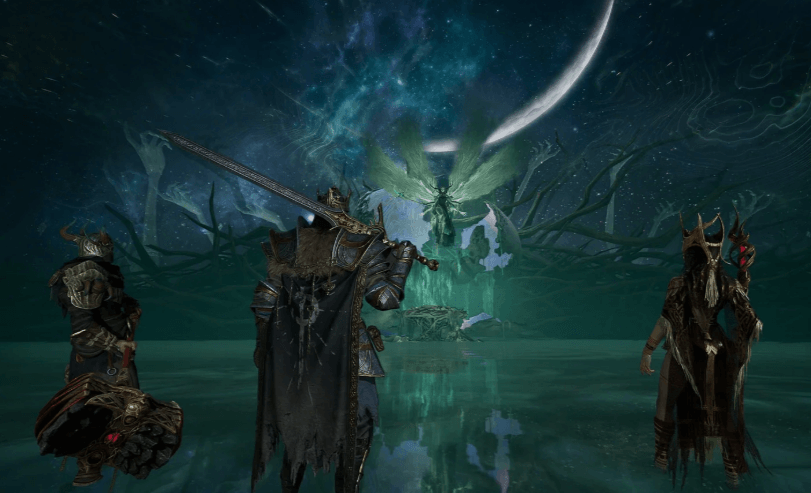
The Mistfall Hunter Withered Knight Greatsword build is designed for players who want explosive close-range combat and constant pressure. Its combination of Bad Karma, Momentum, Parry, Breakthrough Charge, Fervor, Valor, Strife, and Wrath creates a high-risk, high-reward playstyle capable of producing enormous burst damage. Players looking to further optimize their progression can also consider buy Mistfall Hunter Gyldenblod as part of their gearing strategy.
The most important lesson is not simply which talents to equip. You must control the pace of the fight. Use Breakthrough Charge to engage, Dodge Light Attacks to burn enemy resources, Parry committed attacks, punish openings with heavy strikes, and use Hook only when the timing is favorable.
For confident players willing to accept risk and maintain pressure, this Greatsword setup can be extremely powerful in both PvP and PvE.