






Summary
Murder Mystery 2's hide and seek scene has just been flipped on its head. A new class of the smallest avatars ever possible on Roblox is letting players tuck themselves into doorways, barrel gaps, and floor corners that were never meant as hiding spots, and the Bank map in particular has become a hunt for near-invisible specks. Last player standing walks away with a godly weapon. Here is how the tiny avatar meta works, the spots worth learning, and what seekers should actually be checking, plus how Murder Mystery 2 Items can fit into your broader MM2 inventory and gameplay experience.
The Smallest Avatar Meta, Explained
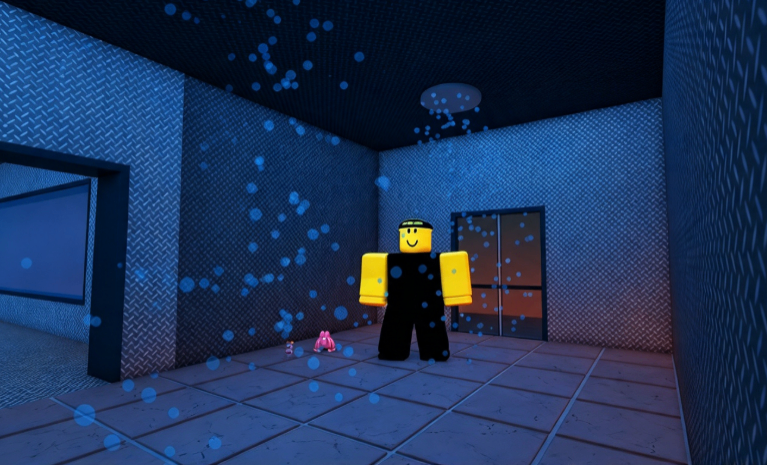
MM2 hide and seek has always had small-avatar lobbies, but the new avatars are a genuine step down. They are the smallest characters you can currently build in Roblox, and the difference is not cosmetic: where a normal avatar needs a full corner to itself, these can vanish inside a doorway frame, under a hanging garbage bag, or behind a plant pot without ever fully leaving sightlines.
That changes the fundamental cat-and-mouse problem. A seeker walking a standard route will miss a tiny avatar sitting in plain sight because the character is literally smaller than the map's own clutter. A tiny piece of gum on the floor, a coin, a pebble, any decorative prop is now camouflage. The meta rewards hiding out in the open rather than deep inside obvious cover.
The lobbies run on a simple rotation: roughly thirty seconds for everyone to tuck in, then one seeker hunts the rest. The seeker swaps each round, so the same players are both hiding and hunting across a night, and everyone learns the same spots from both sides. The last player not found wins a godly-tier item, which is enough incentive to actually learn the meta rather than just hide in a closet.
The Best Hiding Spots on Bank
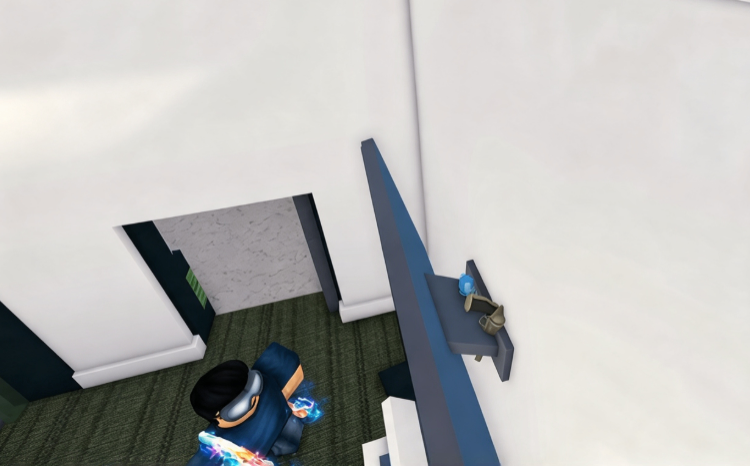
The Bank map is the current favorite, and it rewards creativity. The single strongest new spot is inside a doorway. A tiny avatar can wedge itself into the door frame where the door swings open, and a seeker walking past has to actively stare at the frame to spot it. Multiple rounds have been won from door frames that seekers cleared three times without glancing down.
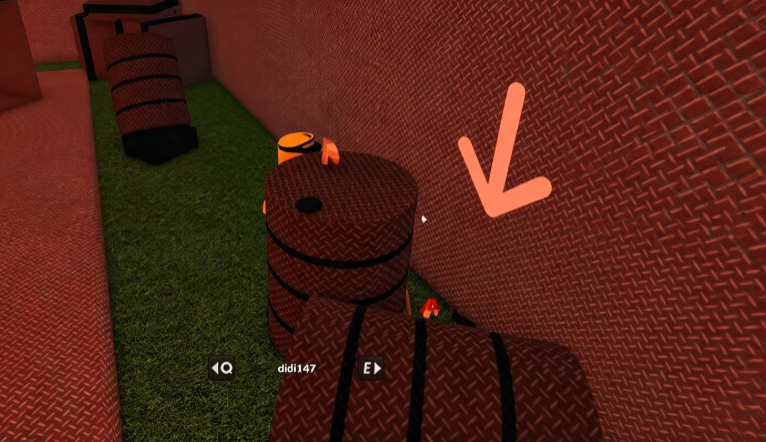
Behind statues and near planters are classic for a reason. The statue base hides the lower half of a small avatar, and a player pressed against a large plant can blend into the leaves. For the truly tiny, tucking under a hanging garbage bag by the barrel stack works shockingly well because the bag itself occludes most of the body.
Functional rooms matter too. The evidence locker and the bathroom are overlooked because seekers assume they are too obvious, but a tiny avatar in the corner of the locker room disappears into the shelving. The cubicle upstairs is another high-value spot: seekers sweep the open floor and forget to check inside each booth. The ventilation system is a legit hiding crawlspace for small builds, and the vault area behind the opening is a niche that almost nobody checks.
The current champion spot is a conveyor-belt-adjacent corner near the admin-side area. It is a one-dimensional sliver where a tiny avatar can sit almost on top of the seam, and seekers have walked past it twenty times in a single round without clocking it. Learn that one first.
Seeker Tips to Actually Find Them
Hunting tiny avatars is a different job than hunting normal builds. Stop sweeping the floor at eye level and start scanning door frames, barrel tops, shelf edges, and corners where a speck could sit. The most common mistake is checking the same obvious closets and beds while leaving every open floor tile unsearched.
Work the known list in order: shelves and boxes first (the community favorite), then the sewers, then the barrel stack, then the vault. A tiny avatar on top of a barrel looks like a stray particle until you get close. Pause in each room and rotate the camera slowly; fast turns skip right over a character the size of a UI icon.
Expect snitching. In open lobbies, found players will happily lead you straight to their friends, and hiding players sometimes drop arrow markers near other people's spots to get them caught. Treat any arrow that appears mid-hunt as unreliable; it is as likely to be a trap as a lead. If a surrendered player offers a location, verify it yourself before committing.
Why This Trend Is Blowing Up
The tiny-avatar trend works because it adds a new skill layer to a mode that had gone stale. Normal MM2 hide and seek had a solved spot list. The smallest-avatar meta reopens every map by making geometry that was previously useless into viable cover, and it punishes seekers who rely on muscle memory. It also scales perfectly with friend groups: no balance changes, no DLC, just a new avatar build and a fresh map.
It also rewards patience over speed. A seeker who sprays and pray misses almost everyone; a seeker who slow-walks and scans frames catches the lobby. That tension is what makes the format worth playing repeatedly, and why players keep cycling through the same Bank rounds without getting bored.
Final Verdict
If you have not tried MM2 hide and seek since the old small-avatar era, the new tiny builds are the reason to come back. The Bank map in particular is now a hide-and-seek puzzle where the winning spot is somewhere you would never have looked a month ago. Hiders should learn the doorway frames, the barrel gap, and the conveyor-belt corner before queuing. Seekers should slow down, scan shelves and door frames, and ignore friendly arrows. The last one left standing walks away with a godly, and on a map this weird, the smallest player in the lobby is always the favorite. Players looking to expand their inventory can also buy Murder Mystery 2 Items to add more options for their next matches.