






Summary:
Path of Exile 2 melee has improved significantly, but major gaps remain between melee and ranged gameplay. Low life pools, weak strike skills, ground damage, slow movement, gem-level scaling, POE2 Currency, and long skill timings continue to hold melee builds back as the game moves toward 1.0.
Path of Exile 2 Melee Has Come a Long Way
Path of Exile 2 has made noticeable progress since its early versions, and melee builds are in a much healthier position than they were during the initial 0.1 era. Defensive improvements, better armor scaling, evasion changes, and stronger deflection mechanics have all helped melee characters survive more consistently.
However, several fundamental problems remain. The biggest issue is that playing melee still feels dramatically different from playing ranged characters. Casters, bow builds, and crossbow builds can often damage enemies from a safe distance, while melee characters must move directly into danger before they can deal meaningful damage.
As Path of Exile 2 continues its journey toward version 1.0, these differences could become increasingly important for build diversity.
Melee Still Struggles With Low Life Pools
One of the most significant concerns is the relatively low life pool available to many raw life-based melee builds.
A melee character has to stand next to enemies, absorb incoming attacks, deal with ground effects, and react to bosses at close range. When the character does not have enough life to survive a heavy hit, these encounters become much more punishing.
This creates a major contrast with ranged builds. A ranged character can frequently avoid damage simply by maintaining distance. Melee characters do not have that luxury.
Increasing the available life scaling could potentially make prolonged melee encounters more practical while reducing the need to instantly destroy enemies before they have an opportunity to respond.
Strike Skills vs. Slam Skills
Another major issue is the difference between strike and slam skills.
Slam builds currently have several advantages because their larger area of effect allows them to attack enemies without requiring extremely precise positioning. Strike skills, meanwhile, can struggle against fast enemies and bosses that constantly move.
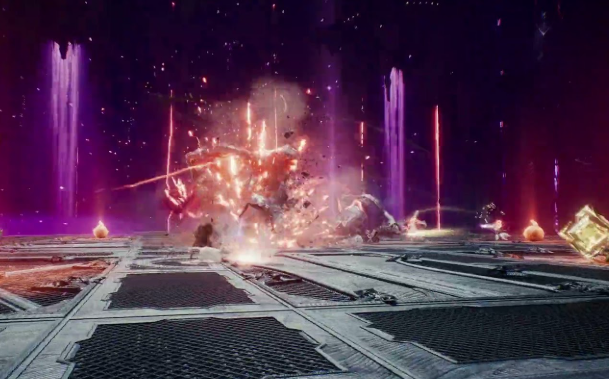
Chasing a Rogue Exile around the battlefield is a perfect example. A strike character may need to repeatedly reposition just to land attacks, while a larger-area slam can often cover the target more effectively.
Gap closers and movement skills can help, but they do not completely solve the underlying problem. Monk skills are particularly effective at repositioning because many of them contain built-in movement or range extension. Traditional mace-based melee characters do not always have the same flexibility.
This makes improving strike skills an important area for future balance changes.
Ground Damage and Slow Effects Hurt Melee the Most
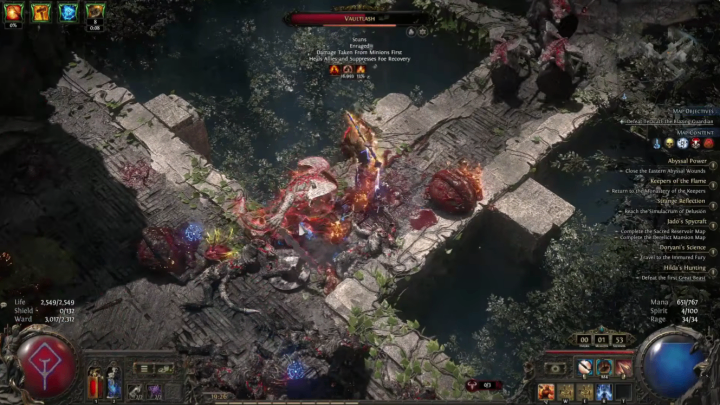
Ground damage is another major problem for close-range characters.
A ranged character can often step away from a damaging zone while continuing to attack. A melee character may have to stand directly inside that area to maintain damage output.
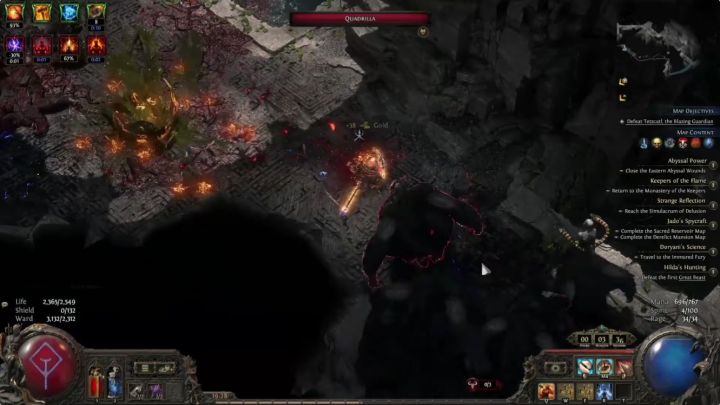
Abyss encounters and other endgame content can make this especially noticeable. When ground damage is combined with slows, chills, freezes, or other movement restrictions, melee characters can quickly lose their ability to control the fight.
Boss encounters can create similar problems. When an enemy constantly changes position, a melee character must spend additional time chasing it instead of attacking.
This is why movement speed, gap closers, and reliable crowd-control resistance are particularly valuable for melee builds.
Gemling Highlights the Defensive Gap
One reason Gemling builds are so attractive is their ability to combine multiple defensive mechanics effectively.
Players can build around combinations involving energy shield, deflection, armor, ailment thresholds, and other defensive layers. Traditional Warrior-style builds can feel more restricted because their defensive options often push them heavily toward armor.
This does not necessarily mean Gemling is the problem. Instead, its popularity demonstrates what players are looking for: a way to combine offense, defense, speed, and utility without sacrificing too much in one category.
Future balance changes may need to address why certain Ascendancies make melee mechanics feel substantially smoother.