





Path of Exile 2 Gold-Only Challenge Guide: How to Progress Without Picking Up Loot
Summary
Path of Exile 2 encourages players to constantly improve their character through item drops, crafting currency, and equipment upgrades. But what happens if every item on the ground is hidden and cannot be picked up?
This self-imposed "Gold-Only" challenge completely changes the game's progression. Instead of relying on dropped equipment, every upgrade must come from vendors, quest rewards, or a handful of alternative systems.
This guide explains how to approach this challenge efficiently, which progression systems become your highest priorities, and how to avoid common mistakes that can permanently slow your character down. Whether you're attempting the challenge yourself or simply want a deeper understanding of PoE 2's progression systems, the following strategies provide a practical roadmap.
Part 1: Establish Your Rules Before the Campaign
Initial Goal
The challenge becomes much easier when the rules are clearly defined from the beginning.
A typical Gold-Only run follows these restrictions:
Do not pick up equipment.
Do not pick up currency.
Do not pick up flasks.
Ignore all normal loot drops.
Only collect gold.
Obtain gear through vendors, quest rewards, or other reward systems.
Keeping the rules consistent prevents progression from becoming inconsistent later in the campaign.
Why This Matters
Almost every normal progression path disappears once loot is removed. Understanding your available upgrade sources early allows you to plan every purchase instead of reacting to random drops.
Part 2: Prioritize Gold Above Everything Else
The First Priority
Gold replaces nearly every traditional progression resource.
Without dropped equipment or currency, every meaningful upgrade depends on having enough gold available.
Actionable Steps
Clear areas efficiently instead of rushing bosses.
Delay unnecessary purchases until meaningful upgrades appear.
Save enough gold for important weapon upgrades.
Resist buying small improvements that will be replaced quickly.
Why It's Important
A mediocre weapon purchased too early may prevent you from buying a much stronger upgrade only a few levels later. Careful budgeting often contributes more to progression than defeating monsters slightly faster.
Part 3: Build Around Guaranteed Skill Rewards
The Problem
Support gems and skill gems become extremely limited without item drops.
Instead of experimenting freely, every gem reward becomes a long-term investment.
Actionable Steps
Choose a leveling skill that performs well with minimal support.
Plan your support gems before earning them.
Avoid spending valuable support gems on temporary skills.
Prioritize skills that offer reliable damage throughout multiple acts.
Why It's Important
Replacing support gems is no longer easy. Every reward should strengthen your long-term build instead of solving only a short-term problem.
Part 4: Let Vendors Replace Traditional Loot
Your Main Equipment Source
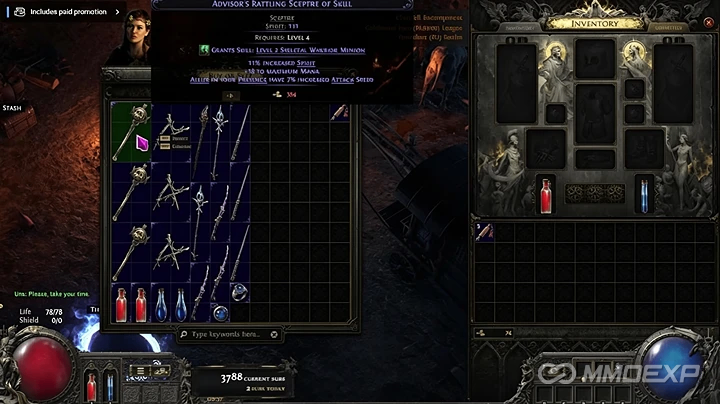
Vendor inventories become one of the most important progression systems in the game.
Instead of hoping for lucky drops, regularly inspect vendor inventories whenever they refresh.
Prioritize These Upgrades
Weapon damage
Spell or minion bonuses
Movement speed boots
Life and resistance gear
Better flasks when available
Key Tip
A single high-damage weapon purchased from a vendor can outperform hours of waiting for random upgrades that never arrive.
Part 5: Spend Gold Selectively
The Problem
Gold is limited, especially during the campaign.
Buying every improvement usually creates larger problems later.
Good Purchases
Major weapon upgrades
Life regeneration
Movement speed
Essential resistances before difficult bosses
Purchases Worth Delaying
Minor armor upgrades
Expensive gambling attempts
Equipment offering only small statistical improvements
Why It's Important
Every purchase has an opportunity cost. Saving gold for one major upgrade is often stronger than making several minor improvements.

Part 6: Use Alternative Reward Systems
Progress Doesn't End With Vendors
Several game systems still provide equipment without relying on ground loot.
These become significantly more valuable during the challenge.
Reliable Sources
Quest rewards
Vendor purchases
Ritual rewards
Certain guaranteed progression rewards
Why It's Important
Since random drops are unavailable, these systems become your primary way of replacing outdated gear throughout the campaign.
Part 7: Prepare Carefully Before Bosses
The Problem
Bosses become much harder when your equipment upgrades are limited.
Instead of repeatedly attempting difficult encounters, prepare beforehand.
Actionable Steps
Reach an appropriate level before major bosses.
Purchase resistance gear if needed.
Upgrade flasks whenever possible.
Improve your weapon before attempting difficult encounters.
Why It's Important
A small investment before a boss fight often prevents multiple failed attempts and saves both time and gold.
Part 8: Evaluate Gambling Carefully
Is Gambling Worth It?
Vendor gambling can occasionally produce powerful equipment, but it also consumes large amounts of gold.
Recommended Strategy
Use gambling only when:
Your current equipment has fallen far behind.
The potential upgrade significantly improves your build.
You have enough gold remaining for future purchases.
Avoid Gambling If
You're saving for a weapon upgrade.
Your current gear is still functional.
You cannot afford multiple unsuccessful attempts.
Why It's Important
Gold is your most valuable resource. Treat gambling as a calculated risk rather than a primary gearing strategy.
Part 9: Adapt Your Build Around Available Resources
Flexibility Matters
Traditional builds often assume access to numerous support gems,POE2 Currency, crafted equipment, and powerful uniques.
A Gold-Only challenge rarely provides these advantages.
Practical Adjustments
Favor reliable damage over complicated combinations.
Build around guaranteed progression instead of ideal equipment.
Be willing to change skill setups if better vendor equipment becomes available.
Why It's Important
The strongest build on paper may perform poorly if its required items never become available.
Part 10: Accept That Progress Will Be Slower
Managing Expectations
Some progression systems become natural bottlenecks during this challenge.
Examples include:
Limited support gems
Restricted equipment upgrades
Map sustain in the endgame
Lower overall character power
Rather than forcing progression, focus on improving every available system before pushing into more difficult content.
Patience often produces better results than repeatedly attempting content while underprepared.
Key Takeaways
Establish clear challenge rules before starting.
Treat gold as your most valuable progression resource.
Spend currency primarily on meaningful weapon upgrades.
Build around guaranteed skill rewards instead of ideal setups.
Check vendor inventories regularly for powerful upgrades.
Use quest rewards and Ritual as alternative equipment sources.
Prepare carefully before major boss encounters.
Gamble only when the potential reward justifies the investment.
Adapt your build to the resources actually available.
Expect slower progression and plan accordingly.
Conclusion
A Gold-Only challenge transforms Path of Exile 2 from a loot-driven action RPG into a resource management exercise. Success depends less on lucky drops and more on careful planning, disciplined spending, and making the most of guaranteed progression systems.
By prioritizing gold, purchasing impactful upgrades, preparing thoroughly for difficult encounters, and adapting your build around available resources, it is entirely possible to complete challenging content without relying on traditional loot. While progression is slower than a standard playthrough, the challenge highlights how flexible PoE 2's progression systems can be when every decision carries greater weight.