Weekend Drop -












Summary
Choosing the right league starter in Path of Exile 3.29 can determine how quickly you reach maps, generate currency, and transition into powerful endgame content. The three builds discussed here offer very different playstyles: Winter Orb focuses on freezing enemies and Herald of Ice explosions; Physical DoT Elementalist evolves from a spell-slinging setup into an automated autobomber, while Elemental Hit provides a straightforward attack-based progression path with strong defenses and endgame damage. If you want to accelerate your progress, buy POE currency to secure key gear early and skip the grind.
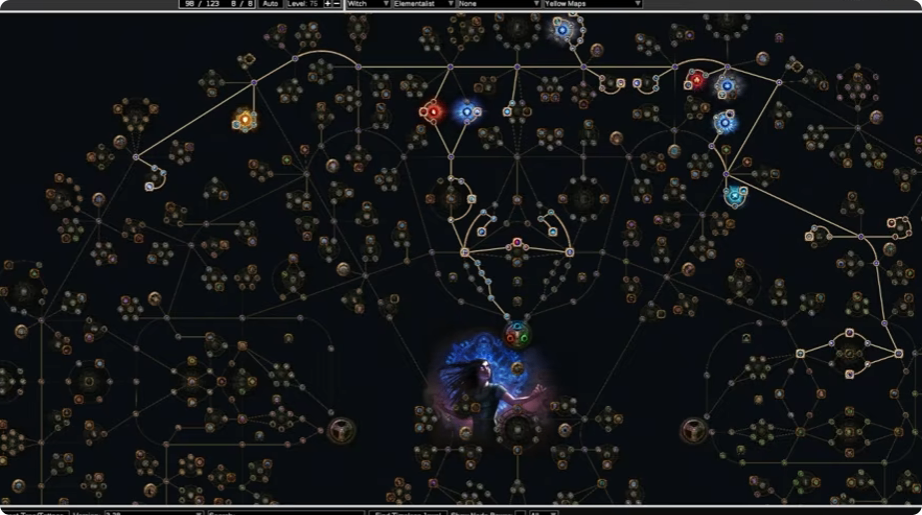
1. Winter Orb: Freeze Enemies and Let Herald of Ice Clear the Screen
Winter Orb is the most mechanically demanding of the three starters during early progression, but it eventually becomes an extremely fast mapping build. Its main strength comes from combining frequent hits, freeze scaling, instant leech, and powerful Herald of Ice explosions.
Start with Freezing Pulse and Transition at Level 34
The early setup uses Freezing Pulse alongside Flame Wall, Frost Bomb, Frost Wall, and supporting skills. This gives the build serious early damage, although it requires several buttons. Rolling Magma or alternative leveling setups can also be used.
At approximately level 34, transition into Winter Orb. Greater Multiple Projectiles is especially useful early on, while area-of-effect investment significantly improves the skill's coverage. Focus Channeling allows Winter Orb to reach its maximum stages and maintain them as long as the skill remains active.
Once you reach yellow maps, prioritize key recovery and damage upgrades. Barracks is particularly valuable because Winter Orb hits extremely rapidly, allowing instant leech to provide substantial recovery.
Freeze Scaling Is a Major Defensive Layer
One of the most important aspects of this version of Winter Orb is cold duration. The build is designed to freeze enemies consistently, including powerful bosses under the right conditions.
The important concept is minimum freeze duration. With a sufficiently high hit rate, the build can repeatedly apply freezes, provided the enemy's elemental threshold is low enough relative to the build's damage. Removing cold-duration investment can reduce the freeze threshold significantly and make boss freezes much less reliable.
This is why the freeze mastery becomes particularly valuable during progression. Against bosses and powerful rares, even a short freeze provides valuable crowd control and additional damage benefits.
Herald of Ice Is the Key to Endgame Mapping
The major transition occurs when you begin building around Herald of Ice. The core setup requires Scornful Herald and Calamitous Vision, allowing the build to concentrate heavily on Herald of Ice damage while sacrificing traditional aura setups.
The Lone Messenger setup is central to this progression. Because it changes how your auras function, the build must reorganize its defenses and equipment. You will also want to invest in power charges and global critical strike scaling to improve Herald of Ice's explosion damage.
Frenzy generation can be added through gear, allowing the build to gain attack and cast speed without requiring additional active skills. Later upgrades include replacing early recovery gear with stronger offensive items and adding flat fire damage to enable ignition-based bonuses.
Power Charges and Speed Complete the Build
For endgame mapping, Frostblink becomes a major part of the playstyle. The movement skill itself can deal significant damage, allowing you to blink through packs while Winter Orb freezes enemies ahead of you.
For maximum speed and damage, the build can also use Righteous Fire temporarily. A low-life setup with suitable chaos-damage protection allows you to gain a major offensive boost without fully committing to Chaos Inoculation.
2. Physical DoT Elementalist: From Cold DoT Slinger to Autobomber
The Physical DoT Elementalist begins more slowly but has one of the most dramatic upgrade paths. The build eventually transforms from a spell-slinging character into an automated chain reaction of explosions, Corrupting Fever, and physical damage over time.
Level with Cold Skills Before Switching to Physical Damage
Early on, use cold skills such as Creeping Frost and Cold Snap. The reason is simple: the early passive tree provides much better access to cold scaling than physical damage scaling.
At around level 28, transition into a spell-slinger setup. The early version can use Frenzy to trigger multiple cold spells, allowing you to continue playing a comfortable cold DoT setup through a large portion of the campaign and even into maps.
The build eventually transitions into a Poet's Pen-based setup. Reap and Exsanguinate provide the core physical damage-over-time foundation, with Exsanguinate's chaining behavior improving clear speed significantly.
Use Kinetic Blast to Spread Corrupting Fever
Once the build acquires the necessary equipment, Kinetic Blast becomes an important clearing tool. The attack applies Corrupting Fever to enemies, and dying monsters can create explosions that spread damage throughout nearby packs.
The passive tree also provides substantial attack-speed scaling through minion-related nodes and Spiritual Aid. This makes shield movement and wand attacks feel considerably faster than many traditional caster builds.
The Golem Transition Creates an Explosive Power Spike
The largest upgrade comes from massively scaling the number of summoned Golems. Primordial Bond provides increased damage per summoned Golem, but its value increases dramatically once the build begins multiplying its Golem count.
Dark Monarch, Primordial Chain, Anima Stone, Eminence jewels, and Congregation Support work together to create a massive increase in the number of active Golems. The build can eventually reach a dramatically higher Golem count, causing every Primordial Bond node to provide much more damage.
At this point, Corrupting Fever receives a huge damage increase, allowing you to move away from the original spell-slinger setup.
Turn the Build into an Autobomber
Once the Golem scaling is established, the build can transition into an automated explosion setup. Bladefall of Tropeus acts as one of the key triggers, applying Corrupting Fever and helping sustain the effect automatically through life-cost mechanics.
The resulting chain reaction is the core of the autobomber playstyle. One enemy is hit and affected by damage over time. It dies, explodes, and spreads additional effects to nearby enemies, creating a continuous chain reaction across the pack.
The build can be upgraded incrementally. You do not need every expensive item simultaneously. You can acquire the Golem helmet first, improve the Golem setup, add explosion sources, and upgrade the wand later.
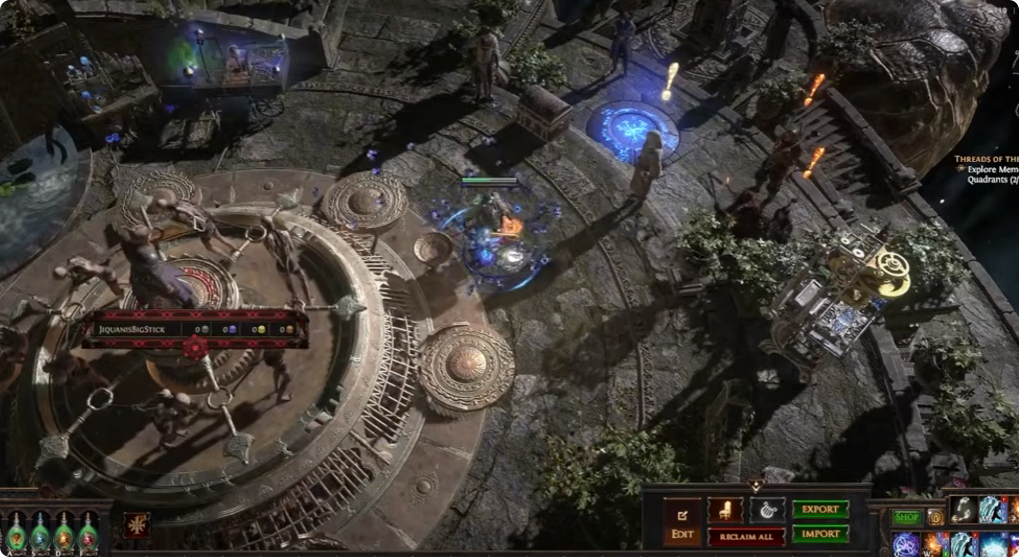
3. Elemental Hit: The Straightforward Attack-Based Starter
Elemental Hit is the simplest of the three builds to understand. Its progression is direct: level with an attack skill, transition into Elemental Hit early, upgrade your weapon and defenses, and gradually build toward a high-damage endgame setup.
Switch to Elemental Hit Early
The build begins with Spectral Throw and transitions to Elemental Hit at approximately level 12. From there, the leveling process is relatively straightforward.
The build suffered damage and area-of-effect reductions, but the changes do not fundamentally destroy its progression. Quality improvements and efficient passive-tree choices help recover part of the lost damage.
Early upgrades focus on movement speed, attack speed, critical strike scaling, and inexpensive offensive uniques. Items such as Rat's Nest and The Taming can provide strong value during progression if they are affordable.
Follow a Five-Step Upgrade Path
The first major upgrade is moving into a relic-based setup with a crafted claw and Hits Can't Be Evaded. This provides a substantial improvement in consistency and damage.
The second major step is acquiring a Squire and crafting the appropriate claw. After that, upgrade your rare equipment to improve elemental avoidance and defensive consistency.
The fourth stage focuses on cluster jewels. These become increasingly important as the build moves toward its final setup.
The final progression stage adds the important crafted items, clusters, and defensive upgrades required to reach the full endgame version. The finished build combines serious damage with large maximum-hit values, block, suppression, and endurance charges.
Do Not Automatically Chase Mageblood
One important consideration is flask opportunity cost. Mageblood is powerful, but an attack-based Elemental Hit setup may lose access to valuable unique flasks such as Cinderswallow and Wine of the Prophet.
Because the build already has several defensive layers, replacing those flasks with Mageblood is not automatically an improvement. The best choice depends on the content you are running and whether you specifically need additional defensive consistency.
Which Starter Should You Choose?
Winter Orb is ideal if you enjoy freezing enemies, fast movement, and Herald of Ice explosions. Physical DoT Elementalist offers the most dramatic transformation, evolving from a cold DoT and spell-slinger setup into a powerful autobomber. Elemental Hit is the most straightforward choice, offering a clear upgrade path from early leveling to a high-damage endgame attack build.
For the smoothest direct progression, Elemental Hit is the easiest to follow. For explosive mapping and a highly automated playstyle, Physical DoT Elementalist has enormous long-term potential. If you want a fast caster that combines freeze-based defense with screen-wide explosions, Winter Orb provides one of the most satisfying endgame experiences in Path of Exile 3.29. With POE currency, you can gear up any of these builds faster and start mapping sooner.