Weekend Drop -














Summary
If you are playing a Righteous Fire Chieftain in Path of Exile 3.29 and want to transition into a stronger endgame setup, one of the most important decisions is knowing when to add Scorching Ray of Immolation Totems. The transition can significantly improve your damage, but switching too early can leave the character feeling incomplete.
This guide covers the key progression decisions for a Day One or Day Two Righteous Fire Chieftain, including the required shield upgrade, early gear priorities, helmet crafting, currency-efficient upgrades, and how to properly scale Scorching Ray Totems. To fast-track these upgrades, buy POE currency and get your build online instantly.
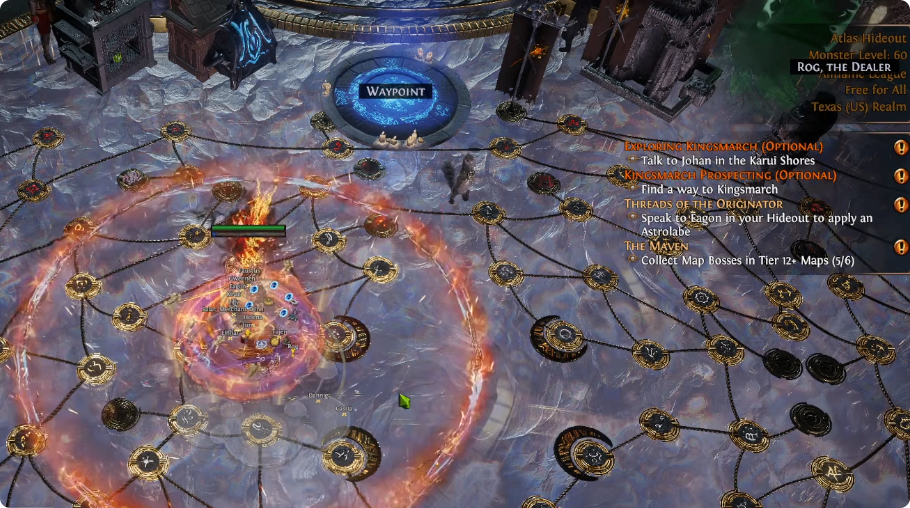
Start with Righteous Fire and Build Your Core
Focus on Density-Based Mapping
Righteous Fire Chieftain performs especially well in maps with high monster density. The more enemies you can bring together, the more value you get from the build's defensive and offensive mechanics.
A density-focused Atlas setup works particularly well for mapping. Mechanics that create large monster packs can make the build feel significantly stronger because Righteous Fire can continuously damage multiple enemies at once. If you are experimenting with Abyss content, remember that some enemies may not interact with explosion mechanics as effectively as other monsters. Combining different mechanics can help create more consistent pack density and better clear.
The key is not to rush into a complicated endgame strategy. Focus first on creating a reliable mapping setup that allows the character to progress through the Atlas while generating currency for future upgrades.
Do Not Switch to Totems Too Early
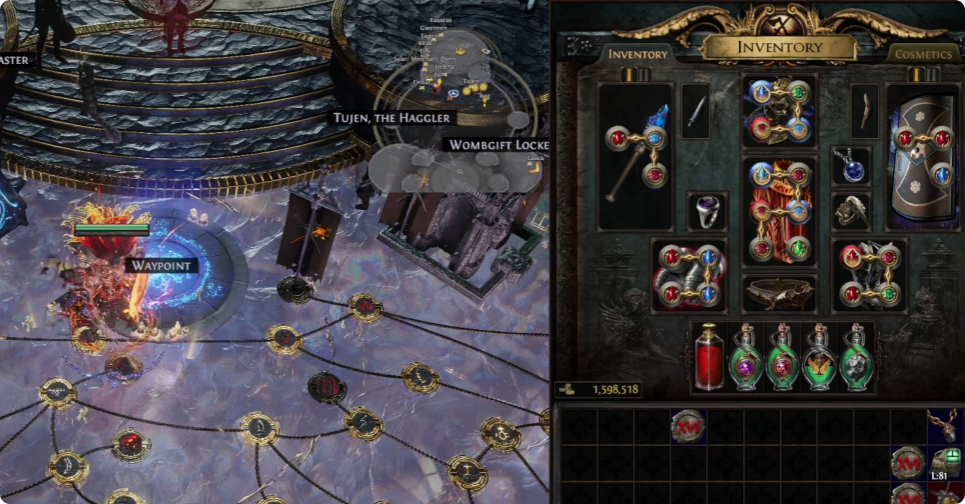
The most important requirement for transitioning into Scorching Ray of Immolation Totems is a shield with +1 to maximum number of Totems.
This modifier is the foundation of the transition. Without it, the totem setup will not perform as smoothly, and you may end up losing the benefits of your existing Righteous Fire setup before the new skill is ready to take over.
The ideal shield can also include Life gained on Block, which is especially valuable for a Righteous Fire character. However, the essential requirement for the totem transition is the additional maximum Totem modifier.
Once you obtain a suitable shield, you can begin moving toward Scorching Ray of Immolation. However, remember that the shield alone is not enough to instantly destroy endgame content. You still need a properly supported skill setup, a functional helmet, and a reasonable overall gear foundation.
Prioritize the Right Gear Upgrades
Upgrade Your Scepter for Damage
A temporary weapon with high Cast Speed can be useful while you are trying to reach important breakpoints for Scorching Ray Totems. However, it should not be considered a final weapon.
A stronger long-term scepter should focus on modifiers such as:
+1 to Fire Skill Gems
Damage over Time Multiplier
Fire Damage or Ignite-related modifiers
A suitable crafted Fire modifier
The goal is to replace temporary Cast Speed-focused gear with a weapon that provides real damage scaling. Once the rest of the character is stable, a properly crafted scepter can become one of the biggest upgrades available.
Use Your Amulet for Damage over Time Multiplier
The amulet is another major damage slot. Damage over Time Multiplier is particularly valuable for a Righteous Fire and Scorching Ray character because it directly improves the damage of your primary skills.
A weak amulet without DoT Multiplier can significantly limit your damage. Therefore, after obtaining the required Totem shield, upgrading to an amulet with a strong Damage over Time Multiplier roll should be one of your next major goals.
At the same time, make sure the amulet does not create unnecessary pressure on your other gear slots by failing to provide important defensive or attribute requirements.
Keep Immortal Flesh as an Early Belt
Immortal Flesh is an excellent early belt for this type of character. Its Life Regeneration and defensive properties are extremely useful while the build is still developing.
The belt can help compensate for limited armor and improve the character's overall durability. Because Righteous Fire builds naturally value Life Regeneration, Immortal Flesh remains a highly practical choice until you can afford a significantly more expensive endgame belt.
Build Defensive Layers Correctly
Use Ignite Proliferation on Your Gloves
One of the most important glove modifiers for this type of Righteous Fire setup is the ability to spread Ignites to nearby enemies.
This effect can be obtained through Searing Exarch modifiers. It dramatically improves clear because Ignite can spread from one enemy to others instead of forcing you to individually apply damage to every target.
For an early pair of gloves, prioritize a combination of:
Life
Dexterity
Life Regeneration
Chaos Resistance
Dexterity is particularly useful because it can reduce the pressure on your rings and other equipment slots. A well-balanced pair of gloves can therefore provide both damage utility and important defensive flexibility.
Build Around Fire Resistance and Life Regeneration
Purity of Fire is a core part of the setup, while other defensive and offensive auras can be used according to your progression stage.
Your boots should ideally provide Life, Movement Speed, Fire Resistance, and Chaos Resistance. A higher Life roll is always desirable, but early on, a balanced collection of useful modifiers is often more important than chasing perfect gear.
The goal is to create a character that can comfortably survive while you continue upgrading your damage.
Craft the Right Righteous Fire Helmet
Use Burning Damage Instead of Sacrificing Area of Effect
A powerful Righteous Fire helmet can provide a substantial damage increase, but some crafting methods are much more expensive than others.
An Essence of Horror-based helmet can provide a strong More Damage modifier. However, this method can require significant investment because you need to repeatedly roll the item in search of the right combination of modifiers.
A cheaper alternative is to use a Harvest-based crafting method to obtain a Burning Damage-focused helmet.
The advantage of avoiding Concentrated Effect is that it does not reduce your Area of Effect. Righteous Fire already benefits from being able to affect a wide area, so reducing the radius can make the build feel noticeably worse during mapping.
Scale Scorching Ray Totems Correctly
Balance Totem Placement Speed and Cast Speed
Scorching Ray of Immolation Totems have an important mechanical requirement: you need to balance Totem Placement Speed and Cast Speed.
The goal is to summon your Totems rapidly while allowing them to cast before you replace them. If you place Totems too quickly without enough Cast Speed, they may be replaced before they have a chance to apply their damage properly.
When the balance is correct, you can repeatedly summon Totems and rapidly build Scorching Ray stacks. This is where Duration becomes increasingly valuable because maintaining and scaling those stacks creates another powerful damage-scaling vector.
In other words, do not simply stack one speed stat without considering the interaction between both mechanics.
Consider Searing Bond of Detonation
Searing Bond of Detonation can also be a strong option, especially for players on a lower budget.
It can be used alongside Scorching Ray of Immolation and may outperform Fire Trap during certain stages of progression. This makes it a useful alternative while you are still building toward a more complete endgame setup.
The important point is to choose your skills according to your available gear rather than forcing an expensive final version too early.
Follow a Practical Upgrade Order
Upgrade Damage Before Chasing Luxury Items
Once your basic gear is functional, the next upgrades should focus on improving the character's core damage.
A strong progression order is:
1. Obtain a shield with +1 to maximum Totems.
2. Transition toward Scorching Ray of Immolation Totems.
3. Upgrade to a properly crafted Fire scepter.
4. Replace the amulet with one offering strong Damage over Time Multiplier.
5. Improve your Scorching Ray gem quality and level.
6. Upgrade the Righteous Fire helmet.
7. Continue improving defensive gear and advanced endgame items.
Expensive unique items can be powerful, but they should not automatically be your first priority. A single high-cost item may not provide as much practical improvement as several targeted upgrades to your weapon, amulet, helmet, or skill gems.
The most important lesson for a 3.29 Righteous Fire Chieftain is to transition at the right time. Keep your original setup until the required Totem shield and supporting gear are ready, then gradually move into Scorching Ray of Immolation Totems.
With the right balance of Totem Placement Speed, Cast Speed, Duration, Fire damage, Damage over Time Multiplier, and defensive layers, the build can progress from an efficient early mapper into a powerful endgame character without wasting POE currency on premature upgrades.